- Al-Ittihad’s Lina Boussaha is eagerly awaiting her country’s FIFA Women’s World Cup debut next summer
DUBAI: To say that the Middle East and North Africa region has historically been underrepresented at the FIFA Women’s World Cup would be an understatement.
With the exception of Morocco, who made their debut in 2023, no other nation in the region had qualified for the tournament.
That was until Algeria broke the mold.
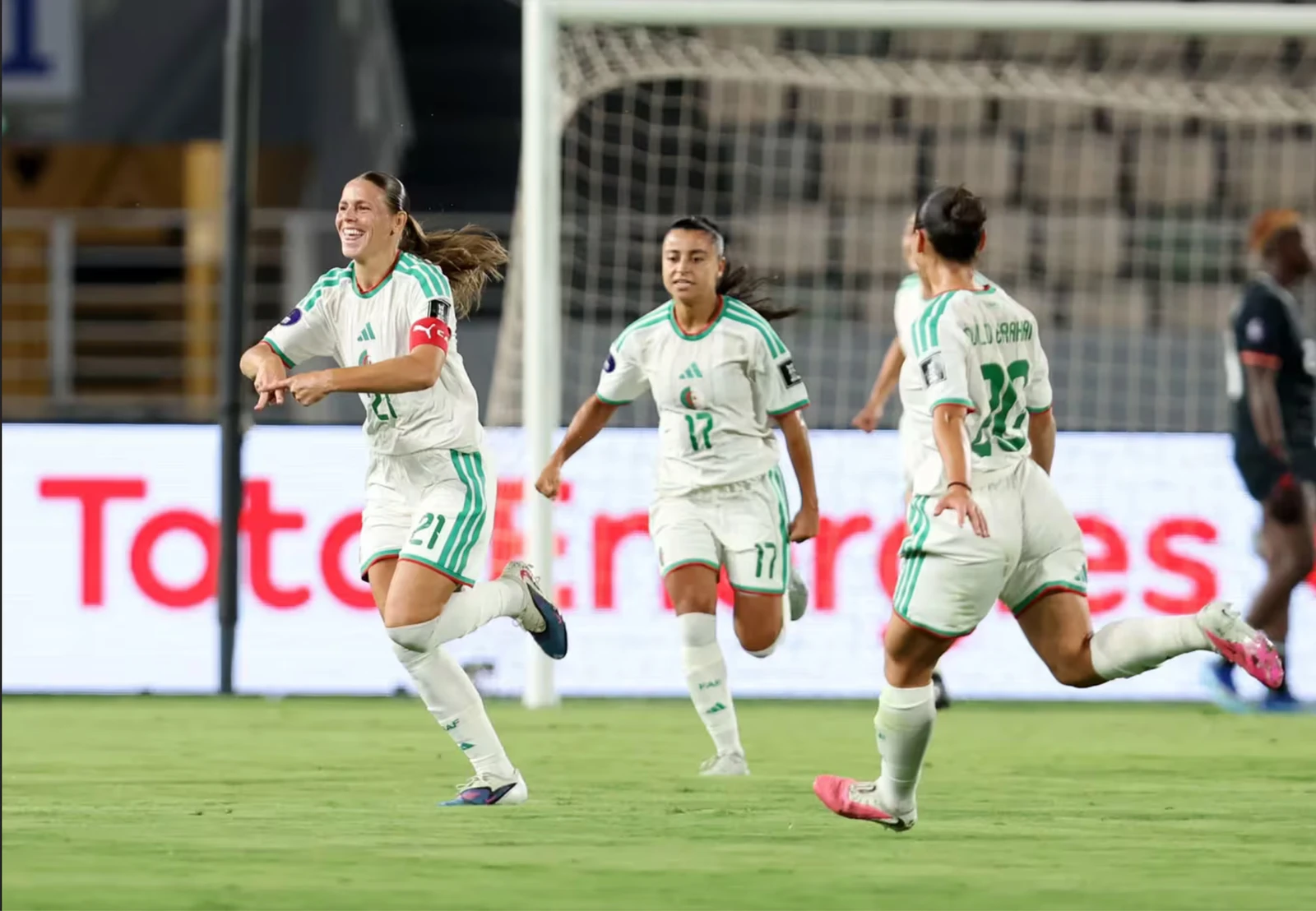
On Aug. 8, 2026, the North African nation qualified for the 2027 FIFA Women’s World Cup in Brazil after beating Cote d’Ivoire 2-1 in the quarterfinals of the CAF Women’s Africa Cup of Nations 2026. The scorers, Ikram Adjabi and Ines Khiri, who were both substituted on in the second half, gave Algeria the upper hand after trailing behind 0-1 in the first leg of the match, courtesy of a 30th minute goal by Ines Konan.
This victory for Algeria comes at a time when the squad has played at more foreign clubs than ever before. While there are a good number of home-grown players who represent Algerian clubs such as Khiri, its national team now occupy places in France’s Ligue 1 Feminine, America’s National Women’s Soccer League, Canada’s Northern Super League and England’s Women’s Super League.
At present, three of the players on the Algerian national team represent sides in the Saudi Women’s Premier League. These are Lina Boussaha, who plays as a midfielder for Al-Ittihad, Nesrine Bahlouli, a midfielder for Al-Nassr, and Roselene Khezami, a defender for AlUla.
“It’s difficult to put into words,” Boussaha told Arab News when asked about her country’s landmark achievement.
“I think when you grow up dreaming of something, you don’t always realize how much it means until you get there. This is bigger than us as players.
“It’s for girls who play football in the streets, for the girls who never thought it was possible to represent Algeria on that stage, and for everyone who has worked for years to keep women’s football alive in our country,” she added.
“We are making history, and I think the most beautiful thing is that we are hopefully opening the doors for the next generation.”
More broadly speaking, Boussaha believes that women’s football is seeing a renaissance of sorts where Arab countries are concerned.
“I think we are seeing a shift in women’s football in the Arab world,” she said.
“There is more investment, more visibility, more professional structures, and most importantly, more girls playing and believing that football can be a future for them. Algeria and Morocco qualifying is a huge statement, but I don’t think it should stop there.
“There is so much talent in this region, and if we continue to invest in the right way, give players opportunities and build strong foundations from a young age, I genuinely believe we will see more Arab countries on that stage in the future.”
Indeed, Boussaha has seen first-hand how the women’s game has changed domestically in Saudi Arabia.
Having joined Al-Nassr in 2023 before embarking on a move to Al-Ittihad in 2025, she has witnessed the transformation of the Saudi Women’s Premier League, starting there just one year after its inception.
“The growth has been incredible, especially when I look back at when I first arrived in Saudi Arabia,” she said.
“The league is young but the level of professionalism is top, the investment, the quality of players, the competitiveness of the league, everything is evolving.”
She added: “I think the league is becoming a really important platform, not only for Saudi players, but also for international players to develop and compete at a high level.
“From the first year to now, there’s clearly a big gap and a huge gap that has been built. I’d like to thank the league and the federation for all the efforts.”
Gearing up for a FIFA Women’s World Cup takes significant preparation, which Boussaha aims to do at Al-Ittihad all while individually working on physical, mental and emotional aspects of the game throughout the year.
Internationally, Algeria will have the opportunity to apply this preparation during their upcoming friendlies against Nigeria on Nov. 30 and Dec. 4.
“Nigeria is one of the strongest teams in Africa, so these are exactly the kinds of games we need,” she said of her opponents.
“You want to challenge yourself against teams that push you physically, tactically and mentally. The World Cup will be a completely different level of intensity, and these games give us the opportunity to test ourselves, identify what we need to improve and gain experience against top opposition.
“I think these games will be very important for us and help us to evaluate ourselves.”
Algeria are not merely arriving in Brazil next summer as FIFA Women’s World debutants, but are also making an important statement about the growth of Arab women’s football on the global stage.