- Three-member body to examine procurement, breeding, slaughtering and export at Hangeng Trade in Gwadar
- Chinese investor says they target $100 million in annual donkey exports, vow to cooperate with the committee
KARACHI: Pakistan's government has launched a probe into operations of a $30 million Chinese facility in the country’s southwest to process donkey meat and hides for export to China, according to official documents seen by Arab News.
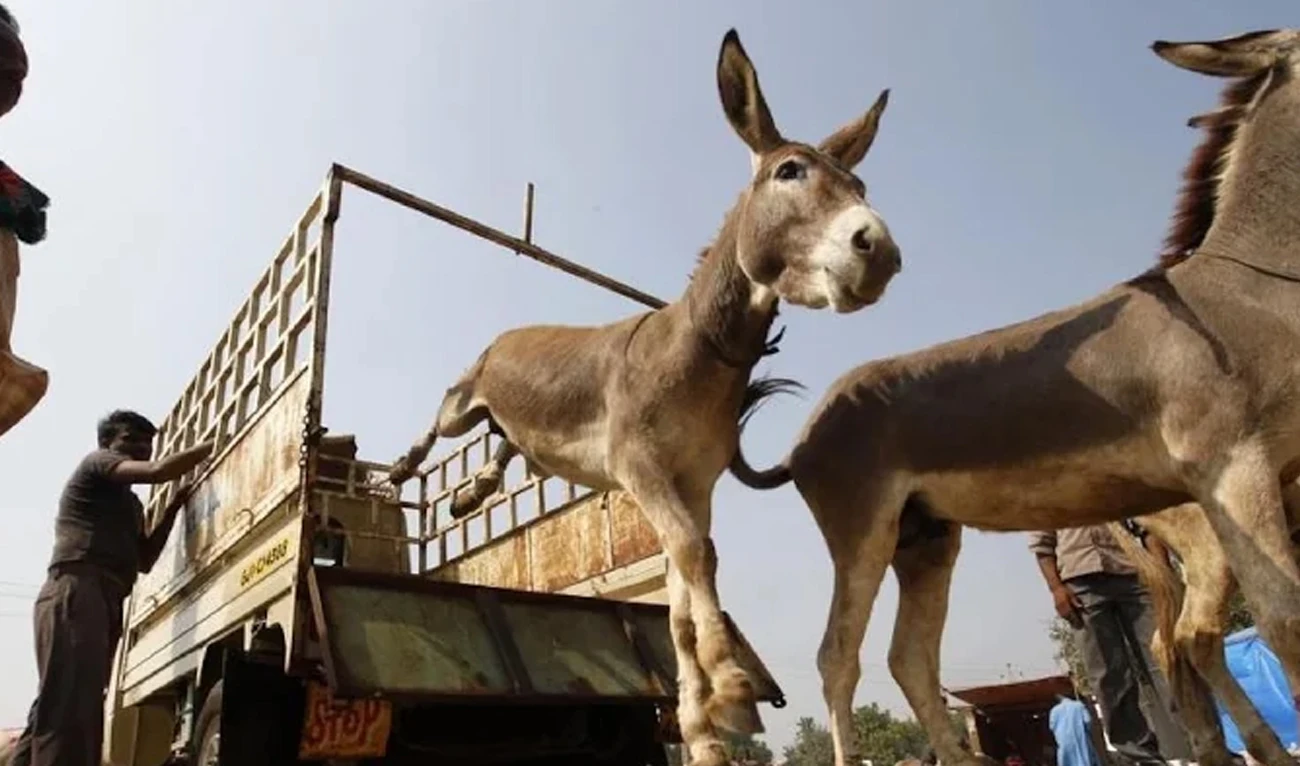
Pakistan holds one of the world’s largest donkey populations, recorded at 5.9 million in 2024. While donkey meat consumption is prohibited locally under Islamic dietary laws, it is highly valued in China for food and traditional medicine, particularly for ‘Ejiao,’ a gelatin derived from donkey hides used for blood health and immunity.
In recent months, the government has taken steps to facilitate donkey meat and hide exports to China. In April, the Economic Coordination Committee (ECC) approved the disposal of existing inventory under export protocols, followed by approval in September for exports from Gwadar, subject to food ministry safeguards.
However, the government has tasked a three-member “fact finding” committee, led by Pakistan Agricultural Research Council (PARC) Director-General Irfan Ali, to review the operations of Hangeng Trade (SMC Private) Ltd in procurement, breeding, transportation, slaughtering, processing, storage and export of donkey meat and hides at Gwadar Free Zone in the Balochistan province.
“The committee is at the stage of collecting basic facts and figures, and your cooperation will help it complete this task in a fair and timely manner,” reads a letter written to the Chinese exporter by the Pakistani food security ministry this month.
The committee is seeking details on donkey traceability, breeding arrangements and compliance with Pakistan-China protocols. It has also requested figures on slaughtered donkeys, permits, production and exports as well as details of imported hides and existing stocks.
However, the Nov. 12 letter did not specify any violation warranting an inquiry into the Chinese investor. Arab News reached out to the Pakistani food security ministry’s spokesperson, Shah Faisal, but he did not respond to questions seeking comment.
Prime Minister Shehbaz Sharif’s government is seeking to consolidate hard-won macroeconomic stability by boosting exports, which fell 6 percent to $30.1 billion in the fiscal year that ended in June, according to Pakistan Bureau of Statistics data. Pakistan's exports rose 9 percent year-on-year to $11.3 billion in the first four months of FY27 through October.
The probe could, however, set back the government’s efforts to develop donkey meat and hide exports as a new source of foreign exchange.
“The Committee is looking at these operations with reference to the Ministry's permission dated 21 November 2022 (F.No.2-2/05-Epid), the Cooperation Agreement dated 2 July 2025, and the Pakistan-China Protocols on donkey meat (2024) and donkey hides (2023),” the Pakistani food ministry said.
Majyd Aziz, corporate affairs adviser to Hangeng Group, said the Chinese investors were ready to cooperate with Pakistani authorities.
“We will give them all the information they have asked for,” he told Arab News, adding that Hangeng Trade was a duly registered slaughterhouse in Pakistan.
“There is transparency, traceability, everything.”
The facility shipped at least two consignments of donkey meat and hides worth $195,425 to China that met Pakistani and Chinese inspection and certification requirements, Pakistani media reported in July.
“A lot of containers have gone. Landed in Tianjin,” Aziz said, adding that the company plans to increase its exports to $100 million annually.