- Capital’s civic offices are due to stop accepting cash on Dec. 1, businesses are expected to offer digital payments by year-end
- Finance minister says banknotes will remain legal tender as traders question whether networks and customers are ready
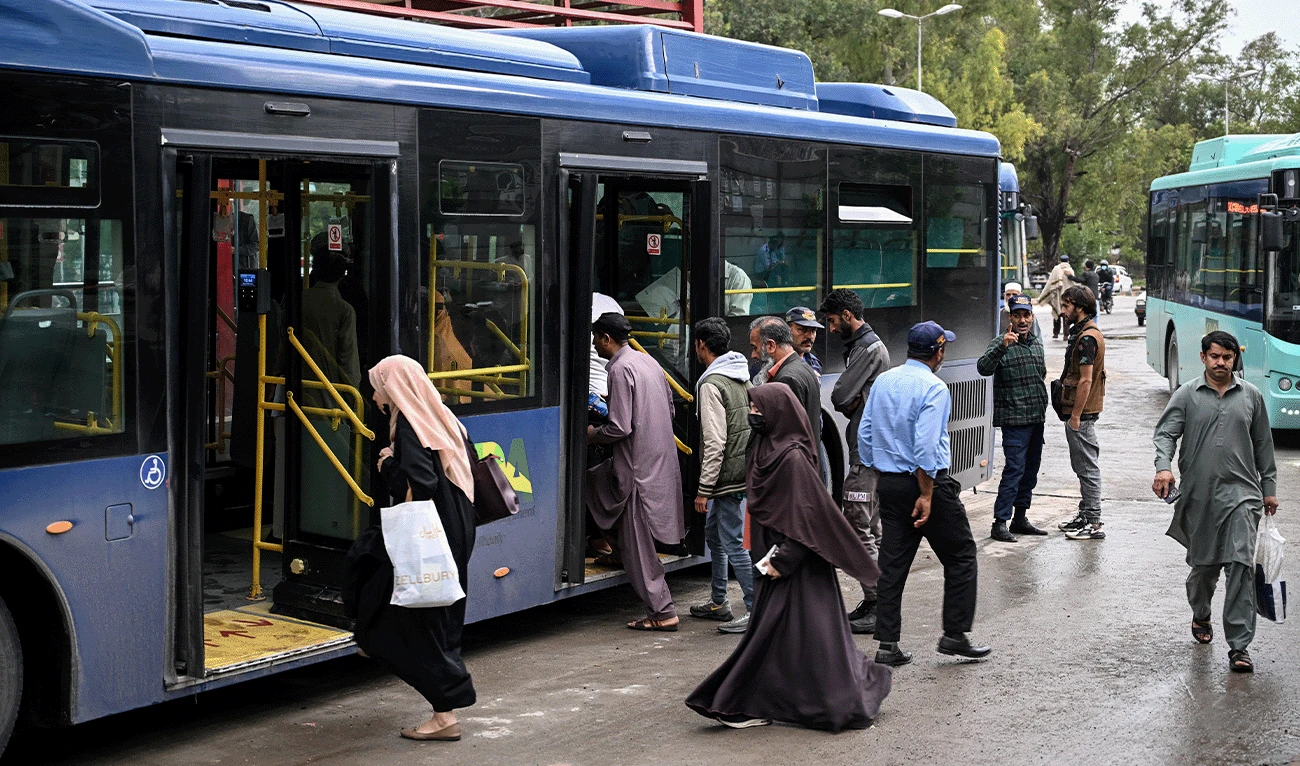
ISLAMABAD: Islamabad’s push to make digital payments available across the capital by the end of December is meeting resistance from traders and residents who say unreliable Internet, payment fraud and limited access to banking could leave some people unable to pay for everyday goods and services.
The deadlines are approaching quickly. Offices run by the Islamabad Capital Territory administration and the Capital Development Authority, which manages the city’s civic services, are due to stop accepting cash after Nov. 30. The government wants every merchant, from street vendors to large stores, to offer a digital payment option by Dec. 31. It says about 26,000 merchants in the capital have already joined the system.
The distinction matters for customers: the government’s description of a “cashless city” does not mean banknotes will cease to be legal tender or that shops must refuse them. But payments at the designated civic offices are set to change and traders say making digital payments work consistently across markets will take more than a deadline.
“The biggest issue is the network,” Muhammad Shafaqat, a businessman and former telecommunications executive, told Arab News while shopping with his family in Islamabad’s Abpara market.
He said ATMs frequently went out of service and connectivity could be disrupted during VIP movements in the capital.
“In such a scenario, if I have gone cashless and have nothing with me except a card, what happens if my mobile network goes down or the payment machine stops working,” he said. “How are we going to make payments?”
Pakistan’s wider drive to encourage digital payments is intended to make transactions easier to track and bring more people and businesses into the formal financial system. It relies in part on Raast, the central bank’s instant payment network, which allows customers to pay merchants by scanning QR codes.
Digital payments are growing: the number of merchants accepting them nationwide rose from 500,000 to 2.03 million, while transaction volumes doubled over a year, according to figures presented at a government meeting this month. Those national figures, however, do not show whether every customer and merchant in Islamabad can use the system reliably.
Syed Imran Bukhari, a traders’ representative in the capital, said many low-income workers struggled to open bank accounts, while suppliers in neighboring cities still required cash for wholesale purchases.
“It is not possible to immediately impose such a system at this stage,” Bukhari said.
He said traders had reported customers using fabricated payment receipts to obtain goods without transferring the full amount.
“A receipt showing a payment of Rs100,000 ($360) was created by putting in just Rs1,000 ($3.60). Goods were then obtained by sending these fake receipts,” he said, recalling one such transaction.
“LOVELY INITIATIVE”
Other residents see benefits if the technology works. Noorani Barkat, a businesswoman who recently moved to Islamabad from Canada, said digital payments could be more convenient than making frequent trips to an ATM.
“I guess that’s a lovely initiative, especially for people who cannot go to the ATMs all the time, it’s a convenience for us,” she told Arab News. “But if we don’t have Internet, it’s not possible to have the cashless services available nicely, right? In order for us to ensure that the services are going on perfectly, we need to have good Internet.”
Responding to the concerns, Minister of State for Finance Bilal Azhar Kayani told Arab News the government did not intend to prohibit cash transactions and that banknotes would remain legal tender.
“The government’s ambition is to enable Islamabad as an exemplary cashless jurisdiction by ensuring that every payment touchpoint has at least one digital payment option,” he said.
Kayani said the government wanted people to choose digital payments because they were accessible and secure. He said it was working to improve telecommunications infrastructure, expand public Wi-Fi and develop ways to make payments where connectivity was poor. Private companies were exploring offline or low-connectivity options, he said.
He also pointed to a Rs3.5 billion ($12.5 million) allocation to subsidize QR payments and reduce costs for merchants. A central bank notice says the announced subsidy covered transactions from September 2025 through June 2026. The government said earlier this month it was preparing a proposal for further support.
Dr. Maqbool Hussain, an Islamabad pediatrician, said the transition could benefit the city but worried that street vendors and people unfamiliar with digital banking would need more time.
“The December 31 deadline is probably too short a period for this transition,” he said.