Egypt MP ridiculed for proposing college virginity tests

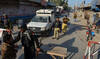
Egyptian students walk past soldiers standing guard in armored personnel carriers in the street in front of Cairo University in this April 14, 2014 file photo, in the Egyptian capital. (AFP)
Updated 30 September 2016
Follow

Egypt MP ridiculed for proposing college virginity tests

CAIRO: An Egyptian member of Parliament is facing ridicule for saying that universities should perform virginity tests on female students.
Ilhamy Agina reportedly told an Egyptian newspaper on Thursday that virginity should be a prerequisite for admission to university.
He argued that it would help to end the practice of unregistered “customary” marriages that appeal to Egyptian youths who cannot afford formal weddings.
“Any girl who enters university must be examined to prove she is a maiden,” Agina reportedly told the Youm 7 newspaper.
His comments sparked derision on social media.
“Didn’t I tell you the bottom is still far, and worse is to come?” rights lawyer and dissident Gamal Eid wrote on Twitter.
“We have a member of parliament obsessed with sex,” wrote liberal dissident and journalist Khaled Dawoud.
Agina told AFP on Friday his remarks had been misinterpreted and that he has decided to boycott the media.
“People have been attacking me since yesterday and they’re upset and such. I’ve decided not to deal with the media,” he said.
“I did not make a demand, I made a suggestion. There’s a big difference between a demand and a suggestion.”
He said the Youm 7 reporter had asked him about the government’s role in ending customary marriages, so he suggested the virginity tests.
“I said, well, it’s not the government’s right to ask a girl or a man whether they’ve had a customary marriage,” he said.
“But maybe, maybe... just as a suggestion that may or may not be implemented: the government could tell university hospitals to conduct drugs and virginity tests.
“And then the university can tell the student’s parents,” he added.
It was not the first time Agina has made controversial remarks.
He previously said he supported female genital mutilation, which is illegal but is still widely practiced in Egypt.


Syrian leader to meet Putin, Russia seeks deal on military bases

Updated 28 January 2026
Follow

Syrian leader to meet Putin, Russia seeks deal on military bases

  • Russia’s continued sheltering of Assad and his wife since their ouster remains a thorny issue

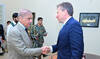
MOSCOW: Syrian President Ahmed Al-Sharaa will meet Russian counterpart Vladimir Putin in Moscow on Wednesday, as the Kremlin seeks to secure the future of its military bases in the country.
Putin and Sharaa struck a conciliatory tone at their previous meeting in October, their first since Sharaa’s rebel forces toppled Moscow-ally Bashar Assad in 2024.
But Russia’s continued sheltering of Assad and his wife since their ouster remains a thorny issue. Sharaa has repeatedly pushed Russia for their extradition.
Sharaa, meanwhile, has embraced US President Donald Trump, who on Tuesday praised the Syrian leader as “highly respected” and said things were “working out very well.”
Putin, whose influence in the Middle East has waned since Assad’s ouster, is seeking to maintain Russia’s military footprint in the region.
Russia withdrew its forces from the Qamishli airport in Kurdish-held northeast Syria earlier this week, leaving it with only the Hmeimim air base and Tartus naval base on Syria’s Mediterranean coast — its only military outposts outside the former Soviet Union.
“A discussion is planned on the status of bilateral relations and prospects for developing them in various fields, as well as the current situation in the Middle East,” the Kremlin said of the upcoming meeting in a statement on Tuesday.
Russia was a key ally of Assad during the bloody 14-year Syrian civil war, launching air strikes on rebel-held areas of Syria controlled by Sharaa’s Islamist forces.
The toppling of Assad dealt a major blow to Russia’s influence in the region and laid bare the limits of Moscow’s military reach amid the Ukraine war.
The United States, which cheered Assad’s demise, has fostered ever-warmer ties with Sharaa — even as Damascus launched a recent offensive against Kurdish forces long backed by the West.
Despite Trump’s public praise, both the United States and Europe have expressed concern that the offensive in Syria’s northeast could precipitate the return of Islamic State forces held in Kurdish-held jails.