

Pakistan says economic reforms aim to create fairer, more predictable business climate

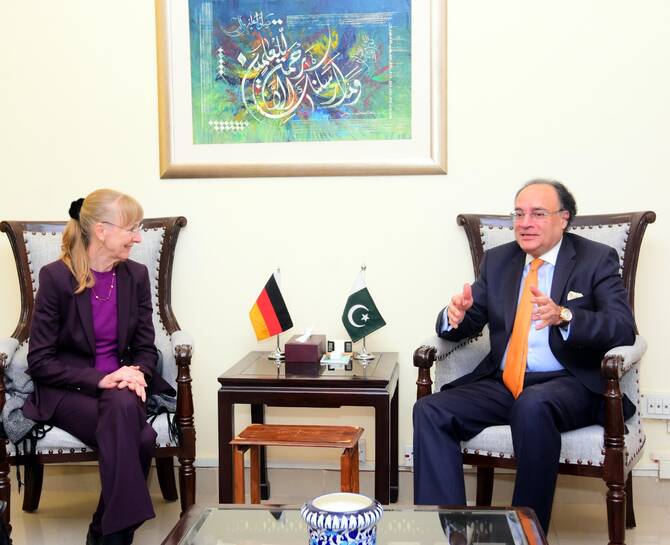
Pakistan's Federal Minister for Finance Muhammad Aurangzeb (right) in conversation with German Ambassador Ina Lepel in Islamabad, Pakistan, on January 28, 2026. (Government of Pakistan)
Short Url
Updated 44 min 18 sec ago
Follow

Pakistan says economic reforms aim to create fairer, more predictable business climate

  • Islamabad seeks to consolidate macroeconomic gains after years of financial turbulence
  • German envoy stresses need for policy clarity and consistent engagement with investors

KARACHI: Federal Minister for Finance Muhammad Aurangzeb said on Wednesday the government’s tax and broader economic reforms aim to create a fairer and more predictable business environment, as Islamabad seeks to consolidate recent macroeconomic gains following years of turbulence.

Pakistan has undergone a difficult period of stabilization, marked by inflation, currency depreciation and financing gaps, though international rating agencies have acknowledged improvements after politically costly reforms implemented under the $7 billion International Monetary Fund (IMF) loan program.

Aurangzeb shared the outlook during a meeting in Islamabad with German Ambassador Ina Lepel to review bilateral economic cooperation and investor sentiment, the Finance Division said in a statement.

“The reforms are designed to promote fairness, reduce distortions, and create a level playing field for all economic actors, while supporting investment and formal economic activity,” the minister said, according to the statement.

He briefed the German envoy on the government’s priorities, including broadening the tax base, improving compliance and moving toward technology-driven revenue systems to support fiscal sustainability and competitiveness-led growth.

The ambassador welcomed the reform trajectory and shared feedback from engagements with the business community, noting the need for policy clarity, consistency and effective dialogue between the government and private sector.

Both sides reaffirmed their commitment to strengthening economic cooperation, promoting investment and maintaining regular engagement as Pakistan works to support economic recovery and deepen ties with Germany.


Pakistan offloads wheat stocks, boosts provincial supply to stabilize prices

Updated 5 sec ago
Follow

Pakistan offloads wheat stocks, boosts provincial supply to stabilize prices

  • ECC approves sale of 500,000 tons of wheat, allocates 300,000 tons to Punjab
  • Cabinet body also clears utility arrears and approves vaccine and fertilizer funding

KARACHI: Pakistan’s top economic decision-making body on Wednesday approved the disposal of surplus government wheat stocks and a major inter-provincial allocation to stabilize domestic flour prices, as Islamabad seeks to manage food security risks while containing fiscal pressures.

The decisions come as Pakistan grapples with food inflation sensitivity, climate-related supply disruptions and the fiscal burden of carrying large public stocks. Wheat, the country’s staple food, is politically and economically critical because flour prices directly affect household inflation and living costs, and past volatility has triggered public unrest and costly emergency imports.

On Wednesday, the Economic Coordination Committee (ECC) of the Cabinet authorized the sale of 500,000 metric tons of wheat held by the Pakistan Agricultural Storage and Services Corporation (PASSCO), the federal grain procurement agency, through competitive bidding. It also approved the release of 300,000 metric tons to the Punjab government to ensure uninterrupted supplies to flour mills, according to an official statement issued by the Finance Division.

“The disposal of 500,000 metric tons of PASSCO wheat stock through competitive bidding aims at managing surplus stocks, reducing carrying and storage costs, and ensuring price stability in the domestic wheat market while safeguarding food security considerations,” the Finance Division said in a statement following the ECC meeting.

In a related move, the committee approved the provision of PASSCO wheat to Punjab, the country’s most populous province and a key driver of national wheat consumption, to help maintain adequate supplies for flour mills and prevent supply chain disruptions, the statement said.

Beyond food security, the ECC approved a technical supplementary grant - an off-budget allocation used to meet urgent funding needs - of Rs 10.98 billion ($39 million) to clear long-standing liabilities owed by the Pakistan Post Office Department to utility companies, part of broader efforts to address inter-government arrears that have strained public sector finances.

In the health sector, the committee authorized Rs 29.66 billion ($106 million) for the Federal Directorate of Immunization to ensure uninterrupted procurement of vaccines and syringes under the Expanded Program on Immunization, a move aimed at sustaining routine immunization coverage and preventing outbreaks of vaccine-preventable diseases.

The ECC also approved a Rs 23.42 billion ($84 million) subsidy package for imported urea, to be shared equally between the federal and provincial governments, as authorities seek to cushion farmers from rising fertilizer costs and limit spillover effects on food prices.