

Egypt’s non-oil exports rise 17% as trade deficit narrows

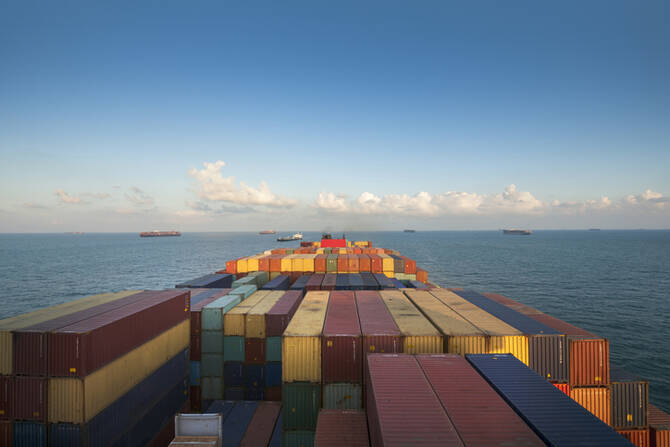
Egypt has ambitions to enter the global top 50 in trade performance. Getty
Short Url
Updated 28 January 2026
Follow

Egypt’s non-oil exports rise 17% as trade deficit narrows

RIYADH: Egyptian non-oil exports increased by over 17 percent year on year in 2025, reaching approximately $48.6 billion, new figures showed.

Latest foreign trade indicators released by the country’s Ministry of Investment and Foreign Trade revealed the trade deficit narrowed by 9 percent over the 12 months, reaching around $34.4 billion, according to a statement.

This supports Egypt’s ambition to enter the global top 50 in trade performance, boost exports to $145 billion a year, and narrow the trade deficit.

It also aligns with the country’s efforts to streamline procedures, maximize the benefits of trade agreements, and protect local industry in line with international agreements.

The newly released data said: “Egyptian gold exports also saw a substantial increase, reaching $7.6 billion in 2025 compared to $3.2 billion in 2024, an increase of $4.4 billion.”

It further indicated that the largest markets for Egyptian non-oil exports in 2025 included the UAE, Turkiye, and Saudi Arabia, as well as Italy and the US. 

The most important export sectors included building materials at $14.9 billion, chemicals and fertilizers at $9.4 billion, and food industries at $6.8 billion.

In October, Egypt’s credit rating was raised by S&P Global to “B” from “B-,” while Fitch reaffirmed its “B” rating, citing reform progress and macroeconomic stability.

S&P said at the time that the upgrade reflects reforms implemented over the past period by the country, including the liberalization of the foreign exchange regime, which boosted competitiveness and fueled a rebound in growth.

Prime Minister Mostafa Madbouly also said at that time that both rating agencies’ decisions signal confidence in the government’s reform agenda and its expected returns.

In September, Egypt’s Ministry of Planning, Economic Development and International Cooperation reported that the economy expanded 4.4 percent in fiscal year 2024/25, driven by a strong fourth quarter when gross domestic product growth hit a three-year high of 5 percent.

This reflects the impact of the more flexible exchange rate regime adopted since March 2024, which has helped stabilize the balance of payments and restore investor confidence.

Saudi mining sector surges with 220% rise in new licenses in 2025 

Updated 26 sec ago
Follow

Saudi mining sector surges with 220% rise in new licenses in 2025 

JEDDAH: Saudi Arabia recorded a 220 percent year-on-year increase in new mining exploitation licenses in 2025, issuing 61 permits, according to a statement from the Ministry of Industry and Mineral Resources. 

This reflects the attractiveness of the Kingdom’s mining investment environment and the ministry’s ongoing efforts to accelerate the exploration and development of mineral resources, which are estimated to be worth more than SR9.4 trillion ($2.5 trillion), the ministry said in a statement. 

Saudi Arabia has designated mining as the third pillar of its industrial economy, a strategy that has seen the sector’s contribution to gross domestic product double, reaching SR136 billion in 2024. 

The industry has attracted over SR170 billion in investments, while exploration spending has surged fivefold since 2020, exceeding SR1.05 billion in 2024 alone. 

Investor interest has skyrocketed, with the number of active exploration companies rising from just six in 2020 to 226 in 2024 — a 38-fold increase — and foreign investors now accounting for 66 percent of total license bidders, reflecting strong international confidence in the Kingdom’s mining potential. 

Jarrah bin Mohammed Al-Jarrah, the ministry’s official spokesperson, explained that the number of mining and small-mine exploitation licenses issued by the ministry in 2025 reached 61 licenses, compared to 19 licenses in the previous year. 

He added: “Total investments in the new licensed projects exceed SR44 billion for the extraction of high-quality mineral ores, including gold and phosphate." 

He noted that the number of valid mining exploitation licenses in the Kingdom reached 275 by the end of 2025, covering an area of 2,160 sq. km. 

He affirmed that the ministry will continue enabling mining investments and facilitating local and international investor participation to maximize sector returns in line with Saudi Vision 2030 targets, positioning mining as a key contributor to economic diversification. 

The ministry’s release emphasized that this reflects the effectiveness of reforms implemented to strengthen the investment environment and regulate the mining sector. 

Last month, Saudi Arabia opened 11 mining sites at the Eastern Province’s Al-Summan Crushers Complex for competitive bidding. The sites, designated for the extraction of aggregates and crusher materials, cover a combined 9 sq. km.