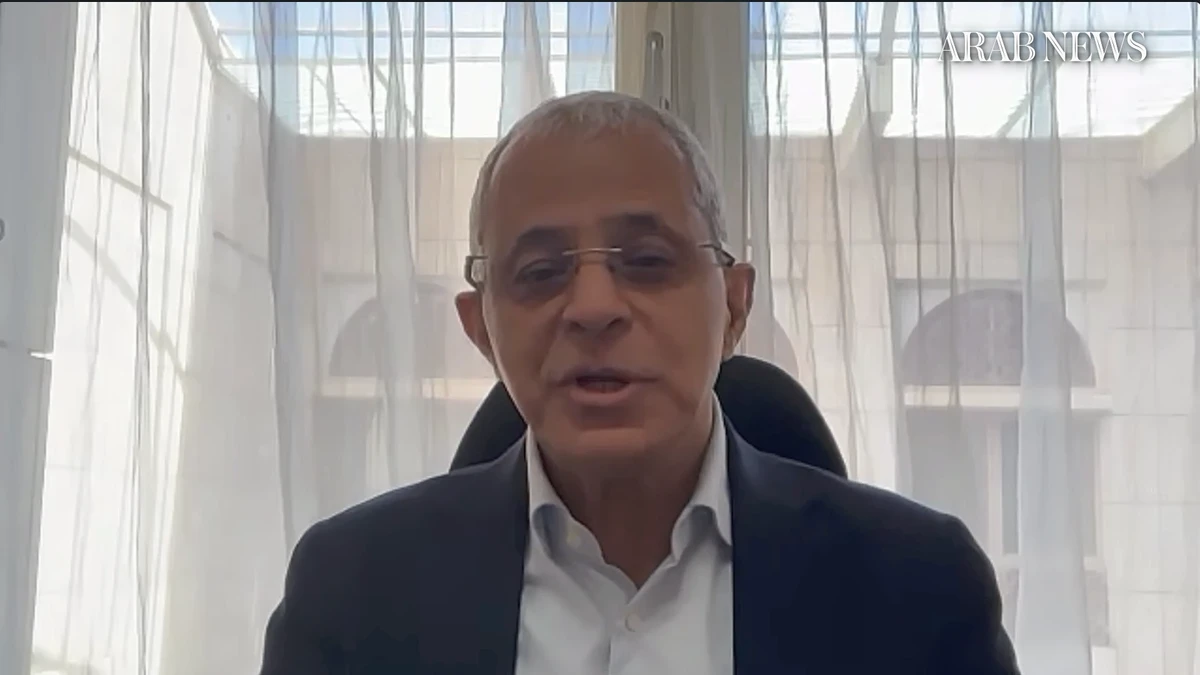
- Yemen’s deputy foreign minister discusses high-treason charges against Aidarous Al-Zubaidi and the political future of southern Yemen after the STC’s dissolution
- The Houthis show no willingness to compromise as political divisions continue to stall the peace process, says Mustafa Noman
RIYADH: As Riyadh prepares to host a conference on southern Yemen as part of its push for a comprehensive political solution, Yemen’s deputy foreign minister, Mustafa Noman, said he is confident the southern cause will be resolved justly.
That confidence, he said, stems from Saudi Arabia’s efforts to steer the issue away from political tensions and armed conflict and toward dialogue aimed at resolving longstanding disputes.
“This is what the Saudi government is doing now,” Noman said during an appearance on the Arab News flagship talkshow “Frankly Speaking.” “They are calling all the major personalities — but as independents; there will be no entities.”
He said the southern question cannot be settled through force, stressing that conference participants will attend in their personal capacities and must ultimately engage with broader Yemeni stakeholders.
“Everybody is going as an independent personality in this conference,” he said. “And they will discuss between themselves, and whatever they achieve, whatever they agree upon, they will have (to) come and sit with the other Yemeni partners in this place. They cannot do it alone. They cannot force it.”
More broadly, Noman noted there was neither optimism nor pessimism, saying politics is driven by realities on the ground.
“The internationally recognized government is working to unite all the forces in the south, and then to coordinate their moves with the national army, which is in Marib, which is Al-Mahra, which is in Taiz,” he added. “And then and only then, we can start talking about the peace process.”
Noman, however, cautioned that negotiations cannot move forward while the Houthis maintain military dominance and control a large part of the population. “We cannot talk about the peace process while the Houthis are still in their strong positions; they are holding the majority of the population hostage to their policies.”
For talks to begin in earnest, he said, the government must be stable and unified and able to command a national army under the president’s authority.
Returning to the southern issue, Noman said there is no consensus yet on how the conflict should be resolved. Any outcome, he said, must reflect agreement among all factions.
“There is no consensus in the south about how to deal with this matter. We cannot talk about what is the system that will follow,” he said. “We have to wait until the end of the South-South dialogue, (and) see what the majority of these participants decide.”
The uncertainty follows a turbulent end to last year, when violence flared across southern and eastern Yemen.
In December, the Southern Transitional Council (STC), led by Aidarous Al-Zubaidi, moved to seize state institutions and military camps in Hadramaut and Al-Mahra, directly challenging the internationally recognized government.
The operations, carried out by armed groups and backed by external actors, resulted in casualties and sharply heightened tensions.
In response, Yemen’s leadership appealed to the Saudi-led coalition to contain the situation, called for the withdrawal of Emirati forces, and launched operations to reassert control over military headquarters in both governorates.
Al-Zubaidi, who is reportedly on the run, later failed to attend talks in Riyadh and was dismissed from the Presidential Leadership Council (PLC), which oversees the internationally recognized government.
He was referred to the attorney general on charges including “high treason” and “corruption.” The STC, following talks in Saudi Arabia, announced its dissolution, citing a desire to preserve stability in southern Yemen and neighboring countries.
Noman told Al Arabiya English on Jan. 2 that the “biggest mistake” of the “outlawed” STC is that it “antagonized Saudi Arabia.”
Appearing on “Frankly Speaking,” he said longstanding problems in the south were widely acknowledged but could never be resolved through force. He said the outcomes of Yemen’s 2014 National Dialogue had clearly outlined a political track for addressing southern grievances.
“What the STC have done is that they crossed all the red lines,” he said. “They were trying to impose their own agenda on all Yemenis and on the region by sending their forces to Hadramout and Al-Mahra.”
He alleged that the moves were driven in part by foreign agendas, including support from the UAE, and said the militias operated outside the authority of Yemen’s defense and interior ministries.
“They have taken steps that were (not) coordinated with the Ministry of Defense as they claimed — as they were claiming that they were going there to fight the terrorists or the Al-Qaeda and (Daesh),” he said. “If you want to do that, you have to do it under the banner of the Ministry of Defense and the Ministry of Interior.”
On the charge of high treason against Al-Zubaidi, Noman said the former STC leader led an unconstitutional rebellion while serving as a member of government.
Al-Zubaidi “led a rebellion against the government, and this is unconstitutional, and this is what is called high treason,” he said. “You cannot be a member of the government and use your militias to topple it or to enforce your own agenda without the consent of your partners in this country.”
He added that Al-Zubaidi bypassed constitutional and political processes in favor of force. “He issued the decree to put a new constitution for the south, and then he declared that he will declare an autonomous state in the south.”
Noman reiterated that “all the steps (Al-Zubaidi) has taken were wrong, were unconstitutional, were unlawful, and this is why he was accused (of) high treason.”
On Jan. 7, the PLC authorized the public prosecutor to form a special committee to investigate allegations against Al-Zubaidi. Preliminary findings reviewed by Arab News accuse him of abuse of power, corruption, land seizures and illicit oil trading.
Noman said Al-Zubaidi received billions of Yemeni riyals monthly to fund militias and imposed unauthorized levies on goods entering southern Yemen.
“He received 10 billion Yemeni riyals ($41.9 million) every month for his militias, and we did not know how he spent that. He was — he had the right — not the legal right — but he had the force to impose tariffs, to impose the levies and duties on every merchandise that goes into the south,” he said.
The committee also cited alleged pressure on the Yemen Petroleum Company to channel fuel imports through firms linked to Al-Zubaidi’s relatives and associates, along with land seizures in Aden and surrounding areas.
Asked why Al-Zubaidi was able to operate without accountability for so long, Noman said the PLC had tolerated his demands to preserve unity against the Iran-backed Houthis.
“He has his own militia that nobody knows what the number is,” Noman said. “He was able to impose 25 vice ministers and deputy ministers in the different ministries, and the PLC approved them just to accommodate him and just to try to make the country run forward.”
He added that the PLC was “only accommodating” Al-Zubaidi “because everybody wanted the entity that was a government — an internationally recognized government to work from Aden peacefully.”
Noman stressed that the government “had only one goal, which is to go after the Houthis and take back the capital. And to do that, there should be a united bloc in the south working with the Yemeni army to go after the Houthis.”
Elaborating, Noman said Al-Zubaidi had “two-thirds of the cabinet. He had everything under his hands. And he just decided to be a rebel … and to get out of all the obligations of a legitimate government.”
When asked how southern political aspirations, including possible statehood, could be achieved through dialogue, Noman stressed this was not a family dispute that could be treated as a “divorce,” and any decision must involve all Yemenis.
“Now everything is going to be put on the table in the Southern-Southern Dialogue,” he said. “And after that, when the southerners reach an agreement about what they want in the future, then they will have to sit with the other Yemeni partners and discuss how to do it, how to achieve it.
“I always say that succession is not a family feud that you can just decide if you want to have a divorce and just quit. No. You have to sit and organize this.”
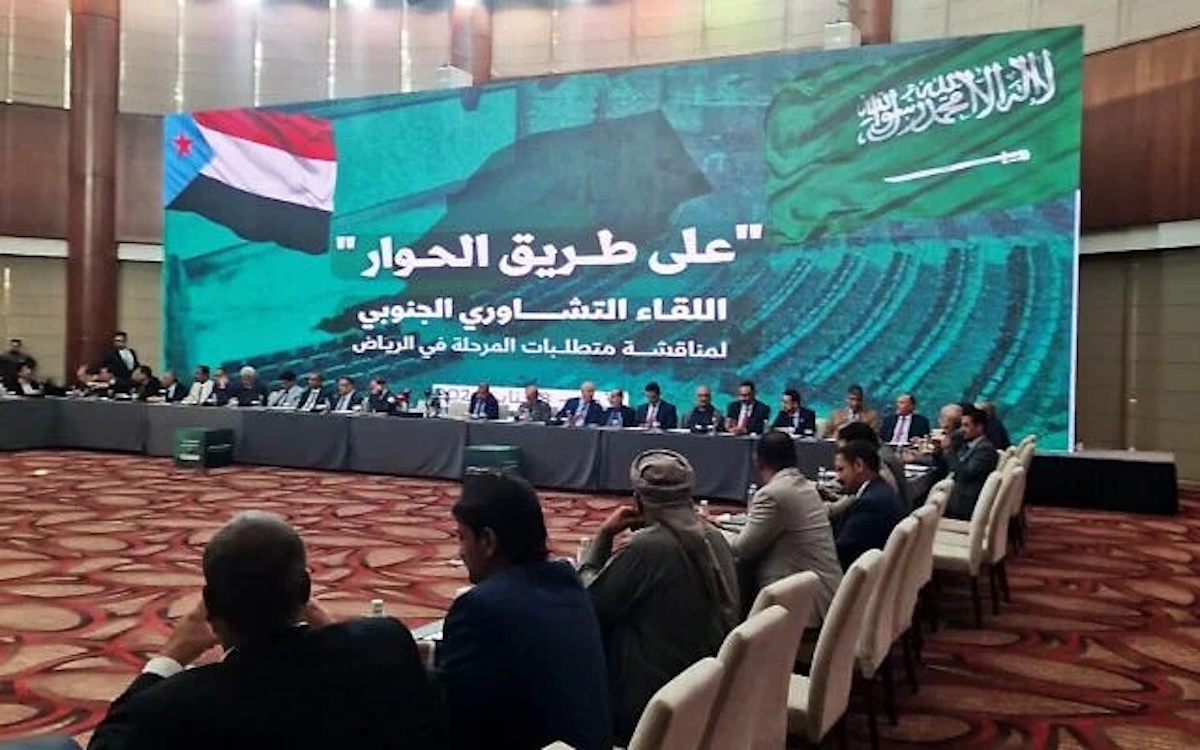
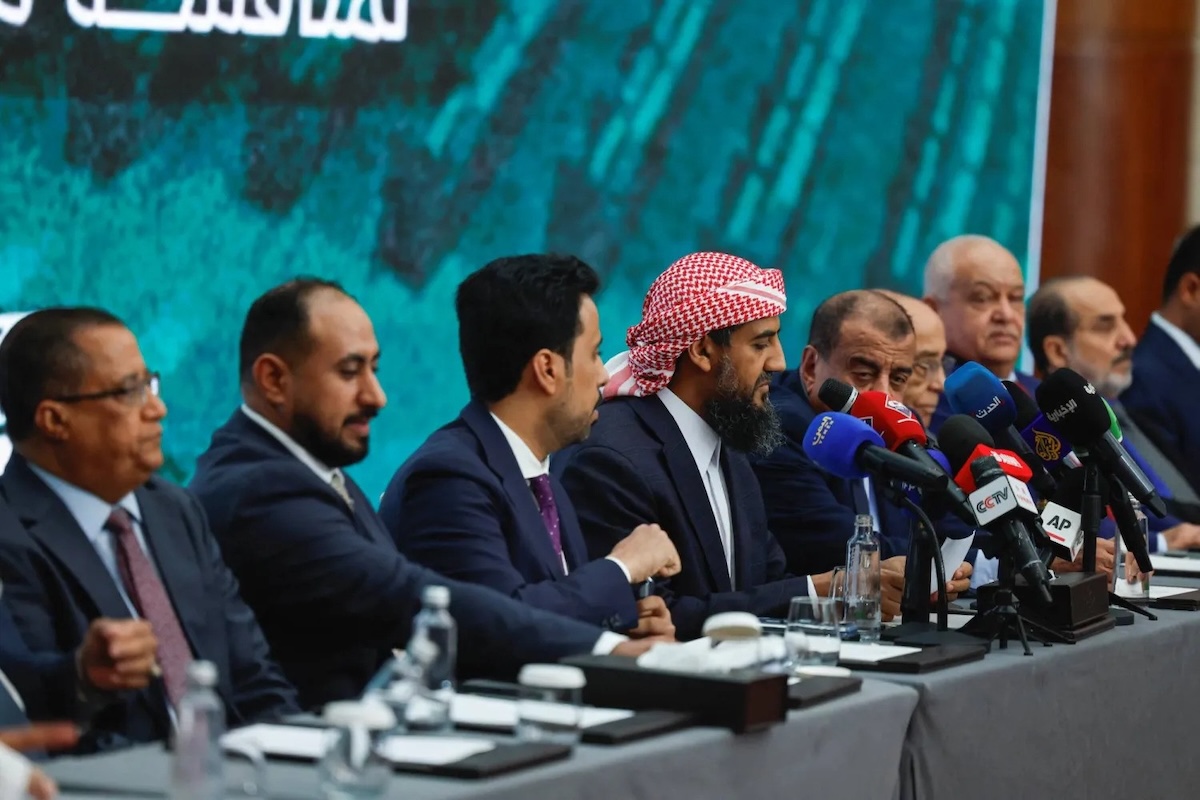
On Jan. 18, Saudi Arabia hosted a consultative meeting on southern Yemen, bringing together political leaders, elders and public figures to pave the way for the broader conference.
A closing statement said dialogue remains the only path to a “just, secure and sustainable solution” and warned that further divisions would deepen instability. The statement also highlighted Saudi Arabia’s role in supporting southern security.
Noman said Saudi Arabia “has committed to pay the salaries of all the national army and the brigades, like the Giants and those who are working with the West Coast under General (Tariq) Saleh’s command, and the national army that's working in Taiz and Al-Mahra.”
He added: “The Saudi government also committed that they will pay the salaries of the government staff, including the diplomats. And this is the first step. First, we have to secure the capital in Aden, and then when the capital is stable and the services are functioning to a certain extent, the government starts operating from Aden.”
Once a unified political and military bloc is established, he said, the focus must return to the peace process and confronting the Iran-backed Houthis, who control much of northwestern Yemen, including the capital Sanaa, and reject the PLC’s legitimacy.
Noman warned that the STC rebellion and resulting security vacuum have benefited the Houthis.
“Nobody can deny that there is a vacuum now in areas of the south,” he said. “The government of Yemen and the government of Saudi Arabia are working very hard, and they are doing their best to fill in these vacuum spots, but that will take some time.”
He added that “the events that have occurred during the past two months, if I were a Houthi, I would have been the happiest on earth to see my enemies, according to his terms, having these disputes, having this disruption.
“But we also know that the Houthis in the area they are controlling are facing more opposition from the people. People are coming more frankly and going more publicly to protest against the Houthi actions.”
He added: “So, at this moment, I’m not sure that they are ready for a peace process until they see what the government would do in the South — in Aden when the government is formed, then going back to Aden.”