RIYADH: Nine people died, most of them children, and three were injured when two vehicles collided on Madinah-Hail Road on Friday morning, an official from the Saudi Red Crescent Authority announced in Riyadh.
"It was a head on collision 10 km north of Hail in the direction of Madinah,” Khaled Al-Sahli, official spokesman for the Red Crescent in the region, said. He added that the Red Crescent received notification of the incident through its toll free number 997 in the early hours of the morning. "We immediately sent three ambulances to the accident site, supported with medics and paramedics,” he recalled.
The Red Crescent admitted the three injured patients to the General Hospital in Hanakiya, and their condition is yet to be determined by the doctors. The bodies of the dead have been sent to the nearest government morgue to complete all of the necessary burial formalities.
During the holy month, many accidents happen just before iftar time, or in the early hours of the morning when motorists are rushing to beat the suhoor traffic. The traffic department has warned motorists to drive carefully during these times since everyone wants to reach their destination on time.
Director of Asir Traffic, Col. Abdullah bin Howeiz, said that traffic accidents increase before iftar during the holy month since many people are in a hurry. He said that the directorate is implementing a traffic plan to intensify traffic patrols in markets and surrounding Ramadan kiosks to ease congestion and organize traffic movement.
In addition to the recent collision, last week a horrific road accident on the Riyadh-Qassim Highway claimed the lives of 12 expatriates just before iftar. This accident was the result of a head-on collision between a bus and a truck, which caused the two vehicles to catch fire. Many of the victims were burned beyond recognition. Nearly 35 people have been injured so far this season, all of them expatriates.


Nine killed in road accident near Hail

Nine killed in road accident near Hail
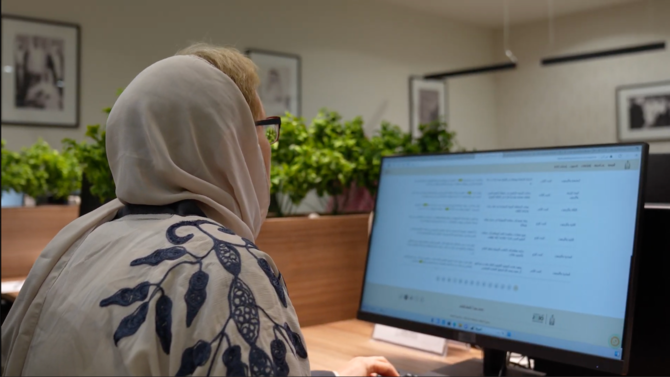
Saudi program opens doors to historical research for local, international scholars
- Starting in May, Darah’s International Visitor Program offers access to rare manuscripts, archival photos, and oral histories
Riyadh: The first session of the International Visitor Program for local and international researchers, organized by the King Abdulaziz Foundation for Research and Archives, known as Darah, will begin in May.
According to Turki Al-Shuwaier, CEO of Darah, the program is a strategic initiative aimed at supporting researchers from within and outside the Kingdom, enabling them to conduct qualitative studies that leverage Darah’s research resources and specialized expertise.
He told Arab News: “The program contributes to strengthening cooperation with academic institutions, research centers, and archival libraries locally and internationally, as well as promoting specialized knowledge production and providing a stimulating environment for the development of research and knowledge paths.”
The program seeks to foster constructive scientific cooperation and open new horizons for documenting national history, giving researchers access to rare documents, historical manuscripts, archival photographs, and oral recordings.
Al-Shuwaier said the program aims to support methodological diversity in handling historical sources and encourage the use of modern academic approaches that contribute to developing knowledge about the history of the Kingdom, the Arabian Peninsula, and the Arab and Islamic worlds.
He added: “Darah seeks to enable researchers to make the most of their research residency at the foundation, and we are keen to provide the necessary academic support and scientific supervision by our specialists, ensuring a successful research experience for all.”
The program targets a diverse range of qualified researchers, including faculty members, graduate students, and specialists in relevant fields. It lasts between one and three months and is extendable “according to a scientific evaluation mechanism.”
Al-Shuwaier noted that Darah is leveraging its capabilities to support serious scientific research, concluding: “Through this program, we seek to contribute to enriching historical knowledge and promoting awareness of the importance of heritage and history in shaping the future.”


