RIYADH: Clay has shaped Saudi Arabia’s architecture for centuries. Now, as the Kingdom’s construction boom accelerates, the ancient material is making a comeback in luxury hotels, cultural landmarks and modern homes as developers seek healthier, lower-carbon building finishes.
The renewed interest reflects a broader shift in Saudi Arabia’s construction sector, where sustainability has become as important as speed and scale. Alongside giga-projects, architects are increasingly turning to natural materials that reduce environmental impact while preserving the Kingdom’s architectural identity.
Long before concrete became the global standard, Saudi builders relied on locally sourced clay to construct homes naturally suited to the desert climate. Thick earthen walls helped to regulate indoor temperatures, while clay’s ability to absorb and release moisture created comfortable interiors without mechanical cooling.
Today, those same principles are returning with modern engineering.
From the restoration of historic mud-brick districts to contemporary developments inspired by traditional architecture, clay is increasingly viewed as both a cultural and environmental asset. Projects such as Diriyah, Red Sea Global developments and the Tuwaiq Heritage Tower demonstrate how traditional earth-based construction methods can be adapted for modern buildings while maintaining the character of Saudi architecture.
The environmental benefits extend beyond heritage preservation.
Unlike cement- or acrylic-based finishes, natural clay plasters require significantly less energy to produce because they are dried rather than fired or chemically manufactured. They contain little or no volatile organic compounds, helping to improve indoor air quality, while their hygroscopic properties allow them to naturally regulate humidity inside buildings.
Perhaps most importantly for Saudi Arabia’s ambitious construction pipeline, clay contributes to lowering embodied carbon — the greenhouse gas emissions generated through extracting, manufacturing, transporting and installing building materials.
Majed Al-Qatari, a Saudi sustainability expert, said that the Kingdom’s unprecedented construction presented an opportunity to rethink not only how buildings were designed but also the materials used to build them.
“Saudi Arabia’s boom in construction paves the way for a much-needed consideration of not just construction volume, but also construction materials,” he told Arab News.
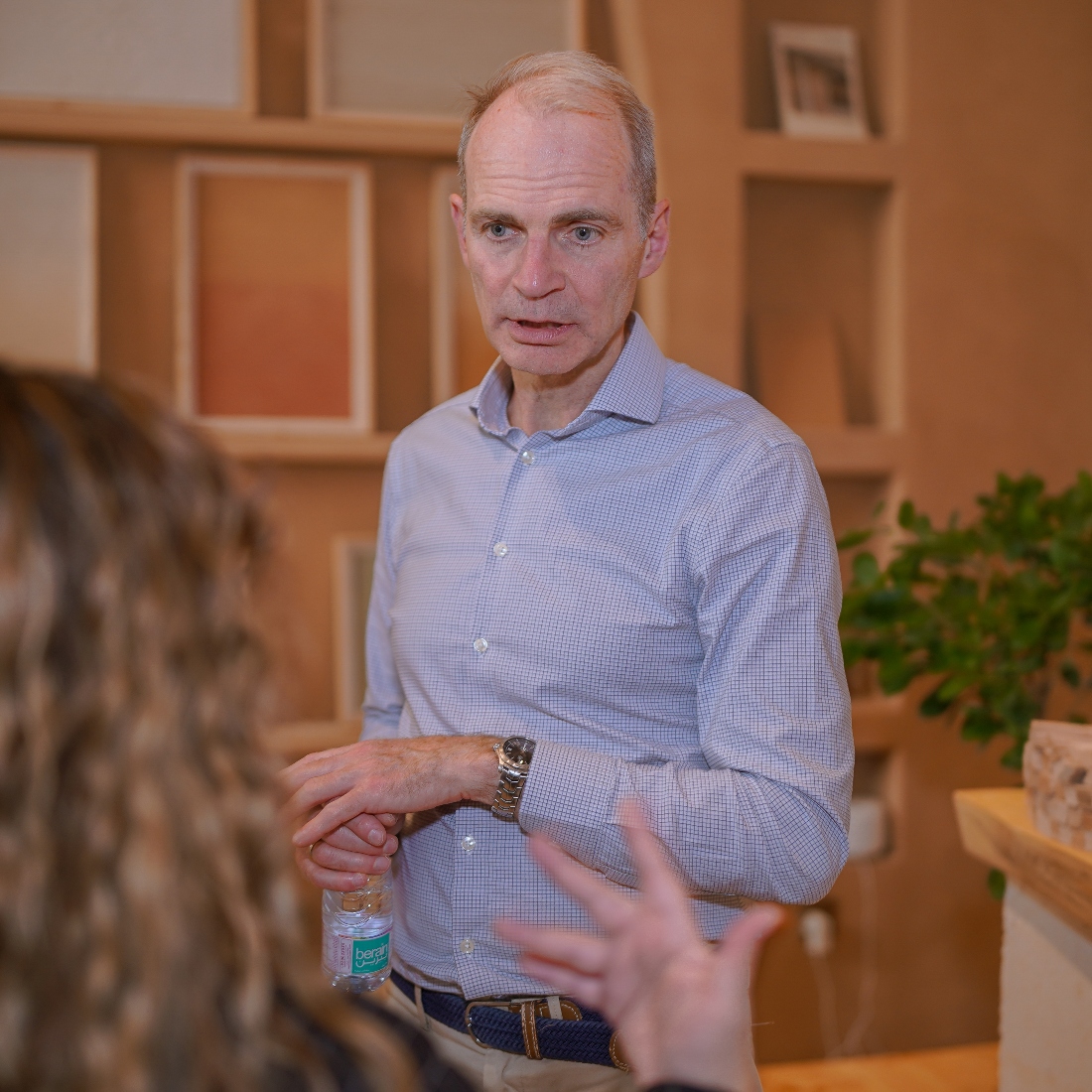
“Natural materials such as clay can help minimize embodied carbon, which refers to greenhouse gas emissions associated with material extraction, manufacturing, transport and installation. Clay requires less industrial processing than many conventional finishing materials, contains no petrochemical binders and can often be sourced locally, reducing transportation emissions while supporting circular economy principles.”
Al-Qatari said that clay also offered operational advantages beyond reducing emissions.
“Clay finishes naturally regulate indoor humidity, improve thermal comfort and are free from volatile organic compounds, creating healthier indoor environments,” he said. “While clay is not intended to replace structural materials such as concrete or steel, it has significant potential as a scalable finishing material that combines traditional building knowledge with modern engineering.”
He added that studies consistently showed that natural clay finishes had substantially lower embodied carbon than acrylic- or cement-based coatings while also requiring less maintenance throughout a building’s life cycle.
“The ecological advantage does not stop at carbon emissions,” he said. “Clay finishes are breathable, repairable and recyclable, making them one of the lowest-impact finishing materials available as Saudi Arabia accelerates sustainable construction and green building certification.”
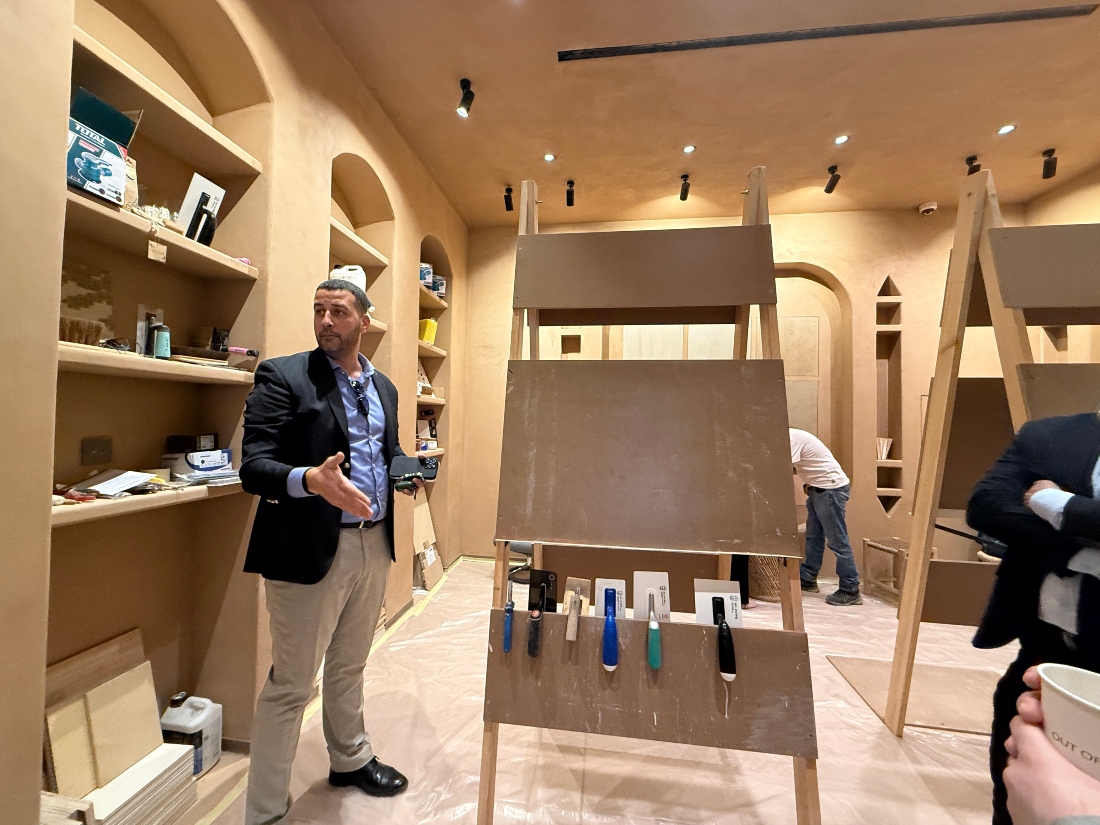
The growing interest was on display on July 27 when Conmarble Atelier hosted British natural plaster manufacturer Clayworks for an interactive workshop in Riyadh, inviting architects, designers and industry professionals to experience traditional clay plastering techniques firsthand.
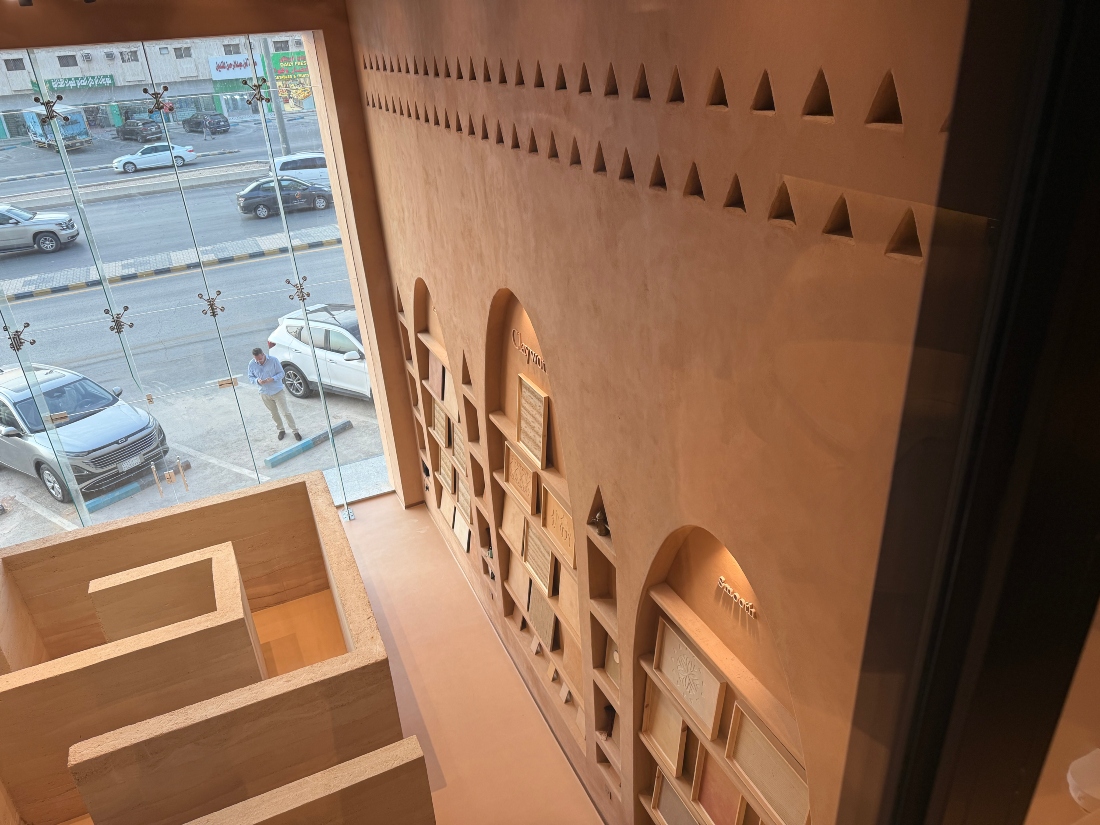
Participants applied the company’s natural clay finishes themselves, reflecting growing demand for materials that combine sustainability with contemporary design.
For Clayworks, the workshop represented more than a product launch. It reflected what the company sees as a rapidly expanding Saudi market driven by Vision 2030 developments.
“We started getting lots of specifications from architects and designers in Saudi Arabia about five years ago,” James Bryce, Clayworks’ representative for Saudi Arabia and the wider GCC, told Arab News.
“The volume kept increasing to the point that we couldn’t ignore it anymore, which is why we needed to be present here and tailor our designs to Saudi Arabia.”
The company now supplies projects including developments by Red Sea Global and Diriyah, where designers are incorporating natural clay finishes into hotels, cultural venues and luxury residential spaces.
Bryce believes Saudi Arabia’s long relationship with earthen architecture gives the Kingdom a distinct advantage compared with many international markets.
“Saudi Arabia has a very strong tradition and relationship with earth and natural materials,” he said. “Where we can show designs that are sensitive to that tradition while also making them contemporary for the future, we’ve found the right balance.”
Unlike conventional paints, Clayworks’ products are made entirely from natural clay. Different textures and finishes are achieved by varying application techniques rather than changing the material itself, allowing designers to create smooth bedroom walls, textured feature spaces or water-resistant bathroom finishes using the same natural base.
“The material is the same. It’s earth. It’s clay,” Bryce said. “What changes is the design around how the client, architect or homeowner wants the space to feel.”
As Saudi Arabia continues investing in tourism, hospitality, residential communities and cultural destinations, demand for environmentally responsible building materials is expected to grow alongside construction activity. In many ways, the Kingdom is returning to one of its oldest building materials not as a relic of the past, but as a practical solution for creating healthier, more sustainable buildings for the future.