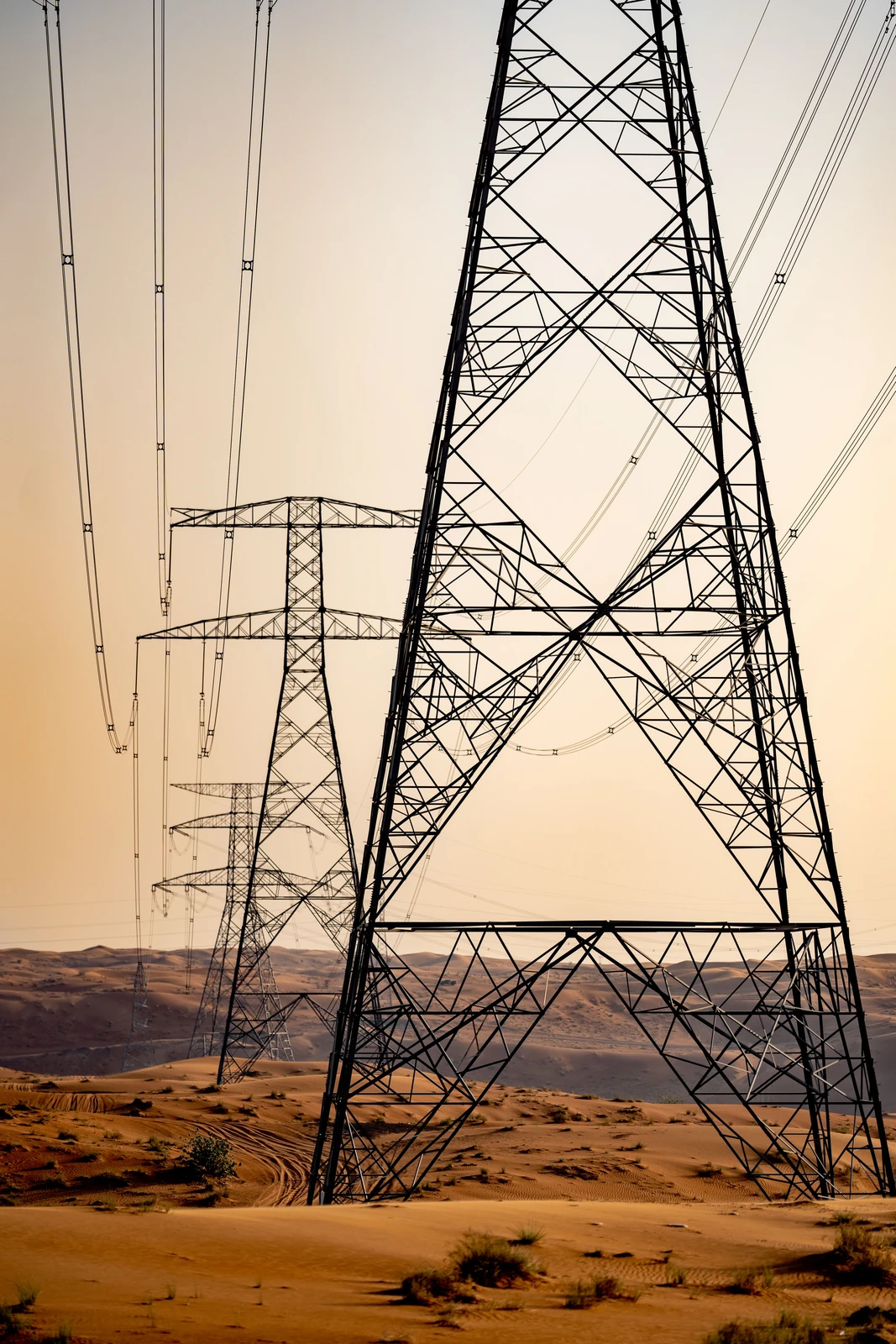
- KAUST researchers develop solution for extreme summer temperatures
RIYADH: Extreme temperatures can place considerable strain on electricity transmission networks, particularly overhead power lines that must carry rising loads while operating within strict thermal limits.
In Saudi Arabia, where summer heat can be intense, keeping these conductors cool is an important challenge for maintaining reliable electricity transmission.
Researchers at King Abdullah University of Science and Technology are developing a specialized coating designed to address this problem. By reflecting sunlight, releasing heat through infrared radiation and allowing internally generated heat to escape, the technology aims to keep overhead conductors cooler and enable them to carry more electricity.
Beyond improving thermal performance, the coating could also increase the capacity of existing infrastructure, potentially deferring some construction, reducing material use and easing transmission bottlenecks, according to Qiaoqiang Gan, professor of materials science and applied physics at KAUST.
Speaking to Arab News, Kai Xu, a postdoctoral fellow at KAUST, explained the sources of heat affecting overhead power lines.
“Overhead power lines are heated both by direct sunlight and by the electrical current flowing through them.”
He added: “During extreme heat, their ability to release heat to the surrounding environment becomes limited, causing conductor temperatures to rise.”
KAUST researchers have developed a silicone-based coating containing boron nitride particles to cool overhead power lines.
Overhead power lines generate heat from two sources: direct sunlight and the electrical current flowing through them.
Higher conductor temperatures increase electrical resistance, resulting in greater energy losses.
Excessive heat can compromise the ability of conductors to carry electricity safely, while also increasing sagging and accelerating long-term material degradation. The KAUST-developed coating is designed to address these risks.
“Our coating addresses these challenges by reflecting most incoming sunlight, efficiently releasing heat through infrared radiation, and allowing internally generated heat to reach the cable surface.”
The material combines a silicone-based polymer with boron nitride particles. This composition enables it to reflect incoming sunlight and release heat through infrared radiation, while also allowing heat generated inside the conductor to reach its surface.
The latter capability is particularly significant because overhead power lines generate heat internally as electricity flows through them, making their cooling requirements different from those of surfaces exposed primarily to sunlight.
“Conventional radiative cooling materials are generally designed for surfaces such as building roofs, where heat primarily comes from sunlight and the surrounding environment,” Xu told Arab News.
The distinction could make the technology particularly relevant to hot climates such as Saudi Arabia, where high temperatures and electricity demand can coincide.
Gan said modeling indicates that the coating could deliver a measurable improvement in Riyadh’s extreme summer conditions.
“Our modeling suggests that, under extreme summer conditions in Riyadh, the coating could increase the current-carrying capacity of thermally constrained overhead conductors by up to 18.3 percent, compared with conventional insulated cables. In practice, this could provide additional operating capacity during periods when electricity demand is particularly high, such as hot summer afternoons when air-conditioning use increases significantly. This additional thermal capacity could help utilities make better use of existing infrastructure.”
Saudi electrical engineer Nada Battyour explained the relationship between conductor temperature and electricity transmission efficiency.
“As the conductor temperature increases, its electrical resistance also increases, leading to higher losses. Higher temperatures can also cause conductor sag and accelerate thermal aging. Since overhead conductors must operate within allowable temperature limits, extreme heat reduces their current-carrying capacity, or ampacity.”
While the initial findings point to potential improvements in transmission capacity, the researchers have yet to establish verified annual energy savings or carbon reductions for a full-scale operating network.
Xu said: “The total energy savings and associated carbon emissions reductions would depend on factors such as conductor type, operating current, line length, climate, and the electricity generation mix.”
Establishing these figures will require further research and assessment under different operating conditions.
Gan also cautioned against viewing conductor cooling as a standalone solution to wider electricity network challenges, particularly as the Kingdom expands renewable energy integration.
“Saudi Arabia and other hot-climate regions could be promising applications, especially where high electricity demand coincides with intense daytime sunlight. However, renewable energy integration also depends on grid stability, storage, and network planning, so conductor cooling would be one complementary solution rather than a complete answer.”
Durability is another important consideration before the technology can move toward practical deployment. Xu said initial testing had produced encouraging results.
“Our initial durability tests have shown encouraging results. The coating maintained its optical properties after 1,000 abrasion cycles and 240 hours of accelerated ultraviolet aging. We also evaluated its resistance to dust accumulation and salt-spray exposure,” he said.
The technology could also support renewable energy integration by creating additional capacity within existing transmission networks. Battyour said this would be particularly relevant for solar power, provided conductors could carry additional electricity without exceeding their operating limits.
“In simple words, yes, the additional capacity could help the grid integrate more renewable energy, particularly solar, by allowing existing transmission lines to carry more electricity without exceeding their limits.
“The greatest benefit, though, would be on heavily loaded transmission lines operating close to their thermal limits, where extreme heat reduces ampacity and creates transmission bottlenecks.”
For the Kingdom, the next step will be determining how the technology can meet practical operating and deployment requirements. Gan told Arab News that the researchers had held meetings with Saudi Electricity Co. regarding their cooling technologies, but further development and practical deployment remain necessary.
He said the team was prioritizing “relevant industry standards, technical requirements, and market qualification criteria.”