

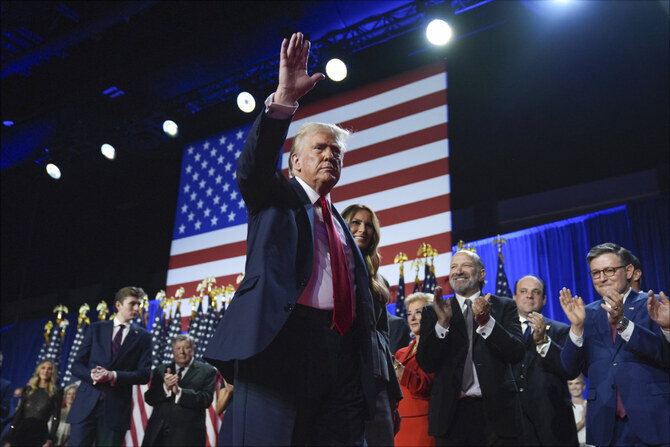

WASHINGTON/TEHRAN: Iran’s foreign ministry on Saturday described as “totally unfounded” US accusations of a plot by Tehran to assassinate president-elect Donald Trump.
The foreign ministry “rejects allegations that Iran is implicated in an assassination attempt targeting former or current American officials,” spokesman Esmaeil Baghaei said in a statement, after US prosecutors announced charges over the alleged plot.
The Justice Department on Friday disclosed an Iranian murder-for-hire plot to kill Donald Trump, charging a man who said he had been tasked by a government official before this week’s election with planning the assassination of the Republican president-elect.
Investigators learned of the plan to kill Trump from Farhad Shakeri, an accused Iranian government asset who spent time in American prisons for robbery and who authorities say maintains a network of criminal associates enlisted by Tehran for surveillance and murder-for-hire plots.
Shakeri told investigators that a contact in Iran’s paramilitary Revolutionary Guard instructed him this past September to set aside other work he was doing and assemble a plan within seven days to surveil and ultimately kill Trump, according to a criminal complaint unsealed in federal court in Manhattan.
The official was quoted by Shakeri as saying that “We have already spent a lot of money” and that “money’s not an issue.” Shakeri told investigators the official told him that if he could not put together a plan within the seven-day timeframe, then the plot would be paused until after the election because the official assumed Trump would lose and that it would be easier to kill him then, the complaint said.
Shakeri is at large and remains in Iran. Two other men were arrested on charges that Shakeri recruited them to follow and kill prominent Iranian-American journalist Masih Alinejad, who has endured multiple Iranian murder-for-hire plots foiled by law enforcement.
“I’m very shocked,” said Alinejad, speaking by telephone to The Associated Press from Berlin, where she was about to attend a ceremony to mark the anniversary of the tearing down of the wall. “This is the third attempt against me and that’s shocking.”
In a post on the social media platform X, she said: “I came to America to practice my First Amendment right to freedom of speech — I don’t want to die. I want to fight against tyranny, and I deserve to be safe. Thank you to law enforcement for protecting me, but I urge the US government to protect the national security of America.”
Lawyers for the two other defendants, identified as Jonathan Loadholt and Carlisle Rivera, did not immediately return messages seeking comment. Iran’s UN Mission declined to comment.
Shakeri, an Afghan national who immigrated to the US as a child but was later deported after spending 14 years in prison for robbery, also told investigators that he was tasked by his Revolutionary Guard contact with plotting the killings of two Jewish-Americans living in New York and Israeli tourists in Sri Lanka. Officials say he overlapped with Rivera while in prison as well as an unidentified co-conspirator.
The criminal complaint says Shakeri disclosed some of the details of the alleged plots in a series of recorded telephone interviews with FBI agents while in Iran. The stated reason for his cooperation, he told investigators, was to try to get a reduced prison sentence for an associate behind bars in the US
According to the complaint, though officials determined that some of the information he provided was false, his statements regarding a plot to kill Trump and Iran’s willingness to pay large sums of money were determined to be accurate.
The plot, disclosed just days after Trump’s defeat of Democrat Kamala Harris, reflects what federal officials have described as ongoing efforts by Iran to target US government officials, including Trump, on US soil. Last summer, the Justice Department charged a Pakistani man with ties to Iran in a murder-for-hire plot targeting American officials.
“There are few actors in the world that pose as grave a threat to the national security of the United States as does Iran,” Attorney General Merrick Garland said in a statement Friday. FBI Director Christopher Wray said the case shows Iran’s “continued brazen attempts to target US citizens,” including Trump, “other government leaders and dissidents who criticize the regime in Tehran.”
Iranian operatives also conducted a hack-and-leak operation of emails belonging to Trump campaign associates in what officials have assessed was an effort to interfere in the presidential election.
Intelligence officials have said Iran opposed Trump’s reelection, seeing him as more likely to increase tension between Washington and Tehran. Trump’s administration ended a nuclear deal with Iran, reimposed sanctions and ordered the killing of Iranian Gen. Qassem Soleimani, an act that prompted Iran’s leaders to vow revenge.
Trump spokesman Steven Cheung said the president-elect was aware of the assassination plot and nothing will deter him “from returning to the White House and restoring peace around the world.”


