- 23 Israeli military vehicles reportedly enter village of Maariya, where soldiers are accused of using excessive force against residents
- Operation spreads to neighboring Koya, where indiscriminate gunfire damages property and forces villagers to temporarily leave their homes
LONDON: Israeli troops raided homes, beat an elderly man and fired toward residential areas during an incursion into southern Syria in the early hours of Tuesday morning, according to Syrian media reports.
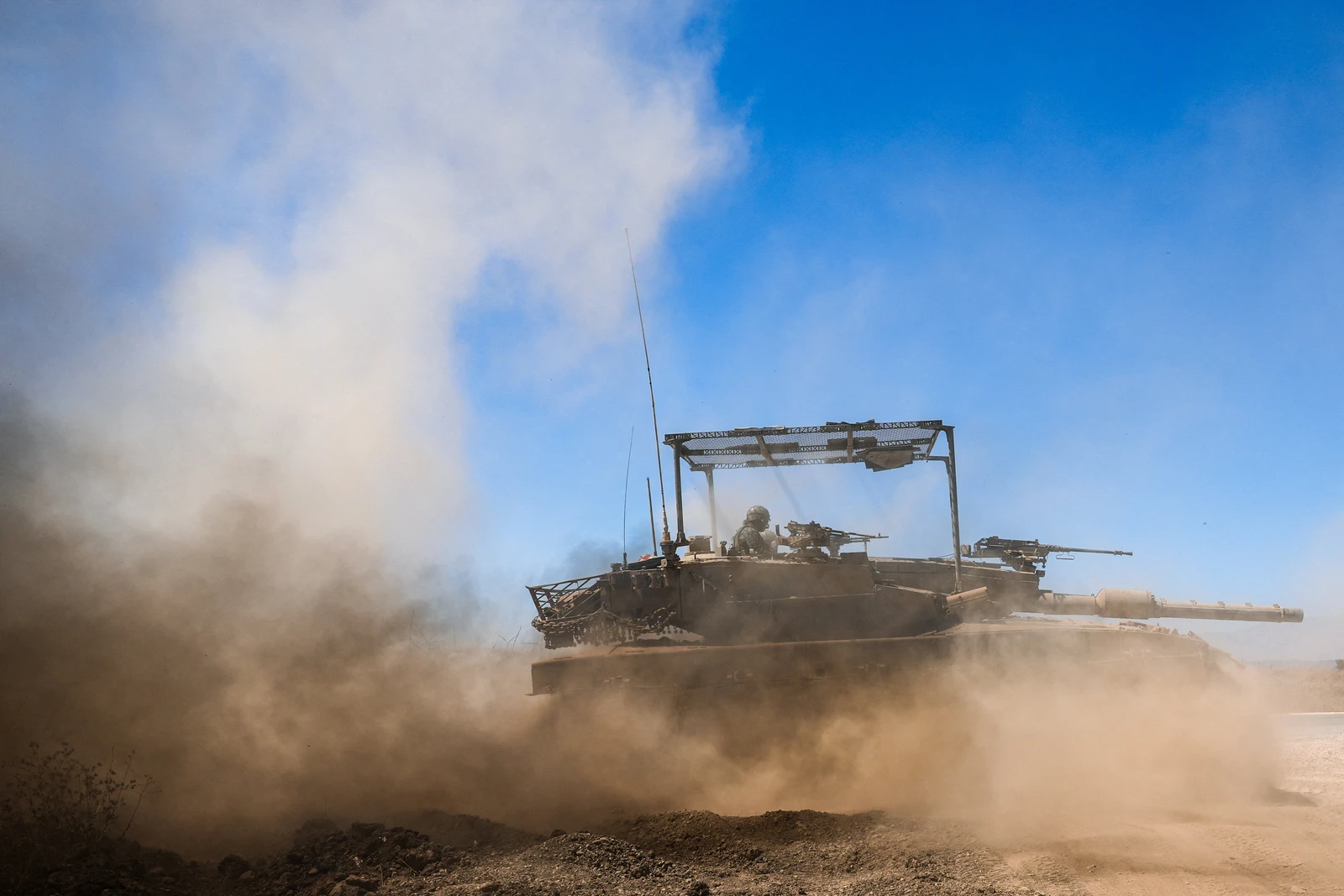
A convoy of 23 Israeli military vehicles entered Maariya, a village in western Daraa province, where soldiers searched homes and fired into the air, state-run TV news channel Al-Ekhbariya reported. The troops beat the elderly man and damaged his vehicle in an area between Maariya and the nearby village of Abidin, it added.
The operation extended to neighboring Koya, where Mayor Amjad Suleiman said Israeli troops advanced into farmland west of the village from the direction of Maariya before firing toward residences.
“During the incursion, Israeli forces opened indiscriminate and brutal fire on residents’ homes, causing one house to burn down completely,” Suleiman added. Several shells landed in the outskirts of Koya, he said, and troops were accompanied by drones and helicopters, prompting some residents to flee.
Local news website Daraa24 said that gunfire set a room in one house on fire but no casualties were reported. It also said Israeli forces had fired five shells at the area around Koya.
Al-Ekhbariya reported that Israeli troops stationed at Al-Jazira barracks in western Daraa had fired toward farmland between Koya and Maariya, where two artillery shells detonated. The broadcaster also said that Israeli helicopters had fired toward the plains surrounding Koya.
The shelling and gunfire reportedly forced families to flee to neighboring villages. They returned after the incursion, which began around midnight and continued until about 2 a.m. on Tuesday.
Mayor Suleiman said that “at the moment, relative calm is returning.”
Koya was the scene of a deadly confrontation on March 25, 2025, when Israeli forces shelled the village following clashes with residents who resisted an incursion, killing or wounding a number of them.
Israel has expanded its military presence in southern Syria since the fall of the former president, Bashar Assad, and his regime in December 2024, with Israeli forces entering the buffer zone established under a 1974 disengagement agreement and advancing into other parts of the south.
The new authorities in Damascus have repeatedly demanded that they withdraw, condemning the incursions as violations of Syrian sovereignty and the prior agreement.
Diaa Qaddour, a Syrian security and military researcher, told Asharq Al-Awsat newspaper that Israel’s continuing presence in southern Syria risked prolonging a strategic impasse by prioritizing territorial control over stable political arrangements.
He said that increasingly frequent Israeli incursions in the Yarmouk Basin and rural Quneitra “reflected an effort to impose an expanded buffer zone following Assad’s fall.”
He added: “Israel was pursuing that goal through a doctrine of forward deterrence, often invoking flimsy security justifications for raids and shelling.”
Maintaining this presence in Syria carried mounting military costs, Qaddour said, as it tied up personnel and resources, while also increasing the regional pressure and eroding Israel’s international legitimacy.
He added that the window of opportunity for authorities in Israel to reach a mutually acceptable security arrangement with their counterparts in Syria was narrowing.
“Continuing this approach does not achieve sustainable security, but deepens the impasse and turns an opportunity into a growing danger for both sides,” he warned.