- Zeeshan Ali is set to become first foreign astronaut aboard China’s Tiangong space station
- Pakistani pilot is expected to spend five to 10 days aboard Tiangong conducting experiments
ISLAMABAD: Muhammad Zeeshan Ali became the first Pakistani to reach orbit on Wednesday after China launched its Shenzhou-24 spacecraft, sending him and two Chinese crewmates toward Tiangong, where he is set to become the station’s first foreign astronaut.
The mission extends Pakistan’s space partnership with China from satellite launches to human spaceflight. The two countries signed an agreement in February 2025 to train Pakistani astronauts for the mission. Ali, a 40-year-old pilot, was selected to fly, while fellow Pakistani pilot Khurram Daud trained as his backup.
For Beijing, the flight marks a new stage in opening its space station to international partners. China completed Tiangong in 2022 and had already selected research projects involving institutions from 17 countries in partnership with the United Nations. It is now preparing to host its first foreign astronaut as NASA plans for the retirement of the International Space Station around 2030.
“From highways to information superhighways, and now to skyways, Pakistan-China friendship and CPEC are rising even higher than the skies,” Pakistan’s Planning Minister Ahsan Iqbal said in a statement after attending the launch.
Iqbal said he had proposed sending a Pakistani astronaut on a Chinese mission in 2017–18, as the two countries looked to expand cooperation beyond infrastructure projects under the China-Pakistan Economic Corridor. He said the launch came in the year the two countries mark 75 years of diplomatic relations.
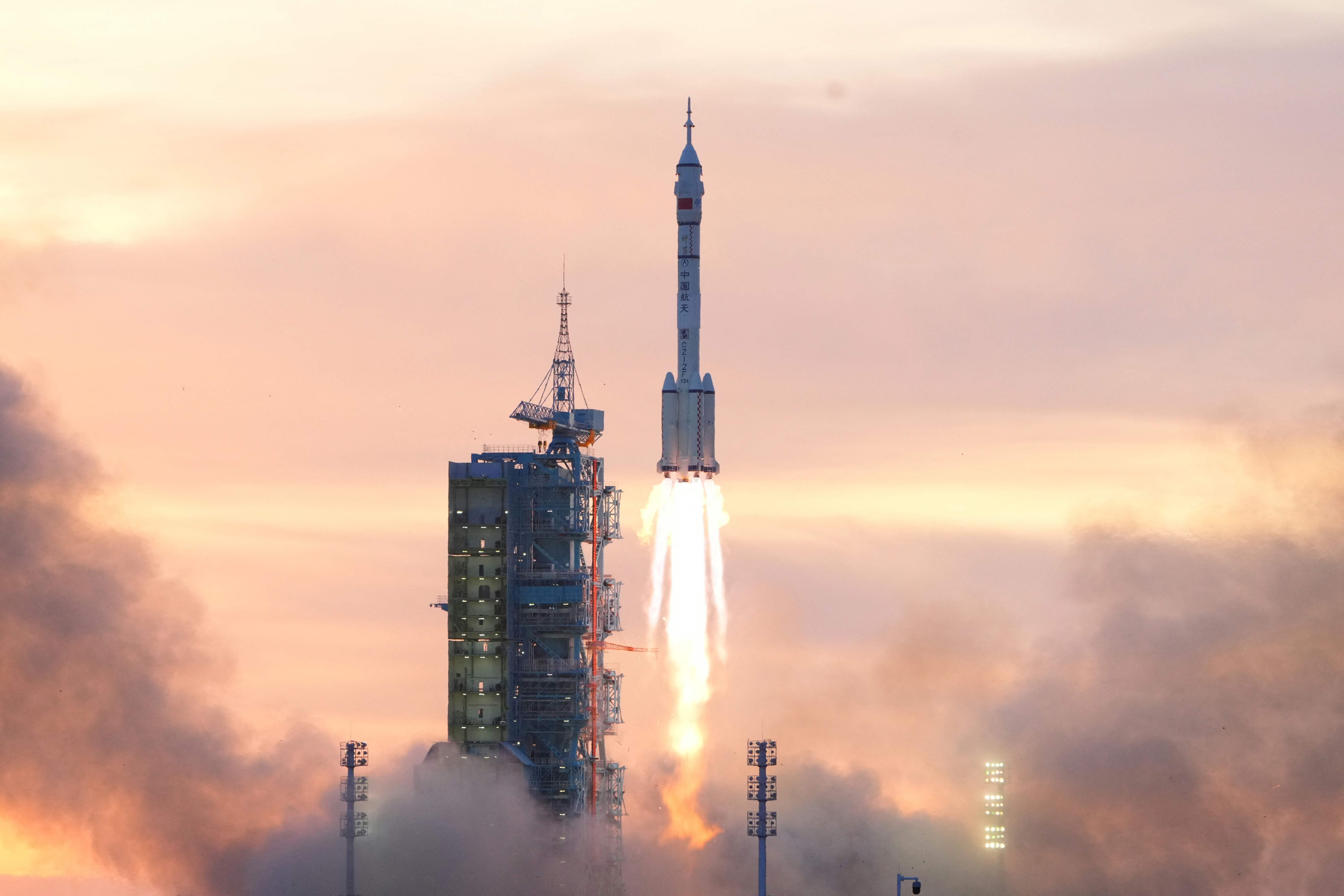
The spacecraft lifted off aboard a Long March 2F rocket from the Jiuquan Satellite Launch Center in northwestern China at 8:18 a.m. Beijing time (5:18 a.m. in Pakistan).
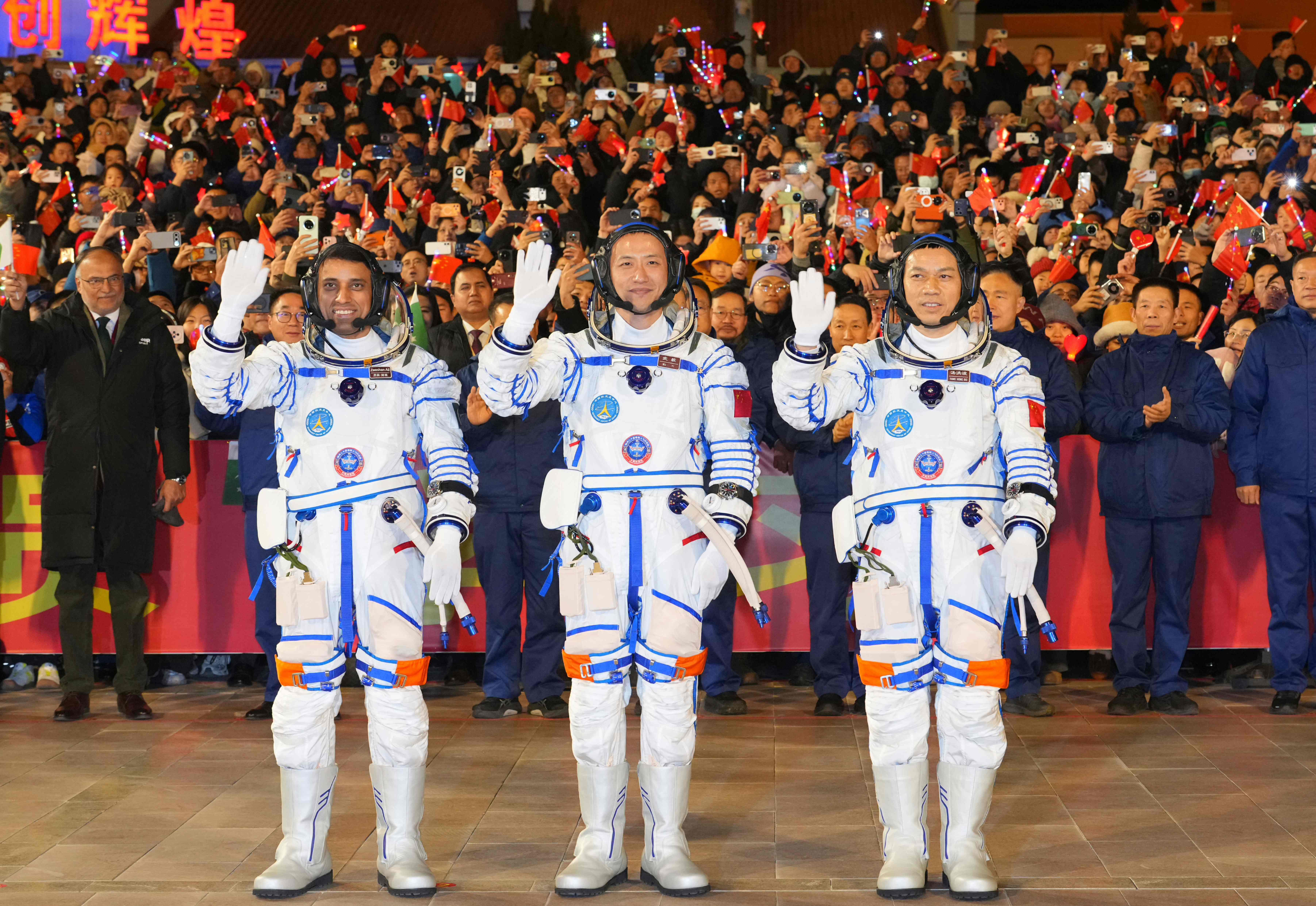
Ali is flying as a payload specialist alongside Chinese mission commander Tang Hongbo and flight engineer Wu Yi. China’s state broadcaster reported that all three were in good condition after launch.
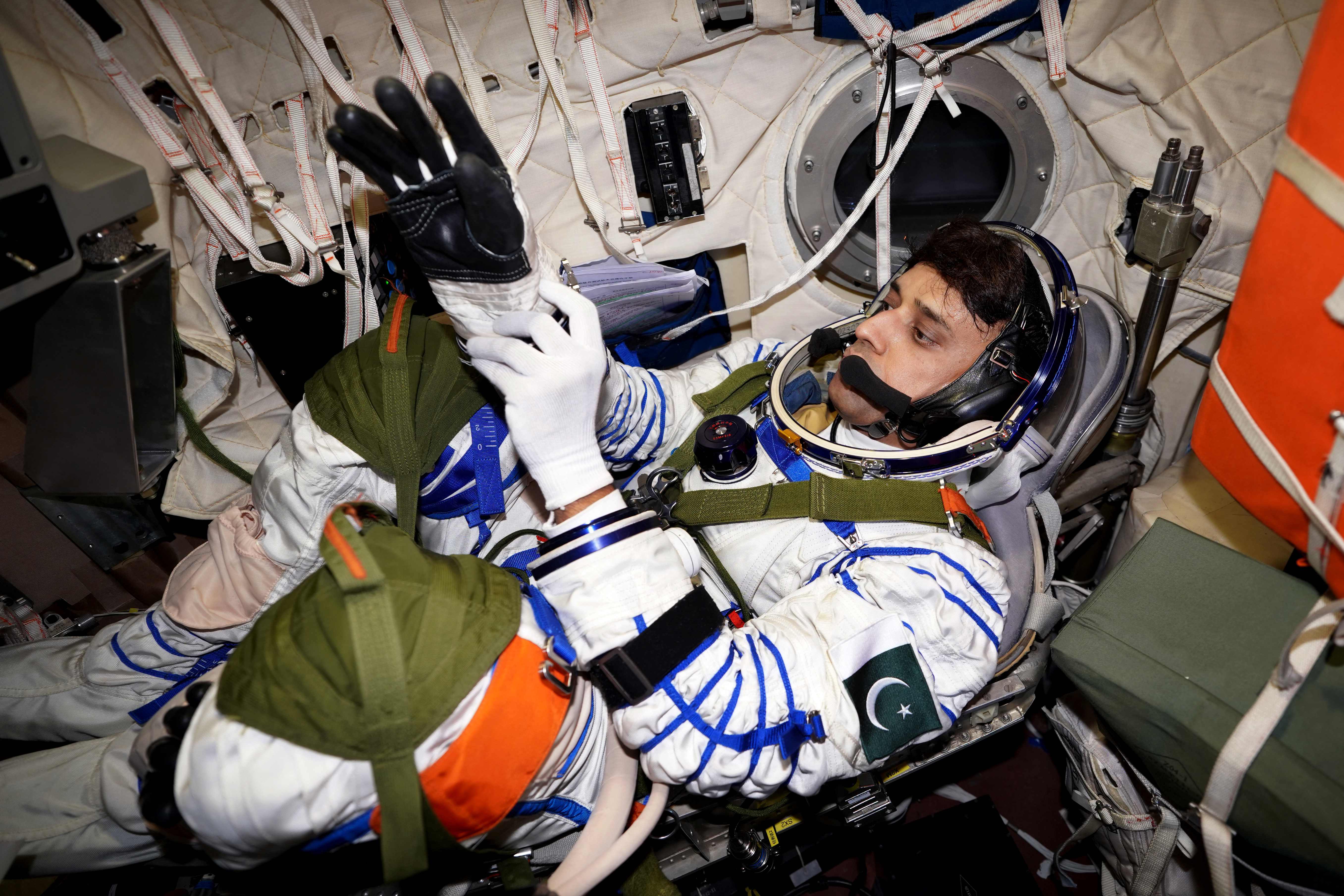
Ali is expected to spend five to 10 days aboard Tiangong. His research includes an experiment involving photosynthetic microorganisms, and he is due to return to Earth aboard the outgoing crew’s Shenzhou-23 spacecraft.