- The US military described the strike as a self-defense operation against the Islamic Revolutionary Guard Corps
- Iranian officials reported no damage to residential or commercial areas following the strikes
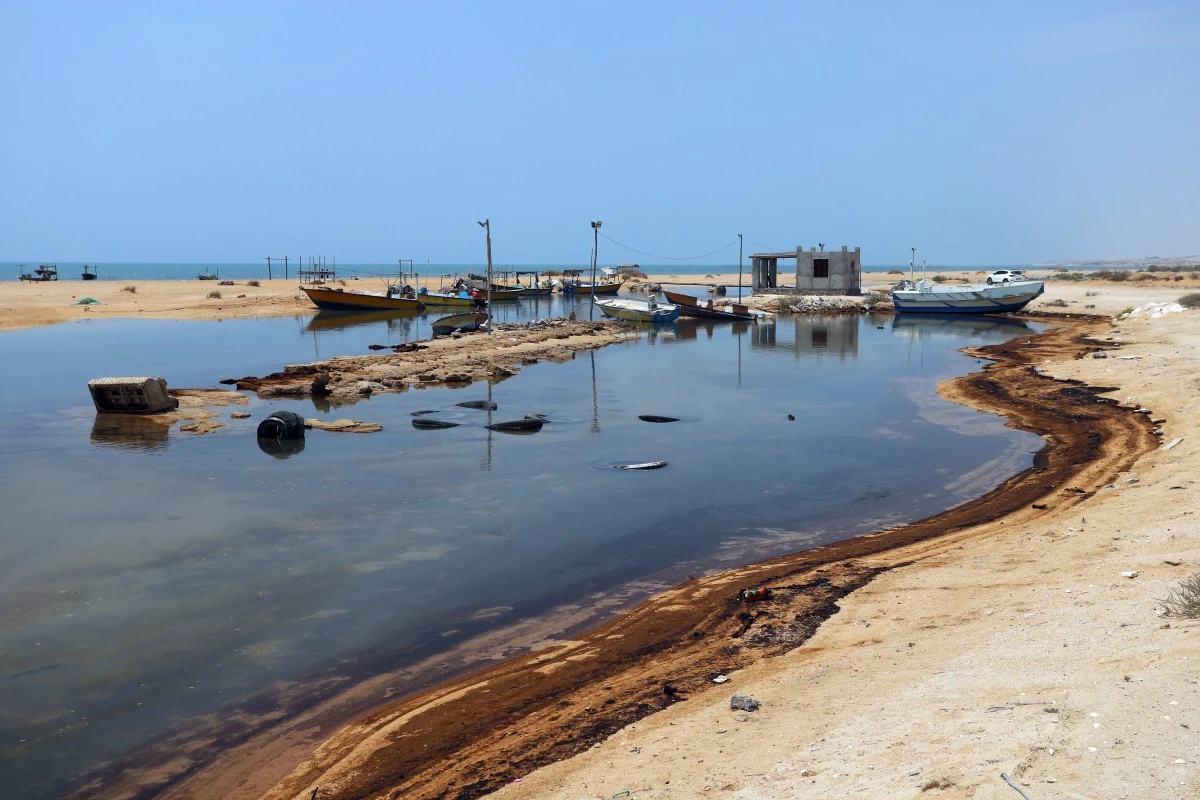
WASHINGTON/TEHRAN: American fighter jets struck an Iranian missile site on Qeshm Island in the Strait of Hormuz on Tuesday in response to "aggression" by Tehran's forces, a US military official said.
The warplanes "used precision munitions to strike an Islamic Revolutionary Guard Corps (IRGC) missile launch site on Qeshm Island in self-defense," the US official told AFP on condition of anonymity, adding that the strike was in response to Iranian "aggression targeting US personnel and assets."
Earlier Tuesday, a local Iranian official said the United States carried out several attacks on Iran’s southern Island of Qeshm, located in the Strait of Hormuz.
“The American attack on locations on Qeshm island caused no damage to residential, commercial, or infrastructural areas,” said Ahmad Nafisi, deputy provincial governor of the southern province of Hormozgan, quoted by the official IRNA news agency.
“The situation on Qeshm island is under control, and all relief, service, and executive agencies are on full alert,” he added.
“The sounds of five to six explosions were heard on Qeshm on Tuesday evening,” IRNA said.
Earlier in the day Iran’s Revolutionary Guards said they had launched a drone attack targeting a radar system in Bahrain operated by the United States.
“Combat drones belonging to the Revolutionary Guards carried out a precision operation this morning, targeting a radar system operated by US forces at the Sheikh Isa Air Base in Bahrain,” the Guards’ Sepah news website said.
It added that the attack was in response to the “repeated violations of Iranian airspace by US military drones.”
Since the outbreak of the Middle East war in late February, Tehran has attempted to restrict traffic through the strategic waterway, insisting vessels use only routes authorized by the Islamic Republic.
It has regularly targeted ships that transit without its authorization.
The United States has, in response, imposed a naval blockade on Iranian ports and helped tankers travel the strait, which normally carries about one-fifth of global oil supplies.
In recent weeks, Tehran has made multiple announcements saying ships have caught fire in the strait, often claiming they struck mines.
On Tuesday, the Iranian armed forces said three oil tankers struck naval mines while attempting to transit Hormuz.
The US military recently said it had cleared all mines from the main routes through the waterway.
US Central Command, which oversees US military operations in the region, said last month that it had helped Gulf countries export 1.5 billion barrels of oil via Hormuz since the summer.