- Social media channels have been forecasting a massive Russian air strike
- Residents are preparing for a long night on the cold marble floors of the station
KYIV: Wrapped in her puffer jacket and woollen hat, Katerina Liubychenko pitched her tent on the freezing marble floor.
With her husband and toddler, Alisa, she planned to spend the night underground. It promised to be a long one.
Monitoring channels on social media forecast a massive Russian air strike was looming.
The family, who live on the tenth floor of an apartment block in the capital’s northern suburbs, decided not to take any risks.
“It’s mainly so our daughter hears fewer explosions,” the 32-year-old mother said.
“We get here at her bedtime. She plays a bit, we read her a book, then she falls asleep.”
Alisa bounced on the inflatable mattress that her father was trying to pump up, teasing him with a torch and laughing.
The two-year-old does not fully comprehend what is going on — but she understands enough.
“She knows that an alert means there is danger and that you have to hide... at nursery, they are used to it,” her mother said.
“It’s heartbreaking to have to stop our children from living their lives, when we have to explain to them that they can’t do this or go for a walk there.”
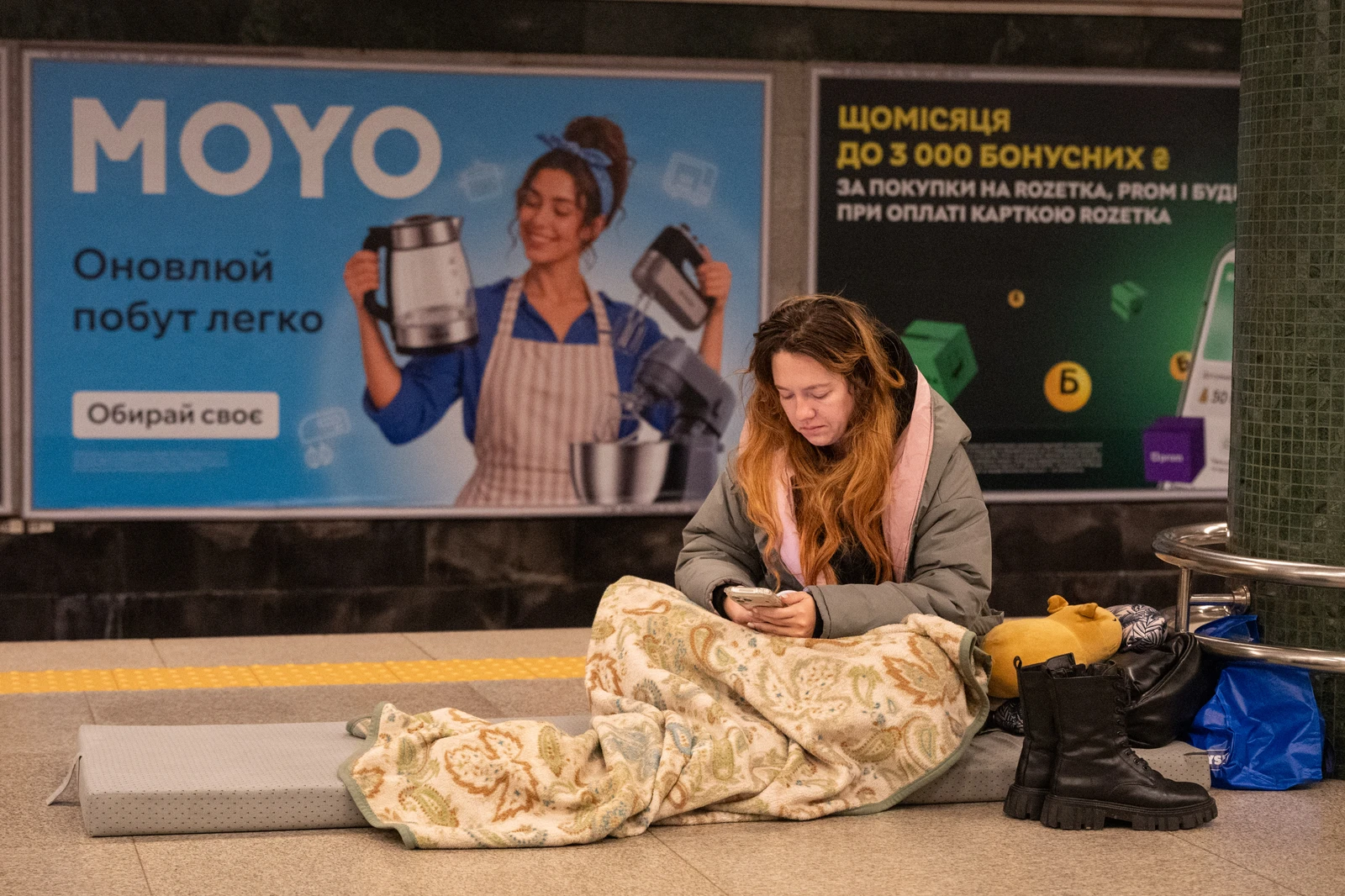
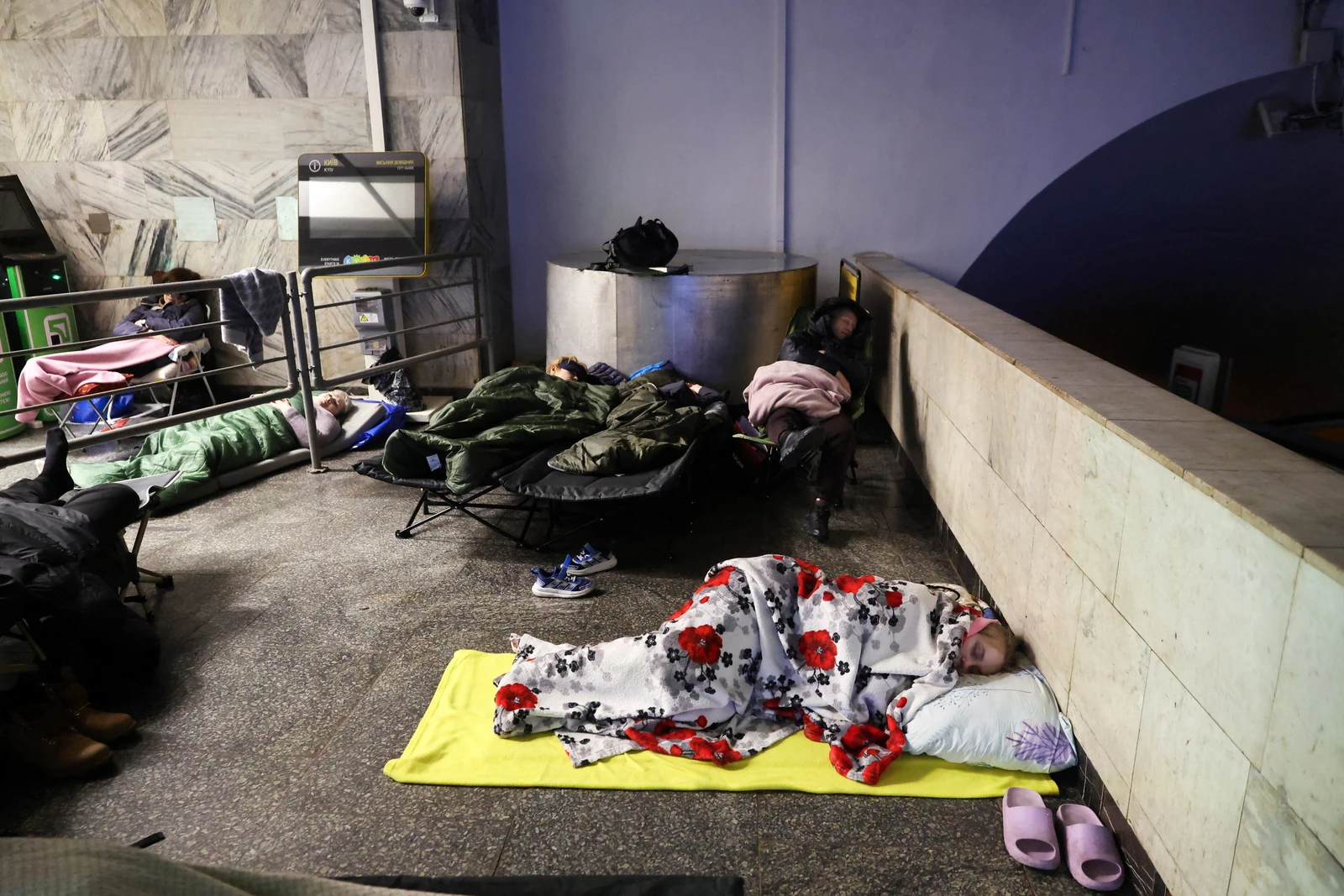
Around them, the Akademmistechko metro station was filling up.
Hundreds of people, carrying bags and covers, tents and camp beds made their way down, hoping for a few hours of rest.
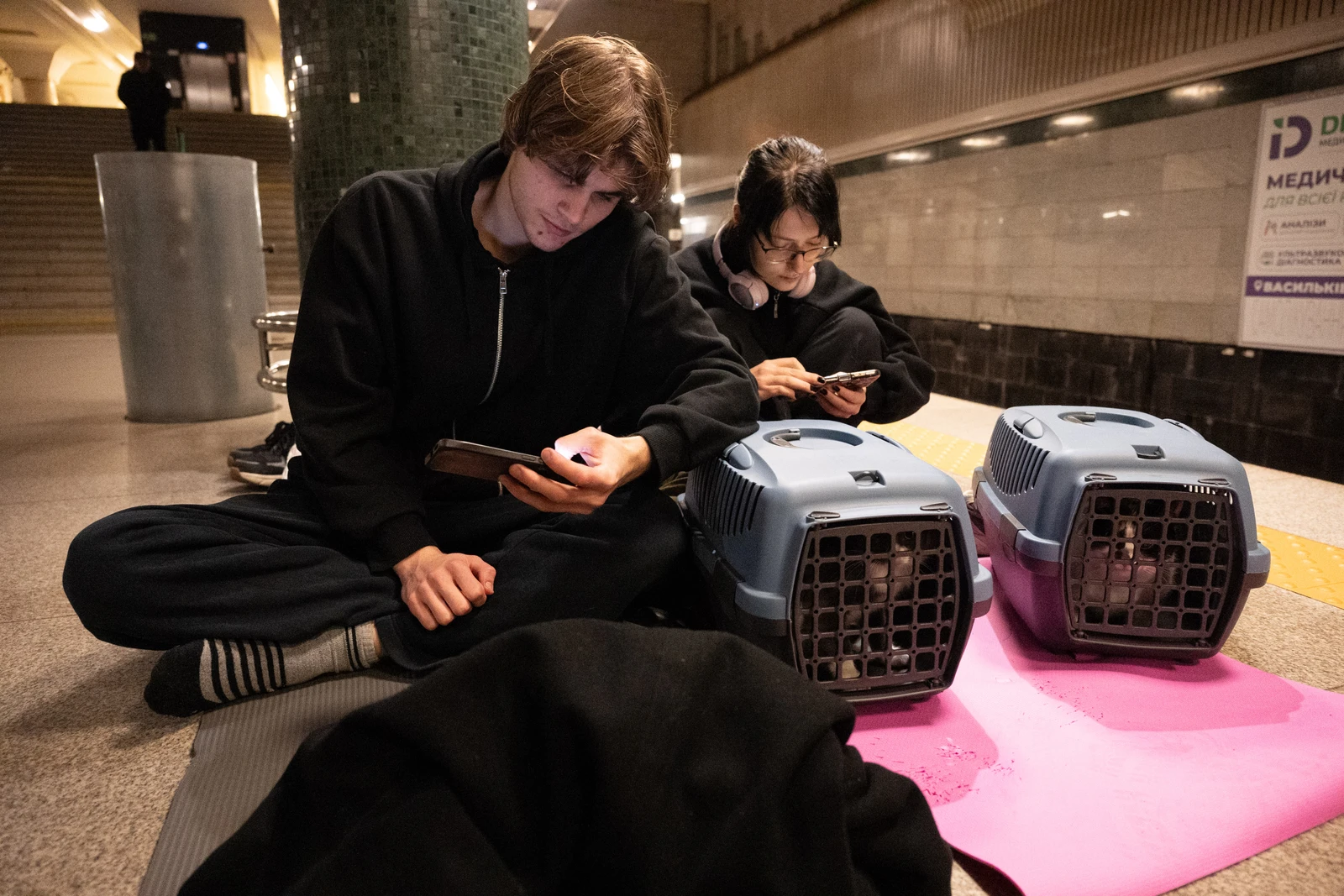
Two teenagers scrolled their phones frantically, looking at the latest news from Telegram: “four bomber planes should take off from the Russian base Ukrainka in several hours... the most likely target is Kyiv.”
Then, they switch to TikTok.
Further down, a ginger cat dressed in pink velvet curled up against its owners. Two plump bulldogs stared on.
- ‘Refugee’ —
Bogged down at the front some 450 kilometers to the east, Russia has intensified its bombardments of Kyiv over the last six months.
Ukraine lacks enough air defense missiles from its Western allies to properly fend them off.
From her glass booth, lively metro employee Tetiana presided over the underground village, noting arrivals in her book and stopping people clambering over turnstiles.
“When it’s calm, you have to pay to enter. But in the case of an alert, or after midnight when the metro stops, it’s free for everyone,” the 48-year-old said.
On some nights, up to 1,500 people have crammed into her station.
But “a lot of people have left” Kyiv since the summer.
Katia, a 38-year-old lawyer, has considered leaving, but not yet brought herself to pack up.
“I don’t really have a life anymore. Everything is dictated by these attacks.”
Almost all of her friends have moved to London or Paris.
“I don’t want to be a ‘refugee’,” she said, worrying what would become of her career in a new country.
As it edged closer to midnight, laughter from boisterous children and the high-pitched screeches from approaching trains broke the heavy silence.
Many slipped silently into their sleeping bags, safe in the underground warren, surrounded by thick walls and packed earth.
- Newborn -
01:00 a.m. Arkadi Sahane, 67, pulled out a thermos of piping hot coffee.
“I can close my eyes for an hour or two, but you can’t really call it sleep,” he said.
Deep bags under his eyes betrayed the exhaustion. His son serves in the army, his mother is very elderly.
He went back to work at the start of the Russian invasion, getting a job at a museum.
“If the alert ends at six, at eight I have to be at the museum. You have to earn money, help the country.”
On one recent freezing night, he recalled seeing a man wearing only his underwear burst into the shelter, carrying a newborn baby in his arms.
He cannot forget the scene.
01:20 a.m. The attack has started. Russian ballistic missiles are heading to the capital.
Within moments, the first blast echoed out. Nobody knows for now whether it hit the target or was intercepted.
Over the next four hours, six waves of missiles are reported to be heading for Kyiv — a “vicious” tactic designed to inflict maximum destruction and death, President Volodymyr Zelensky said Friday.
As the sun rose, the toll became clear: Six killed in Kyiv, three bridges hit.
Alisa would head off to daycare, Arkadi to the museum.
Katia, the lawyer, left to go on wondering: “How much longer is this going to last?”