- Turkish vessel Oruç Reis to survey two offshore areas over six months
- Malik says Hormuz crisis exposed Pakistan’s thin energy buffers
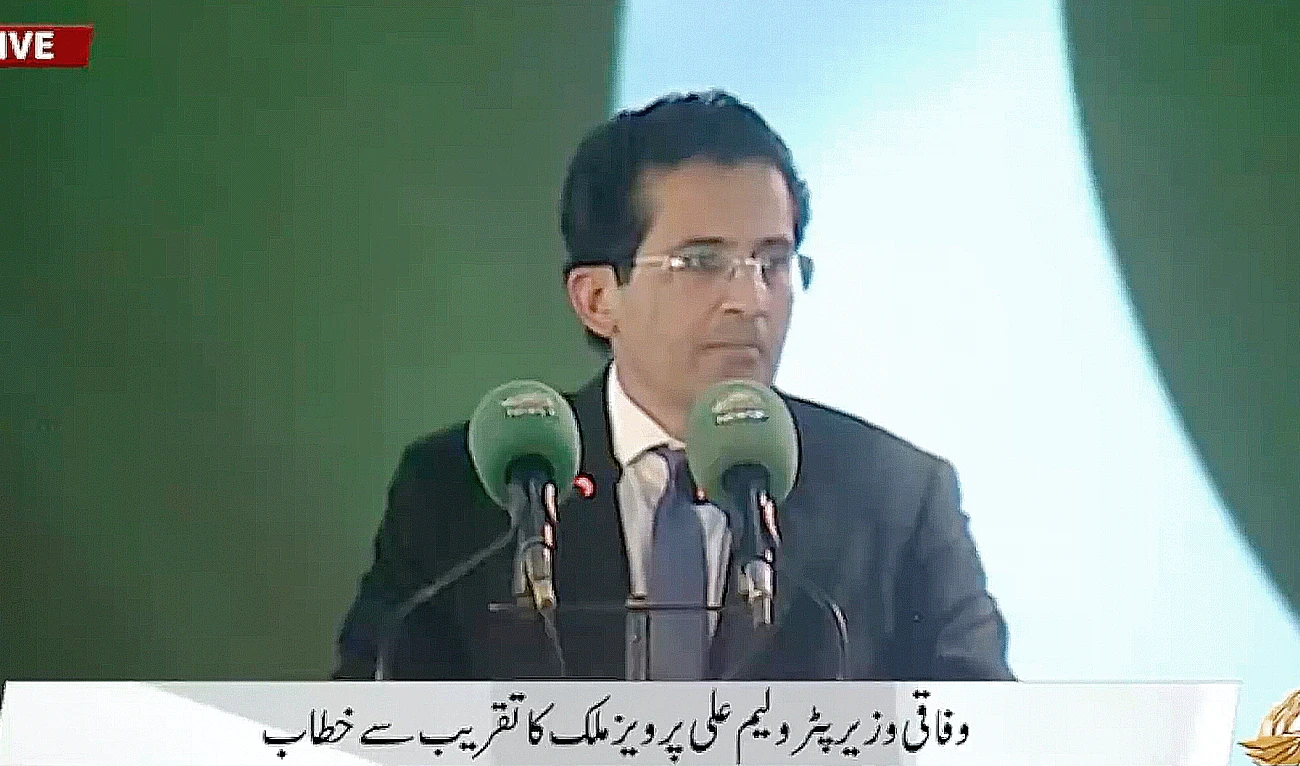
KARACHI: Pakistan aims to begin offshore oil and gas drilling early next year once a Turkish seismic survey off its coast is completed and analyzed, Petroleum Minister Ali Pervaiz Malik said on Friday.
Malik was speaking at a welcome ceremony in Karachi for Türkiye’s seismic research vessel Oruç Reis, attended by Turkish Energy Minister Alparslan Bayraktar and Pakistan’s Deputy Prime Minister Ishaq Dar. The ship docked at Karachi port on Thursday.
Pakistan, which depends heavily on imported fuel, is trying to develop domestic energy resources after years of limited offshore exploration. Its last major offshore drilling attempt, in 2019, failed to find commercially viable oil or gas.
“We are hopeful that this data acquisition and interpretation exercise would be completed under the personal watch of His Excellency, the Energy Minister of Turkiye, in six months, leading to the start of the drilling operations early next year, inshallah,” Malik said.
The Oruç Reis will first gather three-dimensional seismic data across 670 square kilometers in the Indus-C Block off Karachi, work expected to take about 50 days once it reaches the survey area, according to Türkiye’s energy ministry. It will then collect two-dimensional data along 2,353 kilometers of survey lines in the Makran Blocks, which the ministry expects to take 25 days.
The survey follows Pakistan’s award of 23 offshore exploration blocks last year in its first such auction in nearly two decades. Turkish Petroleum holds a 25 percent stake in Indus Block C and operates it, alongside Pakistani firms PPL, OGDCL and Mari Energies. Malik said Türkiye’s agreements with Pakistan cover three offshore and two onshore blocks.
“Offshore exploration is complex, capital-intensive and uncertain, but nations do not secure their energy futures by leaving their potential unexplored,” he said.
Malik linked the push for domestic resources to the disruption of shipping through the Strait of Hormuz since the war in Iran began, which he said had made energy security a concern for ordinary Pakistanis.
“Pakistan entered this crisis on 28th of February with both deficient buffers and high exposure to the Hormuz,” he said.
He said the country had avoided any fuel stockouts in the six months since, and that the government was now building strategic and commercial storage and strengthening its infrastructure to bring in all forms of energy.
“Every effort to develop indigenous resources reduces our external vulnerability and strengthens our economy,” Malik said.
The Oruç Reis previously surveyed waters off Somalia, where Türkiye says the data helped prepare for a later deepwater drilling operation.