- 40-year-old fighter pilot became first Pakistani to orbit Earth, first foreign astronaut aboard China’s Tiangong space station
- At Islamabad exhibition, students explore virtual space station, reflect on how Ali’s flight may change their own career plans
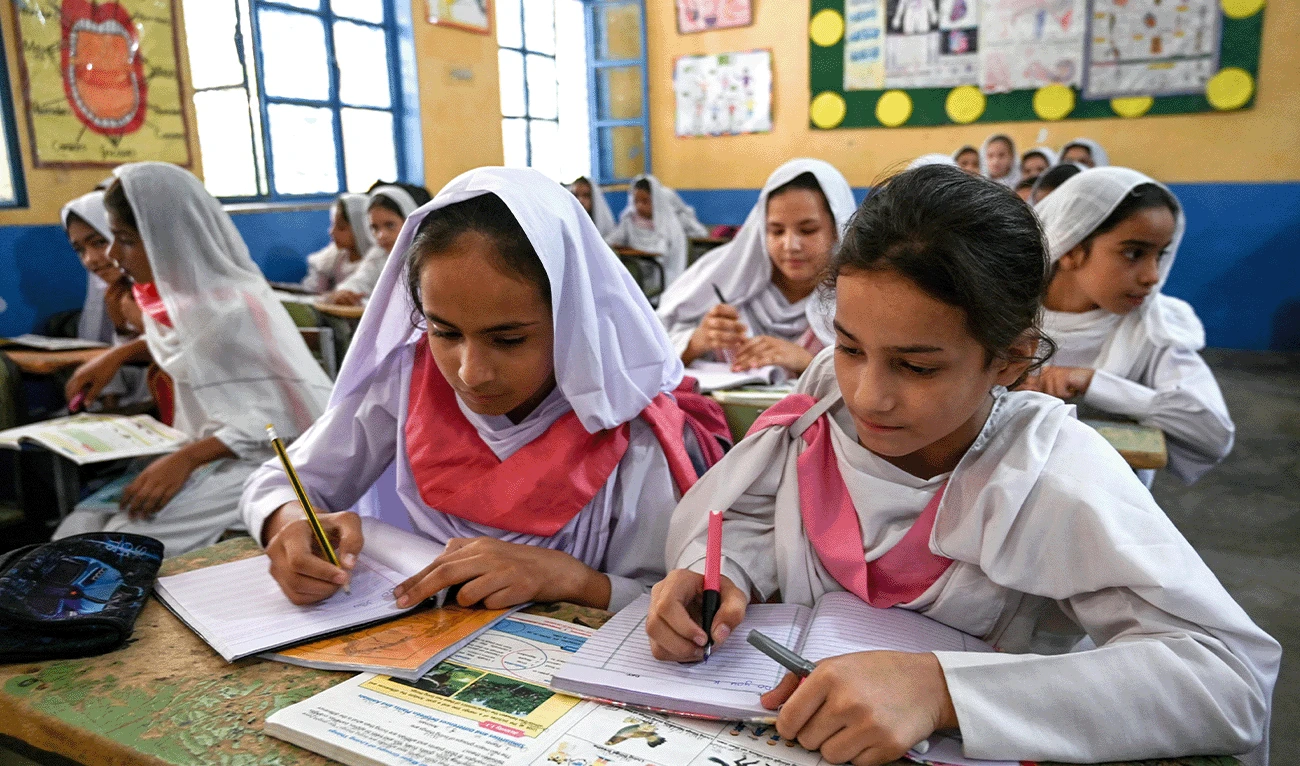
ISLAMABAD: Pakistani university students visiting a space exhibition in Islamabad on Thursday hailed astronaut Muhammad Zeeshan Ali as a “new hero,” saying his historic journey aboard China’s Tiangong space station had inspired them to look beyond conventional career choices and consider opportunities in space science.
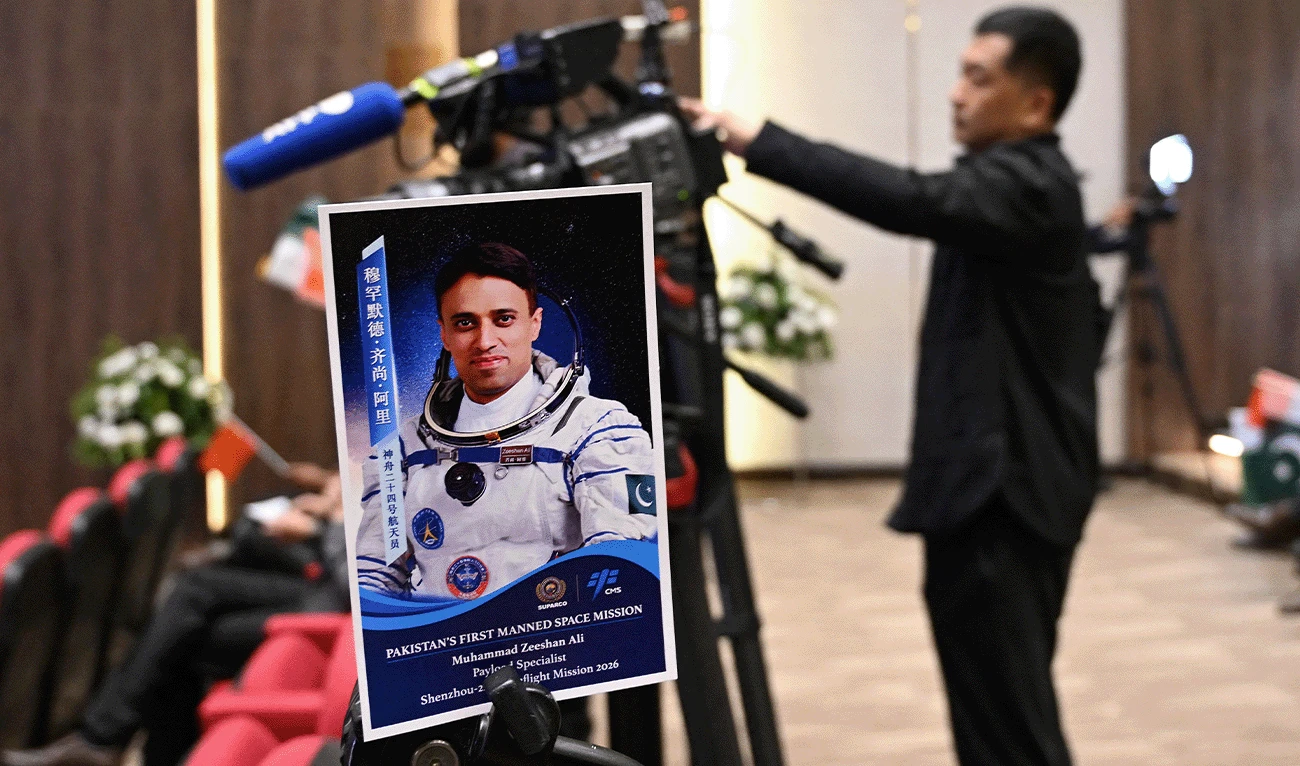
Ali, a 40-year-old fighter pilot, became the first Pakistani to reach orbit and the first foreign astronaut to enter China’s Tiangong space station on Wednesday. He flew aboard the Shenzhou-24 spacecraft alongside Chinese astronauts Tang Hongbo and Wu Yi and is expected to spend about a week aboard the orbiting laboratory, conducting scientific experiments selected by Pakistani universities and research institutions.
His mission has become the focus of a four-day public exhibition, “Kehkashan – Mission Control Center,” at Islamabad’s Pak-China Friendship Center. Inaugurated by Information Minister Attaullah Tarar on Wednesday, the exhibition offers visitors, particularly children and students, an opportunity to follow Ali’s mission and learn about the science behind human spaceflight.
“We have got a new hero, Wing Commander Zeeshan Ali, and he motivated us students to look forward and achieving [our] dreams in a better way,” Muhammad Huzaifa, a student at Islamabad’s National University of Technology (NUTECH), told Arab News.
“He gave us the idea of working hard as well as exploring ... new career paths,” he added.
For some students, the significance of the mission lay in seeing a Pakistani accomplish something they had previously considered a distant possibility.
“We never thought that someone from Pakistan would go into space so soon,” Safa Noor, an undergraduate student at the International Islamic University Islamabad, said. “It was a dream shared by many of us, but it has finally become a reality in 2026, thanks to Zeeshan.”
If given the chance to meet Ali, Noor said, she would like to ask him about his discoveries, daily routine and experience of living and working in space.
For Nasir Kamal Dawar, a 22-year-old student at Quaid-i-Azam University, the mission raised a different question: how might his own career choices have changed had Pakistan achieved this milestone a decade earlier?
Dawar said he and his fellow students had initially become interested in the exhibition after searching for information about the Pakistani astronaut and his mission.
“One thing we have taken away from this exhibition is that although we have already chosen our own career paths, we can introduce the next generation to this field,” he told Arab News.
“Perhaps if Zeeshan Ali had gone into space or entered this field 10 years ago, we might have considered pursuing it ourselves,” he continued, adding that Ali’s journey had made many people realize that medicine and engineering were not the only career options.
“There are so many other fields in which we can excel and make our country proud.”
The exhibition features a dedicated pavilion by Pakistan’s Space and Upper Atmosphere Research Commission (SUPARCO), providing information about the scientific experiments being conducted during Ali’s mission. Visitors can also explore a simulated space station using virtual reality technology and watch documentaries on space exploration.
For younger visitors, organizers have arranged a special animated program, “Journey of a Firefly to Space,” while photographs of Ali and displays about his mission offer visitors a glimpse into Pakistan’s participation in human spaceflight.