- Extraordinary meeting examined military, operational and technical support for Kingdom, Turkish foreign minister says
- Saudi Arabia, Pakistan and Türkiye also discussed peaceful resolution as alliance moves toward institutionalization
ISLAMABAD: Saudi Arabia, Pakistan and Türkiye discussed military and technical support for the Kingdom alongside diplomatic efforts to resolve tensions over Yemen at an extraordinary meeting of their Makkah defense alliance, Türkiye’s foreign minister said.
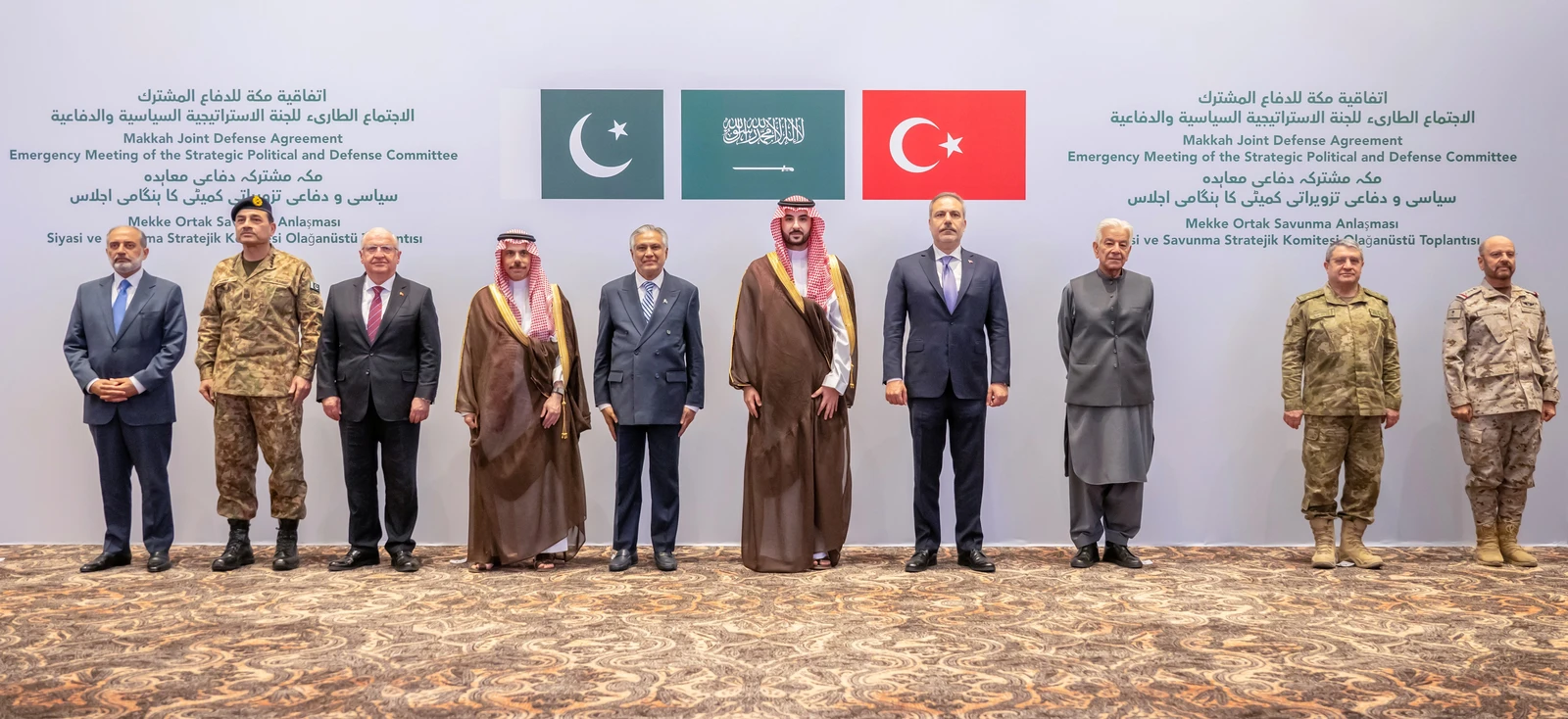
The three allies convened the Strategic Political and Defense Committee in Riyadh on Monday in response to developments involving Yemen and Saudi Arabia, bringing together senior foreign, defense and military officials as the relatively new alliance moves to put its collective-defense commitments into practice.
The meeting followed escalating Houthi attacks against Saudi Arabia and came as the three countries work to establish the institutions and mechanisms through which the Makkah Joint Defense Agreement will operate.
“We thoroughly examined, from every angle, what kind of support could be provided regarding the Yemen issue, particularly for the defense of Saudi Arabia, and on the other hand, what steps could be taken to resolve the conflict through peaceful means and dialogue,” Turkish Foreign Minister Hakan Fidan told reporters after the meeting.
“Saudi Arabia is demonstrating a truly constructive approach toward resolving this issue, and we had the opportunity to hear their perspective once more and share our own views.”
The talks take on added significance after the three allies agreed at the Riyadh meeting to move toward the practical implementation of their collective-defense commitments, including arrangements for the rapid deployment of agreed military forces and capabilities to Saudi Arabia.
Public statements have not specified the number or composition of forces involved, what military capabilities Pakistan and Türkiye would provide or when any deployment would take place.
The Makkah Joint Defense Agreement, signed by Saudi Arabia, Pakistan and Türkiye in August, commits the three countries to regard an armed attack against one member as an attack against all.
Fidan said Monday’s extraordinary session had interrupted an already planned meeting focused on building the alliance’s institutional structure.
“We already had a meeting scheduled; indeed, significant work has been done — thankfully, now nearing completion — to institutionalize the Makkah Defense Alliance Agreement,” he said.
While that work was continuing, he said, the allies decided to convene on an extraordinary basis “due to unfolding events in the Yemen-Saudi Arabia equation.”
The delegations also discussed the structure of the alliance’s secretariat and approved a new secretary-general proposed by Pakistan, Fidan said.
He said Turkish Defense Minister Yasar Guler and Chief of General Staff Gen. Selcuk Bayraktaroglu participated in the talks and provided input on “military, operational and technical issues.”
“As I mentioned, we discussed what can be done, militarily, technically, and institutionally, regarding the direction we are taking and our institutionalization within the Makkah Defense Alliance, as well as how to address the current issues at hand,” Fidan said.
The talks come amid efforts by Pakistan to balance its defense commitments to Saudi Arabia with diplomatic engagement aimed at preventing a broader regional escalation.
Pakistani officials have previously said Islamabad is bound by the pact to support the Kingdom but have avoided publicly detailing what military assistance it could provide. Pakistan has also maintained contacts with Iran as it seeks to promote dialogue in the wider regional conflict.
Fidan said the decisions reached in Riyadh reflected Turkish President Recep Tayyip Erdogan’s position on the crisis, while emphasizing that the allies were considering diplomacy alongside military measures.
The Riyadh meeting marks an early test of how the three countries will translate the Makkah pact’s collective-defense provision into operational arrangements during a regional security crisis.