- The deadlock mainly persisted over a meeting with ex-PM Khan and a military operation in Khyber Pakhtunkhwa
- Minister says talks failed primarily because the KP government could not assure cooperation against militancy
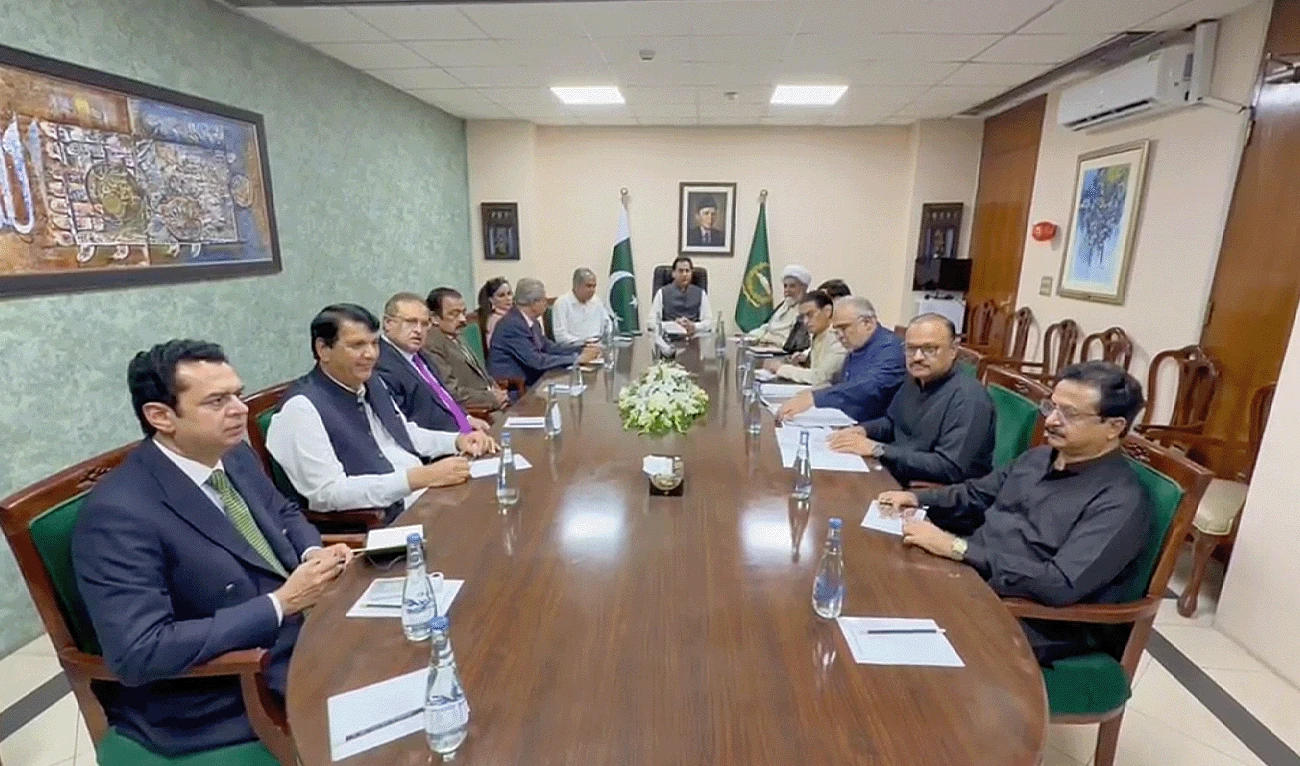
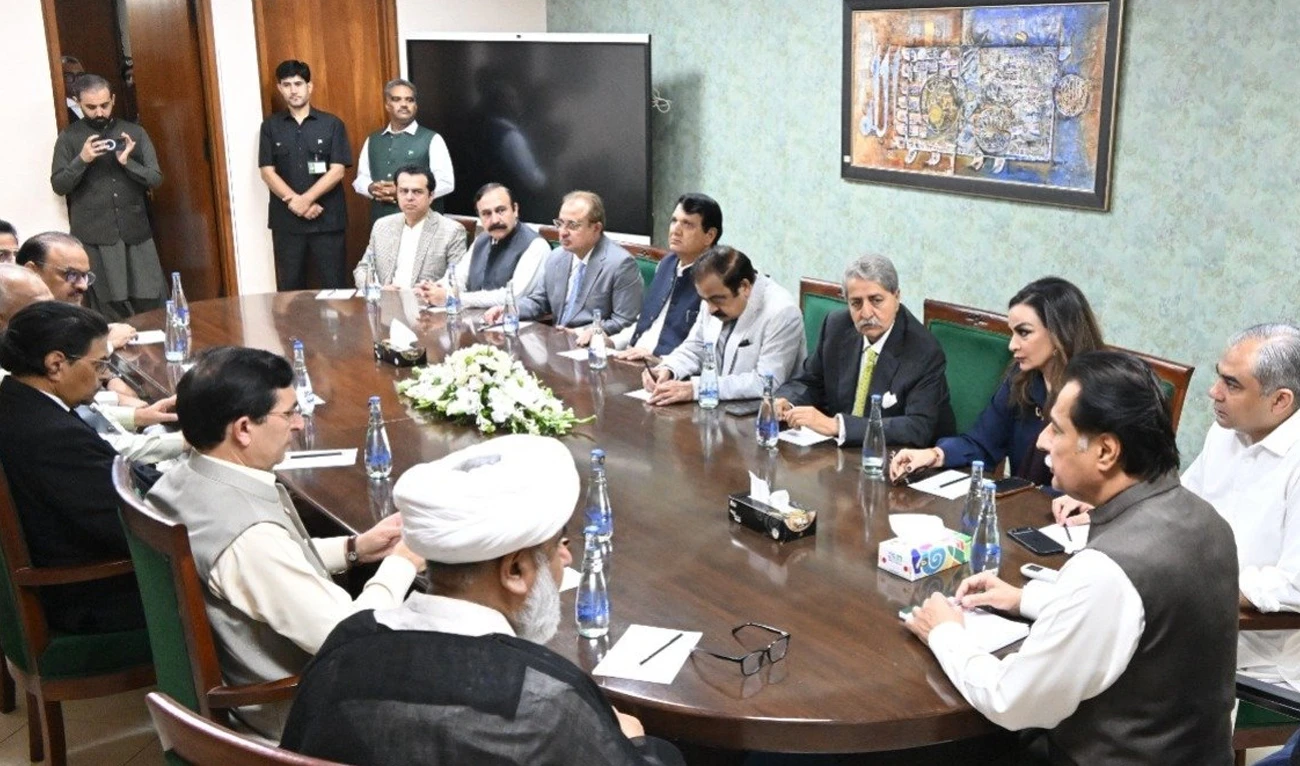
ISLAMABAD: Marathon talks between Pakistan’s government and the opposition ended without a breakthrough on Sunday, leaving key differences unresolved ahead of a planned protest march by jailed former prime minister Imran Khan’s party.
The second round of talks began at Parliament House at around 4:45 p.m. on Saturday after a nearly three-hour delay and continued for several hours. The two sides were trying to finalize a draft as intense political activity continued late into the night.
Interior Minister Mohsin Naqvi was seen leaving Parliament House during the negotiations and later returning. Local media, citing sources, reported that Naqvi had briefed President Asif Ali Zardari on the discussions before returning to the talks.
Speaking to media around 3am on Sunday, Senate Opposition Leader Raja Nasir Abbas, who was part of the opposition delegation, said the deadlock persisted over their meeting with ex-PM Khan, granting him access to personal physicians and a military operation in the northwestern Khyber Pakhtunkhwa (KP) province.
“One [of the demands was] was our meeting with Imran Khan sahib. They (government side) said ‘not now, but it can be arranged later on’,” Abbas said.
“The issues relating to a [military] operation in KPK, the role of the province and the federation, an understanding could not be reached in this regard too.”
The talks came amid heightened political tensions between the federal government and Khan’s Pakistan Tehreek-e-Insaf (PTI), which governs KP, over the Oct. 4 march as well as governance and worsening militant violence in the province. Federal ministers have raised the possibility of governor’s rule, which would place provincial government functions under federal control, though no decision to impose it has been announced.
Khan’s PTI announced the march to secure his release, while the federal government has in the past hinted at a major military operation in KP, which has been opposed by the PTI-led provincial administration.
State Minister for Interior Tallal Chaudhry, who was part of the government’s delegation, said the talks failed primarily because the “KP government could not assure whether they would cooperate in the fight against terrorism in the future,” Pakistan’s Dawn newspaper reported.
He alleged that the PTI’s provincial government in KP did not want to implement the National Action Plan against militancy and that the PTI delegation, which participated in the talks, had also left the venue “disappointed because the KP government did not cooperate on terrorism.”
In a post on X, KP Chief Minister Sohail Afridi also criticized the federal government for their “failed policies” against militants.
“Terrorism has been imposed upon Khyber Pakhtunkhwa. Due to the failed policies of the federal government, the province has consistently been bombarded and remained engulfed in fire,” he said. “Innocent people from my province lose their lives in military operations and drone strikes, which is dismissed as ‘collateral damage’ and the matter is settled with a mere ‘sorry’.”
The central government agreed to pursue talks after a Thursday meeting between President Zardari and Prime Minister Shehbaz Sharif that reviewed the political and security situation and expressed concern over conditions in Khyber Pakhtunkhwa.
PTI said on Friday its Oct. 4 march remained on schedule despite the first round of talks with the government. The party had postponed the march from Sept. 27 after authorities blocked routes toward Islamabad with shipping containers and deployed security forces.
The timetable indicates Oct. 4 is the departure date, rather than the date protesters would reach Islamabad. The PTI statement did not specify when the march would arrive in the capital.