Why the Middle East crisis demands a global health response

https://arab.news/gjxkv
Across the Eastern Mediterranean region, escalating armed conflict is dismantling the infrastructure of health. Hospitals are managing surges of trauma patients while facing shortages of medicines, fuel and staff. Disease surveillance systems — the backbone of outbreak detection — are weakening. At the same time, mortality from otherwise preventable and treatable conditions is rising, often unrecorded.
This is more than a humanitarian crisis. It is a rapidly evolving public health emergency with implications that extend far beyond the region.
The scale of humanitarian need in this region was already without parallel. Nearly half of the world’s population requiring humanitarian assistance lives here, alongside about 40 percent of all internally displaced persons globally. Entering 2026, an estimated 115 million people — one in seven across the region — depended on humanitarian support. The current escalation has sharpened these pressures acutely.
National authorities report more than 1,800 deaths and 23,000 injuries in Iran and more than 1,000 killed and 3,000 injured in Lebanon. In Lebanon, more than 1 million people have been displaced, many sheltering in overcrowded collective sites. In Iran, 3.2 million people are temporarily relocated, alongside increasing cross-border movement.
Under international law, health facilities and personnel are protected. Yet these protections are being repeatedly violated
Dr. Hanan Balkhy
Access to healthcare is becoming increasingly constrained. Facilities have closed or reduced services due to insecurity, while movement restrictions delay ambulances, patient referrals and the delivery of medicines. For patients with urgent or chronic conditions, these delays can be fatal.
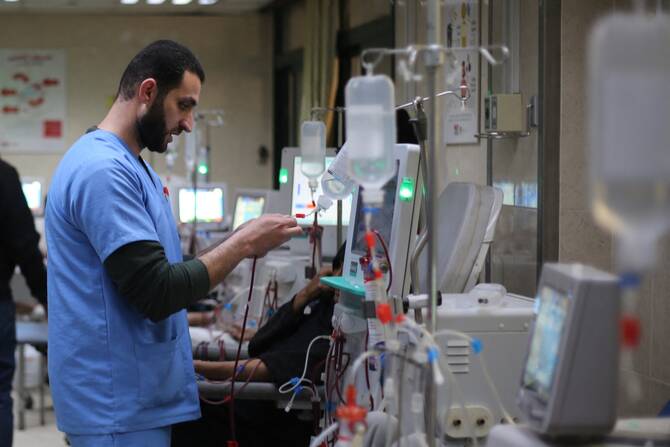
Crucially, the full impact is not captured by injury and death tolls alone. In most conflict settings, indirect mortality — caused by disruption to routine services such as maternal care, dialysis and immunization — often exceeds deaths caused directly by violence. This second wave of mortality is already unfolding.
The World Health Organization has verified multiple attacks on healthcare across the region, resulting in deaths and injuries among health workers and patients. In Lebanon, for example, deaths resulting from these attacks nearly doubled in less than a week — from 16 as of March 11 to 31 as of March 18.
Under international humanitarian law, health facilities and personnel are protected. Yet these protections are being repeatedly violated. The consequence is not only immediate harm but also reduced access to care for entire populations.
For health professionals, the effects are stark: surgeries without adequate supplies, interruptions to intensive care and breakdowns in referral systems. Without systematic documentation and accountability, such patterns risk becoming normalized.
The crisis is also generating significant environmental health risks — an area that remains underreported.
Strikes on petroleum infrastructure, refineries, storage terminals and coastal oil facilities are releasing plumes of particulate matter, sulfur dioxide and volatile organic compounds across populated areas. Satellite data indicates these plumes travel hundreds of kilometers, exposing communities far beyond strike zones to acute respiratory and cardiovascular risk.
Threats to water systems are equally concerning. Many countries in the Gulf rely on desalination for the vast majority of their drinking water. Contamination of coastal waters from oil spills or industrial damage could disrupt these systems, placing tens of millions at risk.
The WHO is working with national authorities to assess these environmental exposures and provide public health guidance on air quality and water safety.
These dynamics highlight a critical point: environmental damage in conflict translates directly and rapidly into public health risk.
The consequences of health system disruption in the Middle East are not contained within the region.
The WHO’s logistics hub in Dubai plays a central role in supplying emergency medicines, vaccines and laboratory materials worldwide. Disruptions to these operations have already delayed shipments to multiple countries.
Instability in key transport routes, including the Strait of Hormuz, has wider implications for energy markets. Rising fuel and food prices can increase food insecurity and malnutrition, particularly in low- and middle-income countries.
The consequences of health system disruption in the Middle East are not contained within the region
Dr. Hanan Balkhy
There are also potential risks associated with damage to industrial or nuclear infrastructure. Although no radiological impact has been reported to date, the proximity of active conflict to such facilities underscores the importance of preparedness and risk mitigation.
Further escalation could drive additional displacement, placing pressure on neighboring health systems and beyond. What begins as a regional crisis can quickly translate into a broader global health and economic shock.
Despite rising needs, funding for health emergencies in the region remains critically low. The WHO estimates that $689 million is required for 2026, but this is only 37 percent funded.
These shortfalls have immediate consequences: fewer functioning facilities, reduced trauma care capacity and gaps in disease surveillance. Delayed investment not only costs lives but also increases long-term humanitarian and economic burdens.
The full health consequences of this crisis are still unfolding but the risks are already clear: governments and donors must act now to uphold international humanitarian law, sustain essential health services and close critical funding gaps.
The current crisis shows how quickly health systems can be pushed beyond their limits — and how far the consequences can spread. Protecting healthcare in conflict is not only a humanitarian imperative, it is essential to global health security, economic stability and development.
- Dr. Hanan Balkhy is the World Health Organization’s Regional Director for the Eastern Mediterranean.