

Built by hand, rooted in history: National Historical Palace in Taif is one man’s tribute to Saudi heritage and Islamic history

1 / 7
Spanning 70,000 sq. meters, the palace features seven museums, seven facades, seven gates and almost 7 million stones cut and laid by Majid Al-Thabiti. (Supplied)
2 / 7
Spanning 70,000 sq. meters, the palace features seven museums, seven facades, seven gates and almost 7 million stones cut and laid by Majid Al-Thabiti. (Supplied)
3 / 7
The palace includes flooring adorned with colored stones and inspired by the historical art of Sadu, an intangible cultural heritage recognized by UNESCO.  (SPA)
4 / 7
Majid Al-Thabiti used seven types of stone sourced from across Saudi Arabia, including basalt, quartz and shale. (SPA)
5 / 7
The palace includes flooring adorned with colored stones and inspired by the historical art of Sadu, an intangible cultural heritage recognized by UNESCO.  (SPA)
6 / 7
Majid Al-Thabiti used seven types of stone sourced from across Saudi Arabia, including basalt, quartz and shale. (SPA)
7 / 7
Spanning 70,000 sq. meters, the palace features seven museums, seven facades, seven gates and almost 7 million stones cut and laid by Majid Al-Thabiti. (Supplied)
Short Url
Updated 11 May 2025
Follow

Built by hand, rooted in history: National Historical Palace in Taif is one man’s tribute to Saudi heritage and Islamic history

  • Built by Majid Al-Thabiti, the site blends Islamic history with contemporary design, rooted in the symbolism of the number seven
  • Spanning 70,000 sq. meters, the palace features seven museums, seven facades, seven gates and almost 7 million stones cut and laid by the man himself

MAKKAH: In the heart of Wadi Qarn in Taif governorate, one man’s vision has resulted in one of Saudi Arabia’s most striking heritage landmarks: the National Historical Palace for Islamic Civilization.

Built by Majid Al-Thabiti, the site blends Islamic history with contemporary design, rooted in the symbolism of the number seven.

In an interview with Arab News, Al-Thabiti said: “The number symbolizes perfection and completeness in several Qur’anic verses, including the seven heavens, the seven earths and the seven shaded by God in his shadow, among others.”


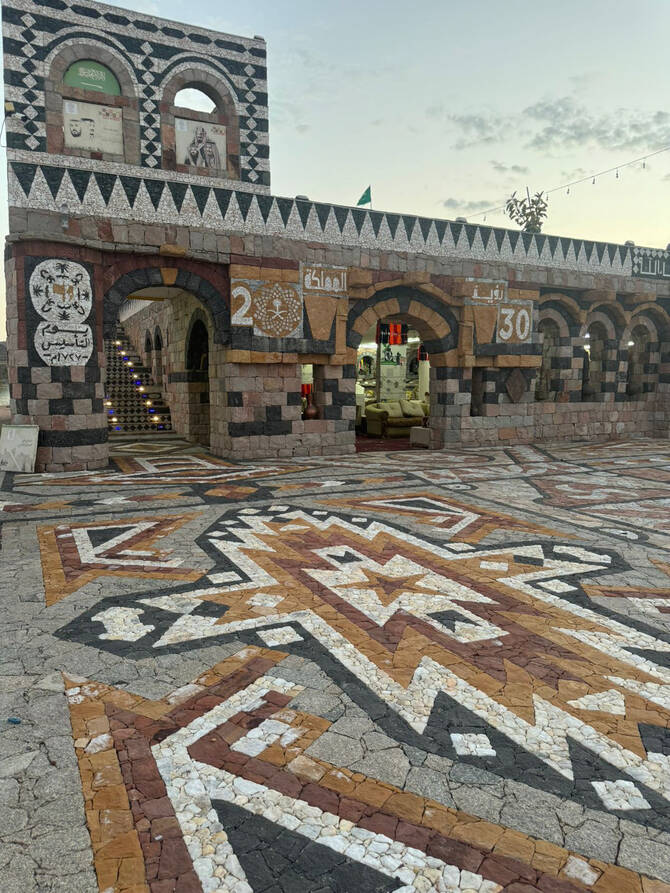
The palace includes flooring adorned with colored stones and inspired by the historical art of Sadu, an intangible cultural heritage recognized by UNESCO.  (SPA)

The project was born out of Al-Thabiti’s strong will. He believed in his dream and devoted his effort, time and energy to bring it to life.

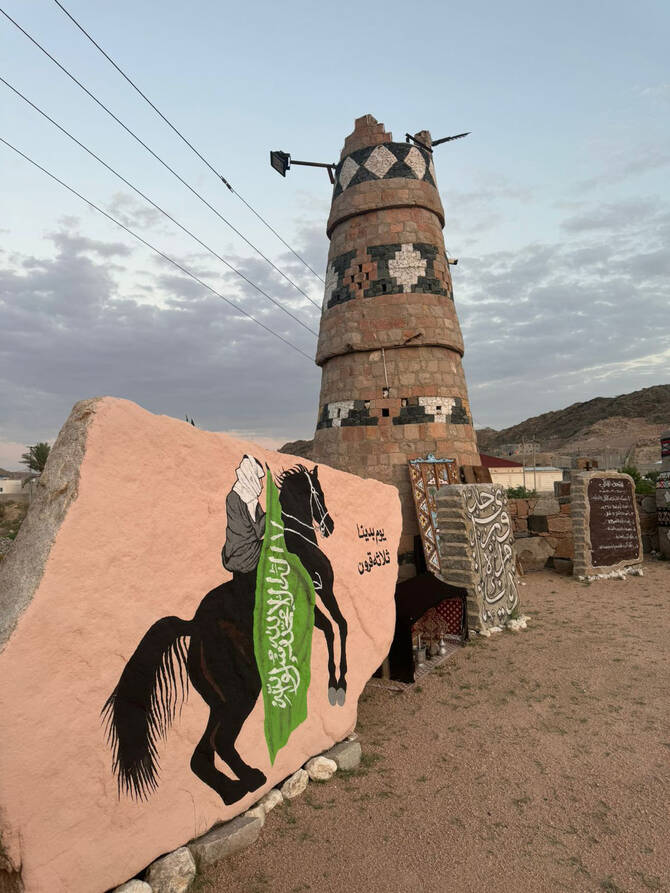
Spanning 70,000 sq. meters, the palace features seven museums, seven facades, seven gates and almost 7 million stones cut and laid by the man himself.

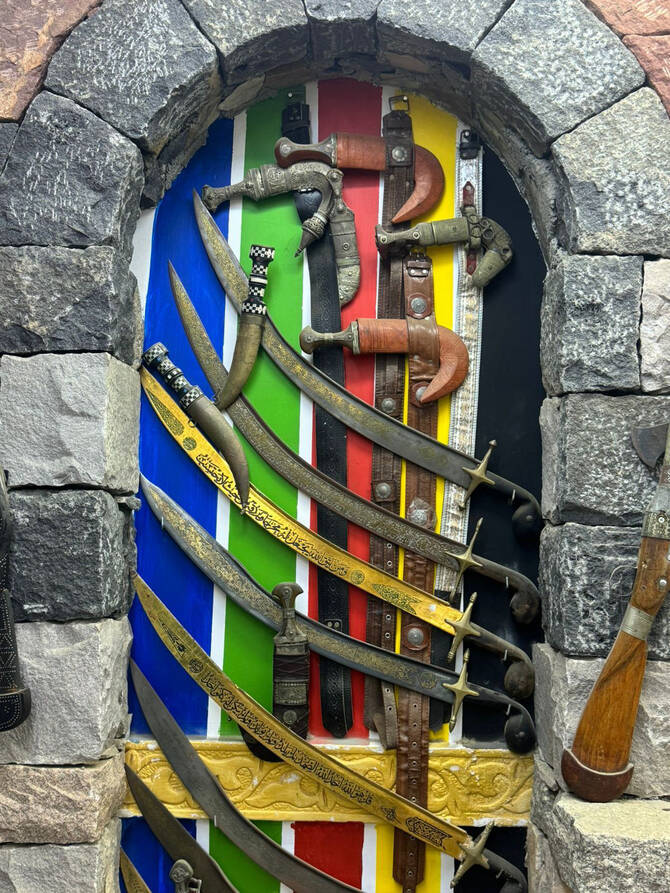
The museums offer distinct cultural and education experiences. Exhibits cover Islamic architecture, local heritage, plastic arts and sculpture, rare collections, astronomy, military history documenting the unification of the Kingdom and an agricultural museum featuring seeds mentioned in the Holy Qur’an.

The palace includes 600 square meters of flooring adorned with colored stones and inspired by the historical art of Sadu, an intangible cultural heritage recognized by UNESCO.

Al-Thabiti said that he personally cuts, shapes and stacks the stones himself. “The manual labor is what gives the project its true spirit, as every corner bears (my) imprint, effort and dedication,” he added.

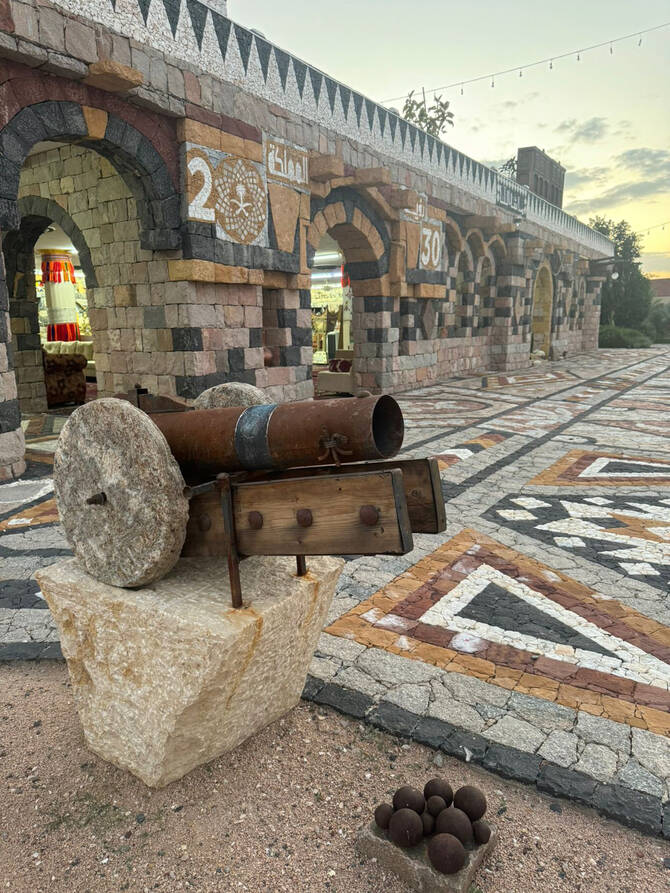
He used seven types of stone sourced from across Saudi Arabia, including basalt, quartz and shale. His attention to detail is reflected in features such as hand-shaped facades, floor mosaics inspired by Sadu art and stonework colored in seven hues that mirror the Kingdom’s geological diversity.


Majid Al-Thabiti used seven types of stone sourced from across Saudi Arabia, including basalt, quartz and shale. (SPA)

Highlights at the palace include an Abbasid-style minaret with a water fountain in honor of Zubaida, the wife of Harun Al-Rashid; an observatory used to track the crescent moon; and stone engravings of Saudi megaprojects like NEOM and The Line.

The site also includes engravings on stone of the Kingdom’s military vehicles, such as a fighter jet and ship.

Al-Thabiti also built a 700-meter sports track along the banks of Qarn valley, a stable for purebred Arabian horses, as well as replicas of symbolic gates like Makkah Gate, Taif Gate and King Abdulaziz Islamic Gate, with stones from Mounts Al-Nur, Thawr and Uhud. Other exhibits, like Diriyah and Yawm Badina (The Day We Began), commemorate key moments in Saudi history.

According to Al-Thabiti, his goal is to transform the palace into a cultural and educational destination that celebrates the Kingdom’s history and heritage.

“We possess a great civilizational legacy and a deep-rooted history. It is our duty to present it to the world in the finest way. This palace is the beginning,” he said.


Sustainability in focus as Madinah marks World Soil Day

Updated 50 min 11 sec ago
Follow

Sustainability in focus as Madinah marks World Soil Day

MADINAH: Madinah joined the world in celebrating World Soil Day on Dec. 5, highlighting the importance of soil conservation for food security and ecosystems, according to the Saudi Press Agency.

The day holds added significance in Madinah due to its rich agricultural history, diverse soil types — from clay to sand and volcanic Harrat — and its longstanding connection to date production.

The region’s soil faces challenges, notably salinization from imbalanced irrigation and climate change, the SPA added.

Authorities are addressing this through soil protection programs, improved irrigation techniques and sustainable agricultural practices.

Soil plays a vital role in water purification, acting as a natural filter. As winter begins, it is an opportune time to prepare soil for spring, expanding crop cultivation and harvest, the SPA reported.

The Ministry of Environment, Water and Agriculture in Madinah is implementing initiatives to enhance resource efficiency, raise farmer awarenes and combat desertification. Farmers contribute by using organic fertilization and recycling agricultural waste.

World Soil Day highlights the need for collaboration between government agencies, farmers and stakeholders to ensure soil sustainability, preserve agricultural heritage and support Vision 2030’s sustainable development goals.

Approved by the Food and Agriculture Organization in 2013, World Soil Day aims to raise awareness of soil’s critical role in healthy ecosystems and human well-being.