

Saudi artist’s ‘Tafawut’ exhibition showcases harmony between art and architecture 

1 / 6
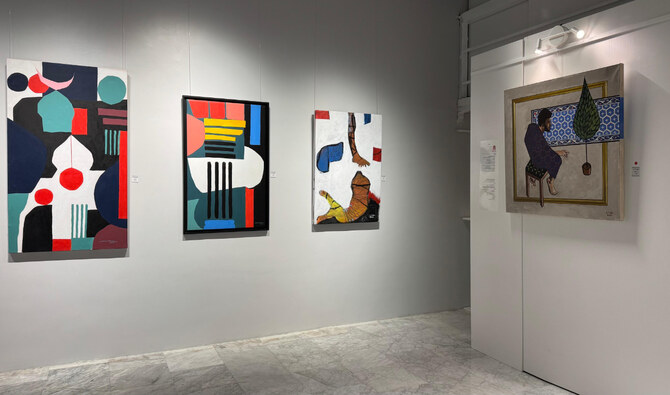
With a background in interior design and architecture, Al-Amir creates spaces that blend functionality with artistic expression, transforming each project into an exciting adventure. (AN Photo by Hind AlKhunaizi)
2 / 6
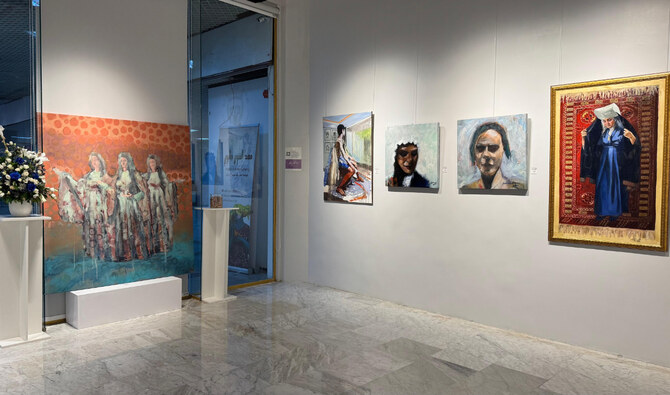
With a background in interior design and architecture, Al-Amir creates spaces that blend functionality with artistic expression, transforming each project into an exciting adventure. (AN Photo by Hind AlKhunaizi)
3 / 6
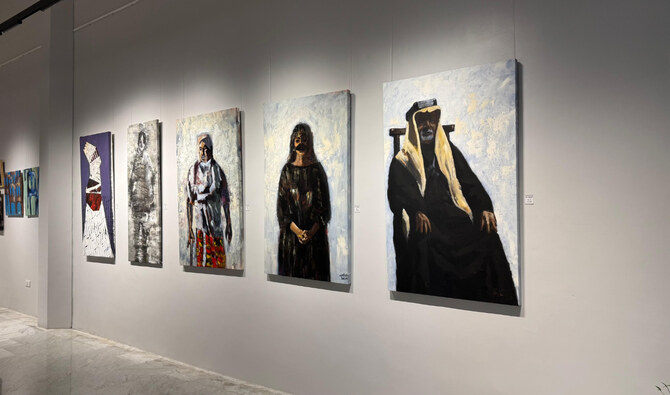
With a background in interior design and architecture, Al-Amir creates spaces that blend functionality with artistic expression, transforming each project into an exciting adventure. (AN Photo by Hind AlKhunaizi)
4 / 6
With a background in interior design and architecture, Al-Amir creates spaces that blend functionality with artistic expression, transforming each project into an exciting adventure. (AN Photo by Hind AlKhunaizi)
5 / 6
With a background in interior design and architecture, Al-Amir creates spaces that blend functionality with artistic expression, transforming each project into an exciting adventure. (AN Photo by Hind AlKhunaizi)
6 / 6
With a background in interior design and architecture, Al-Amir creates spaces that blend functionality with artistic expression, transforming each project into an exciting adventure. (AN Photo by Hind AlKhunaizi)
Short Url
Updated 20 February 2025
Follow

Saudi artist’s ‘Tafawut’ exhibition showcases harmony between art and architecture 

  • Salman Al-Amir’s use of acrylic and oil paint allows for a wide range of textures and tones making his works both thought-provoking and visually striking

RIYADH: Saudi artist and architect Salman Al-Amir’s exhibition, “Tafawut” (Disparity) which was held at Mahd Alfnon Gallery in Riyadh from Feb. 13-19, showcased a glimpse of his creative process, in which he skillfully blended art and architecture. 

Born in 1963 in Al-Ahsa, Al-Amir holds a master’s from Syracuse University and a bachelor’s from King Faisal University. 

With a background in interior design and architecture, he creates spaces that blend functionality with artistic expression, transforming each project into an exciting adventure.

“Tafawut” presented a diverse and engaging collection of 37 artworks that serve as a window into the artist’s emotions and experiences. 

The exhibition showcased a stunning variety of styles and mediums; some pieces were abstract and displayed a masterful play of geometric shapes and others representational, with artworks focusing on people, animals, or objects. Some featured prints, while others featured dreamy backdrops. 

His use of acrylic and oil paint allows for a wide range of textures and tones making his works both thought-provoking and visually striking.

The color palettes were equally varied, ranging from earthy to vibrant tones, further demonstrating the versatility of Al-Amir’s artistic vision and skill. 

This flair is a testament to Al-Amir’s architectural background, where precision and creativity come together. Each artwork invites viewers to explore the harmonious relationship between structure and form. 

His talent lies in merging his architectural expertise with his artistic passion. The paintings on display incorporate intricate details, touching upon various elements of Al-Amir’s experiences.

When asked about a specific painting that links his personal and professional experiences, Al-Amir said: “A painting titled ‘Ideas on a Flat Carpet’ is devoid of ideas but filled with the principles and foundations of Islamic miniature arts, often overlooked in our Islamic cultural heritage, yet rich with inspiration for the Saudi, Arab, and Islamic artist.” 

This painting reflects Al-Amir’s strong connection to his cultural roots and his passion for reinterpreting traditional artistic forms in a contemporary context.

Reflecting on his creative process, Al-Amir explained: “I am still on a journey to discover the creative form that satisfies me and relieves me from the arduous search.” 

The exhibition itself displays this ongoing exploration and experimentation.

Discussing the exhibition’s theme, Al-Amir stated: “Disparity here means diversity, not a difference in levels.

“This is precisely the message I wanted to convey to my fellow artists and amateurs to explore the depths of their talents and strive to reveal them,” Al-Amir told Arab News. 

The exhibition celebrated the multifaceted nature of art and the importance of embracing diverse styles and approaches.

As Al-Amir looks ahead, he shared his artistic goals. “I’m working to bring more Eastern influences into my art,” he explained.

He aims to give his creations a unique character that reflects the beauty and richness of Eastern traditions.

The artist shared valuable advice for aspiring artists. “Learn the rules like a professional so you can break them like an artist. Additionally, I encourage aspiring artists not to imitate Western styles; instead, they should adapt and reformulate these influences to support their local identity.”

Al-Amir is a dynamic force in the art world, leading workshops that ignite creativity. As a juror for art shows and a lecturer at King Fahd University, he inspires and helps direct many other aspiring artists.


Nobel Prize winner discusses art of writing at Ithra

Updated 06 December 2025
Follow

Nobel Prize winner discusses art of writing at Ithra

  • Jon Fosse offers insights into storytelling at the 10th iRead celebration

DHAHRAN: Nobel Prize-winning Norwegian author and playwright Jon Fosse drew a full house to Ithra on Friday, as he discussed art, writing, and the human experience during a session entitled “Nobel Minds” at the 10th edition of the institution’s iRead program.

Fosse, who won the 2023 Nobel Prize in Literature, appeared on stage with moderator Tariq Khawaji, Ithra’s cultural consultant.

Jon Fosse, who won the 2023 Nobel Prize in Literature, appeared on stage with moderator Tariq Khawaji, Ithra’s cultural consultant. (Supplied)

Outside, the landmark Ithra building, designed by Norwegian firm Snohetta, was lit in purple to mark the celebration. 

Fosse, whose work includes more than 70 novels, plays, poems, essays, and children’s books, and has been translated into more than 50 languages, including Arabic, is known for his minimalist, introspective style. His unconventional syntax and pared-down prose have significantly influenced postdramatic theater and contemporary experimental fiction. 

HIGHLIGHTS

• The landmark Ithra building, designed by Norwegian firm Snohetta, was lit in purple to mark the 10th anniversary of the institution’s iRead program.

• During the ‘Nobel Minds’ session, Jon Fosse discussed his writing process, sources of inspiration, and how writers might develop their own signature styles.

• Tariq Khawaji told Arab News that bringing Fosse to Saudi Arabia was especially meaningful as Arabic translations of his work remain relatively new to many readers. 

Khawaji told Arab News that bringing Fosse to Saudi Arabia was especially meaningful as Arabic translations of his work remain relatively new to many readers. 

Jon Fosse, who won the 2023 Nobel Prize in Literature, appeared on stage with moderator Tariq Khawaji, Ithra’s cultural consultant. (Supplied)

At a book signing following the session, he noted that Fosse’s pared-back lyrical language is a boon to both translators and new audiences. 

“I think one of Fosse’s strengths is his extremely simple language, he always uses the simplest phrasing and avoids inflated vocabulary or difficult expressions. This is why translators often find his writing both lyrical and clear,” Khawaji said. 

If I’m writing well, I have to bring something new to the book for me, and hopefully also for other people; something that didn’t exist before.

Jon Fosse, Norwegian Nobel laureate

“I think he speaks to the world through the problem of the individual — this tendency toward the quiet, the stripped-down. And I believe the Norwegian landscape, especially the western region, plays a very strong role in shaping him. His characters often feel like they come from a place with vast silence and depth. Even outside the session, you could sense many layers in how he spoke — something almost carved by that landscape,” he continued.

On the topic of artificial intelligence, Fosse said that while it can mimic a writer’s voice, it cannot replicate the essence behind it. (Supplied)

After noting Fosse’s 18 major awards, Khawaji added: “I think his Arabic readership is still small — though his plays have been translated and performed. I believe introducing him to the Arab world will increase his readership significantly, and I think the reception will change. Readers will discover a unique, unfamiliar voice. It was important to have him here.”

During his hour-long English-language conversation with Khawaji before the book signing, Fosse discussed his writing process, sources of inspiration, and how writers might develop their own signature styles.

“I think you can say all literature, in a certain sense, comes from literature. So the more you read — and the better literature you read — the cleverer you most likely will be,” he said.

“If I’m writing well, I have to bring something new to the book for me, and hopefully also for other people; something that didn’t exist before. And to get to that, you have to leave yourself (somehow). If you don’t leave yourself, you know exactly what you knew before,” he added.

On the topic of artificial intelligence, Fosse said that while it can mimic a writer’s voice, it cannot replicate the essence behind it.

“I’ve done it myself. I asked the computer to write something (in my style) and it was like a kind of parody, but still there were some very interesting sides to it. And there were some great metaphors that happened that I couldn’t have figured out myself,” he said. 

“Perhaps it is a childish idea but I think that art has so much to do with this universal individuality of the artist. It cannot possibly be replaced by a machine,” Fosse concluded.