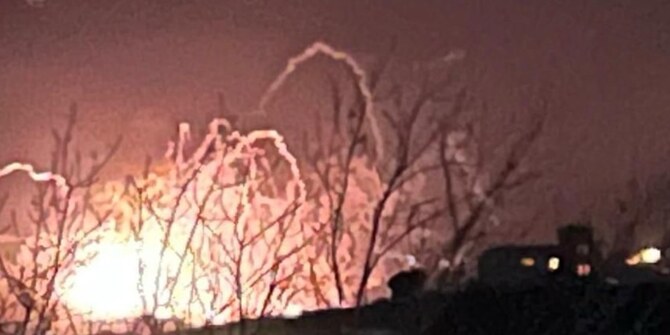
JERUSALEM: Israel’s military said it struck military sites in east and south Lebanon on Thursday, in its latest attack despite a November ceasefire that ended a war against militant group Hezbollah.
“A short while ago, the IDF (military) struck a military site containing an underground terrorist infrastructure site in the Bekaa area in Lebanon, as well as a military site containing rocket launchers in southern Lebanon in which Hezbollah activity has been identified,” the military said in a statement.
Lebanese state media on Thursday reported Israeli strikes on the country’s south and east.
The state-run National News Agency said “enemy aircraft” struck “the eastern slopes of the mountain range within the town of Janta in the Bekaa,” as well as “the outskirts of the town of Taraya, west of Baalbek,” also in the east.
Four missiles were fired in the Nabatiyeh area of southern Lebanon, NNA said.
No casualties were immediately reported.
The November 27 truce largely halted more than a year of fighting between Iran-backed Hezbollah and Israel, including two months of open war during which Israel sent in ground troops.
Hezbollah had said it was acting in support of Hamas militants fighting Israel in Gaza.
Israel has continued to carry out strikes on Lebanese territory since the truce agreement took effect.
Under the agreement, Israel had been expected to withdraw from Lebanon by February 18 after missing a January deadline, but it has kept troops at five locations it deems “strategic.”
The ceasefire also required Hezbollah to pull back north of the Litani River, about 30 kilometers (20 miles) from the border, and to dismantle any remaining military infrastructure in the south.


![]()

Israel says struck military sites in east, south Lebanon
Short Url
https://arab.news/4uf5e
Israel says struck military sites in east, south Lebanon
- Lebanese state media on Thursday reported Israeli strikes on the country’s south and east
- Four missiles were fired in the Nabatiyeh area of southern Lebanon


Latest updates


Recommended


© 2026 SAUDI RESEARCH & PUBLISHING COMPANY, All Rights Reserved And subject to Terms of Use Agreement.