PARIS: France said on Wednesday it would host an international meeting on Syria in January and that the lifting of sanctions and reconstruction aid would be conditional on clear political and security commitments by the transitional authority.
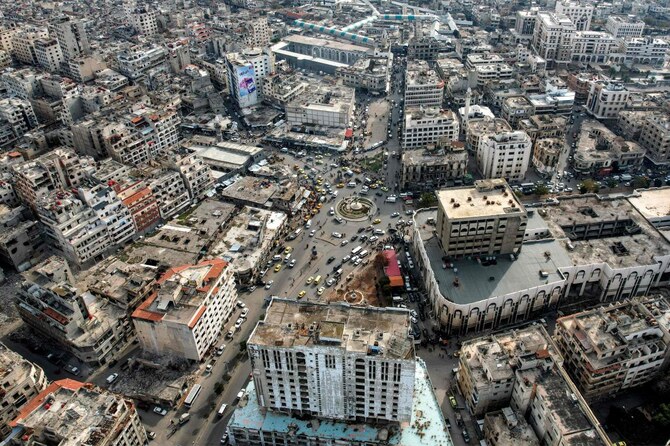
A team of French diplomats met an official from the Syrian transition team on Tuesday in Damascus and raised the flag over the French embassy there 12 years after cutting ties with Syria’s Bashar Assad amid the country’s civil war.
Acting Foreign Minister Jan-Noel Barrot told parliament that the diplomats had seen positive signals from the transitional authority and that in the capital, at least, Syrians appeared to be resuming their normal life without being impeded.
“We will not judge them by their words but by their actions, and over time,” Barrot said.
The January meeting would be a follow-up to a meeting in Jordan last week that included Turkiye, Arab and Western states. It was not immediately clear whether Syrians would attend or what the precise objective of the conference would be.
Western nations have welcomed Assad’s fall but are weighing whether they can work with the militants who ousted him, including Hayat Tahrir Al-Sham (HTS), an extremist group that is designated a terrorist organization by the EU.
Barrot said an inclusive transition would be vital and that Western powers had many tools at their disposal to ease the situation, notably the lifting of international sanctions and aid reconstruction.
“But we are making this support conditional on clear commitments on the political and security front,” he said.
Kurds
Since cutting ties with Assad in 2012, France has backed a broadly secular exiled opposition and Kurdish-led Syrian Democratic Forces (SDF) in northeastern Syria, for which it has given military support in the past.
The SDF is the main ally in a US coalition against Daesh militants in Syria. It is spearheaded by the YPG militia, a group that Turkiye, a NATO ally, sees as an extension of the outlawed Kurdistan Workers Party (PKK), whose militants have battled the Turkish state for 40 years.
France’s ties with the SDF persist. Barrot stressed that the political transition needed to ensure they were represented, especially given they had been at the forefront in the fight against Daesh, and were currently guarding thousands of hardened militants in prisons and camps.
“We know of Ankara’s security concerns toward the PKK, but we are convinced that it’s possible to find an arrangement that satisfies the interests of everyone. We are working on it,” Barrot said.
“This stabilization also means including the SDF in the Syrian political process,” he said, adding that President Emmanuel Macron had made this point in talks with his Turkish counterpart Tayyip Erdogan on Wednesday.


![]()

France to host Syria meeting, cautious on aid, sanctions lifting
Short Url
https://arab.news/8admv
France to host Syria meeting, cautious on aid, sanctions lifting
- “We will not judge them by their words but by their actions, and over time,” Barrot said
- January meeting would be a follow-up to a meeting in Jordan last week that included Turkiye, Arab and Western states


Latest updates



Recommended


© 2026 SAUDI RESEARCH & PUBLISHING COMPANY, All Rights Reserved And subject to Terms of Use Agreement.