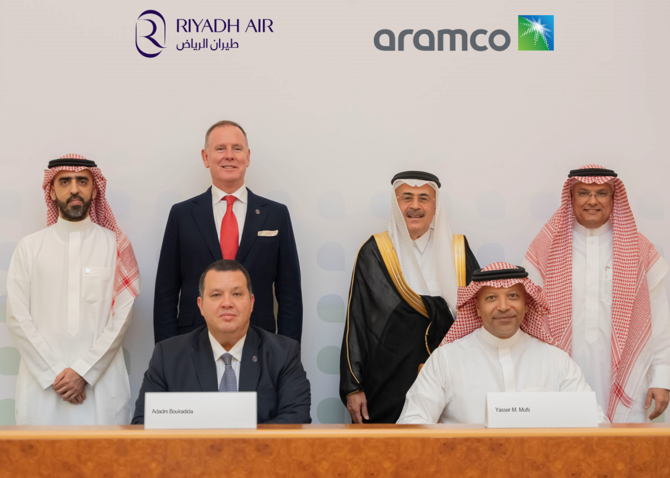

RIYADH: Saudi oil giant Aramco and Riyadh Air have paved the way for potential collaboration in areas such as low-carbon fuel supply and sustainability with a new agreement.
The two parties signed the memorandum of understanding during the eighth edition of the Future Investment Initiative taking place in Riyadh from Oct. 29 — 31 to set the stage for future partnership in those fields of common interest, according to a statement.
This falls in line with the integrated energy and chemicals company’s commitment to recognizing the urgency of addressing climate change and the fact that it has made sustainability a cornerstone of its corporate strategy.
The firm has set ambitious goals to reduce its greenhouse gas emissions by 50 percent by 2030 and achieve net zero by 2050.
It also aligns well with one of the strategic pillars of the Public Investment Fund subsidiary, which is becoming an environmental leader by being fully committed to applying the best global sustainability and safety practices in the aviation industry.
“We are delighted by the prospect of exploring a wide variety of opportunities for collaboration between Aramco and Riyadh Air. Both companies have expressed a desire to adopt the latest technologies, elevate experiences, and contribute to sustainability objectives,” Aramco Executive Vice President of Products and Customers Yasser Mufti said.
“Aramco’s work to develop lower-carbon fuels, its strong focus on digitalization, and its aviation experience, among other things, provide a strong platform for potential cooperation with Riyadh Air,” Mufti added.
On Riyadh Air’s behalf, Adam Boukadida, chief financial officer, said: “Our partnership with Aramco aligns perfectly with our ambition to become a leading global airline committed to sustainability and low-carbon fuels.”
He added: “By leveraging Aramco’s expertise, we aim to improve our operational capabilities and provide outstanding experiences for our guests. Together, we can play a significant role in advancing the Kingdom’s environmental and economic objectives.”
During the event, Aramco agreed to work with Vietnam Oil and Gas Group, known as PetroVietnam, in storage, supply, and trading across the companies’ energy and petrochemical segments.
As for Riyadh Air, the airline also signed an agreement during the forum to purchase 60 Airbus A321neo single-aisle aircraft, as it plans to commence its operations in 2025.
Under the theme “Infinite Horizons: Investing Today, Shaping Tomorrow,” this year’s edition of FII facilitated discussions on how investments can drive a thriving and sustainable future, pushing the boundaries of what is possible for humanity.