

348 arrests in Saudi drug busts

1 / 4
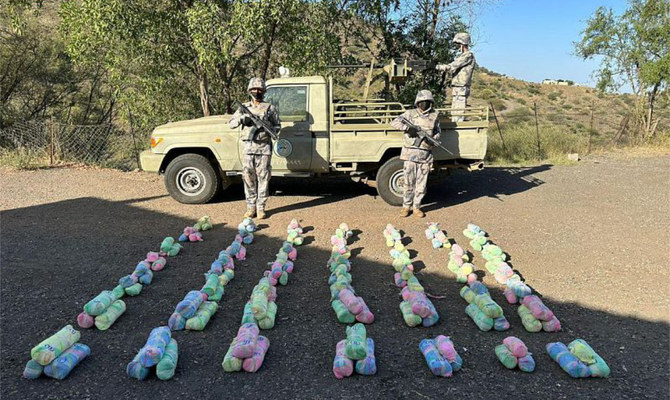
Authorities in Saudi Arabia have arrested 348 people after Border Guards intercepted attempts to smuggle large quantities of narcotics into the Kingdom. (SPA)
2 / 4
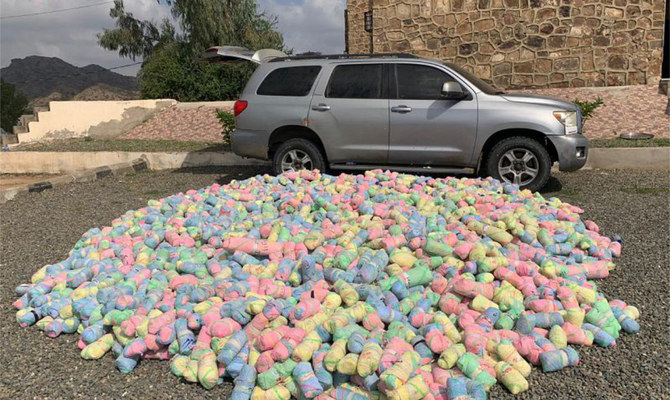
Authorities in Saudi Arabia have arrested 348 people after Border Guards intercepted attempts to smuggle large quantities of narcotics into the Kingdom. (SPA)
3 / 4
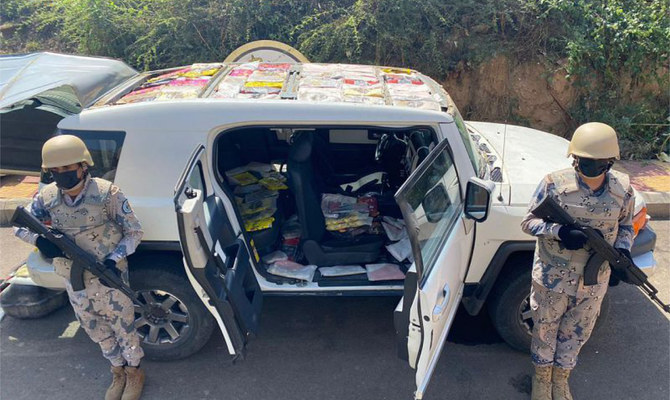
Authorities in Saudi Arabia have arrested 348 people after Border Guards intercepted attempts to smuggle large quantities of narcotics into the Kingdom. (SPA)
4 / 4
Authorities in Saudi Arabia have arrested 348 people after Border Guards intercepted attempts to smuggle large quantities of narcotics into the Kingdom. (SPA)
Short Url
Updated 31 August 2023
Follow

348 arrests in Saudi drug busts

RIYADH: Authorities in Saudi Arabia have arrested 348 people after Border Guards intercepted attempts to smuggle large quantities of narcotics into the Kingdom.

Border Guards spokesman Col. Misfer Al-Quraini said on Wednesday that land patrols seized more than 42 tons of the stimulant qat, 661 kg of hashish, 118,517 amphetamine tablets and 318,970 tablets that are subject to medical regulation in a series of raids in Najran, Jazan, Asir, Tabuk, Makkah and Madinah.

Al-Quraini said that the arrests included 33 Saudi citizens and 315 violators of the border security system, 273 of whom were Yemenis, 38 Ethiopians, three Egyptians, and one Eritrean.

Initial legal procedures against the suspects have been completed, and the contraband has been passed on to the relevant authorities, Al-Quraini added.

The Saudi government has urged anyone with information related to suspected smuggling operations or customs violations to call the confidential hotline at 1910, the international number 00 966 114208417, or to email [email protected]. Financial rewards are available for valid tips.

Last month, Saudi authorities arrested about 800 people from the Najran, Tabuk, Jazan and Asir regions for smuggling large quantities of drugs into the Kingdom.

The Kingdom vs Captagon
Inside Saudi Arabia's war against the drug destroying lives across the Arab world

Enter


keywords

Saudi program opens doors to historical research for local, international scholars

Updated 10 sec ago
Follow

Saudi program opens doors to historical research for local, international scholars

  • Starting in May, Darah’s International Visitor Program offers access to rare manuscripts, archival photos, and oral histories

Riyadh: The first session of the International Visitor Program for local and international researchers, organized by the King Abdulaziz Foundation for Research and Archives, known as Darah, will begin in May.

According to Turki Al-Shuwaier, CEO of Darah, the program is a strategic initiative aimed at supporting researchers from within and outside the Kingdom, enabling them to conduct qualitative studies that leverage Darah’s research resources and specialized expertise.

He told Arab News: “The program contributes to strengthening cooperation with academic institutions, research centers, and archival libraries locally and internationally, as well as promoting specialized knowledge production and providing a stimulating environment for the development of research and knowledge paths.”

The program seeks to foster constructive scientific cooperation and open new horizons for documenting national history, giving researchers access to rare documents, historical manuscripts, archival photographs, and oral recordings.

Al-Shuwaier said the program aims to support methodological diversity in handling historical sources and encourage the use of modern academic approaches that contribute to developing knowledge about the history of the Kingdom, the Arabian Peninsula, and the Arab and Islamic worlds.

He added: “Darah seeks to enable researchers to make the most of their research residency at the foundation, and we are keen to provide the necessary academic support and scientific supervision by our specialists, ensuring a successful research experience for all.”

The program targets a diverse range of qualified researchers, including faculty members, graduate students, and specialists in relevant fields. It lasts between one and three months and is extendable “according to a scientific evaluation mechanism.”

Al-Shuwaier noted that Darah is leveraging its capabilities to support serious scientific research, concluding: “Through this program, we seek to contribute to enriching historical knowledge and promoting awareness of the importance of heritage and history in shaping the future.”