

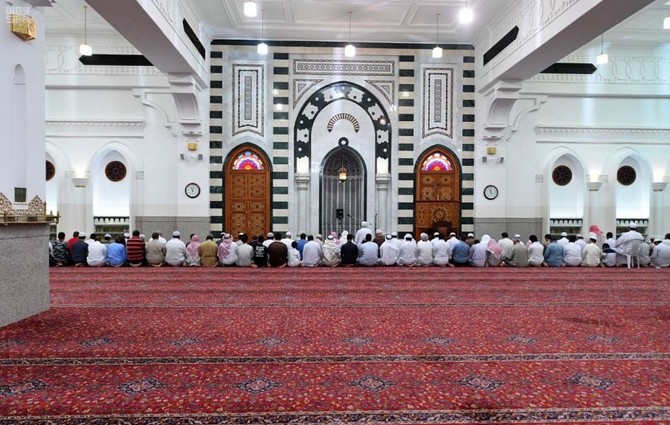
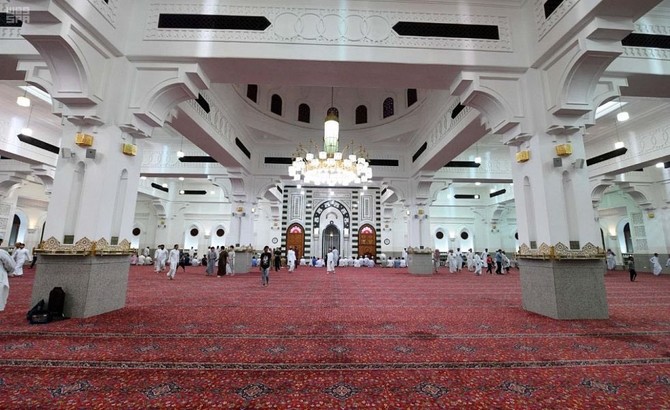
Photos of Al-Khandaq mosque during Ramadan highlight historic importance of Madinah

1 / 4
Photo of Al-Khandaq mosque in the holy city of Madinah, Saudi Arabia, May 22, 2018. (SPA)
2 / 4
Photo of Al-Khandaq mosque in the holy city of Madinah, Saudi Arabia, May 22, 2018. (SPA)
3 / 4
Photo of Al-Khandaq mosque in the holy city of Madinah, Saudi Arabia, May 22, 2018. (SPA)
4 / 4
Photo of Al-Khandaq mosque in the holy city of Madinah, Saudi Arabia, May 22, 2018. (SPA)
Updated 24 May 2018
Follow

Photos of Al-Khandaq mosque during Ramadan highlight historic importance of Madinah

MADINAH: The holy city of Madinah in Saudi Arabia continues its centuries’ old tradition of receiving visitors and pilgrims who enjoy visiting its famous mosques and landmarks dating back to the time of the Prophet Muhammad.

Al-Khandaq Mosque or the Mosque of the “Trench,” which is also referred to as the “Mosque of the Conquest,” is one of the historical sites that visitors to Madinah have high on their list of “must-sees.” It is connected to the Battle of the Trench, which took place during the time of the Prophet Muhammad (PBUH).

The mosque is located in the trench northwest of Madinah where the events of the Battle of the Trench took place.

A few years ago Saudi Arabian authorities expanded the mosque. It is built in a modern architectural style that highlights the aesthetic value of the area and the value of the trench, which is situated at the foot of Jabal Sal’a mountain.

Madinah’s battle of the trenches marked the consolidation of the Prophet’s tenure when he was faced with an attack on Madinah made by an alliance of Jewish and non-Muslim Arab tribes to unseat him.

The digging of the trench around the city saved the day and denied the effective use of cavalry in storming the city by 10,000 attackers who besieged Madinah for more than 30 days.

The Saudi Press Agency recently captured the daily influx of visitors to Madinah during the holy month of Ramadan.

Photos show activity in Al-Khandaq Mosque and seven other mosques in its vicinity. The photographs are a reportage of activities ranging from praying and sightseeing to learning about the mosque’s history, and help put them into the context of the role played by the mosque and the city in spreading the values of Islam and its religious message.


Children’s Theater Festival opens in Qassim region

Updated 27 January 2026
Follow

Children’s Theater Festival opens in Qassim region

  • To develop future ‘cultural architects,’ says CEO Khaled Al-Baz
  • ‘Nurture creativity, aesthetic awareness and sense of belonging’

BURAIDAH: The Qassim Children’s Theater Festival opened on Tuesday bringing together professionals from across Saudi Arabia and the Gulf.

The event is being held under the patronage of Prince Dr. Faisal bin Mishaal bin Saud bin Abdulaziz, governor of Qassim, at the Science Center in Unaizah governorate.

It has been Organized by the Theater and Performing Arts Association and executed by the Unaizah Theater Association, the Saudi Press Agency reported.

Running until Jan. 31, it features shows, panel discussions, as well as training workshops to develop children’s theater and strengthen professional skills in the field.

Khaled Al-Baz, CEO of the Theater and Performing Arts Association, told the SPA the festival forms part of a broader strategy to position children’s theater as a distinct cultural sector.

“Children today constitute genuine audiences — tomorrow’s cultural architects,” Al-Baz said.

Ahmed Al-Humaimidi, president of the Unaizah Theater Association, said it was an investment in young people, noting that it extends beyond performances to include cultural and educational programming.

He said the initiative aims to nurture creativity, aesthetic awareness and a sense of belonging, while also identifying emerging talent and encouraging knowledge exchange among theater practitioners.

“Our association recognizes children’s theater as foundational to cultivating aware, creative character,” he said.

The festival serves as both an artistic showcase and a platform for professional dialogue, reflecting the Kingdom’s expanding cultural landscape and growing focus on children’s theater as an educational and cultural tool, the SPA noted.

This occurs alongside support for signature initiatives and performing arts promotion as quality-of-life enhancement.