

Gulf Theater Festival in Riyadh revives tradition, fosters regional cultural exchange

1 / 3
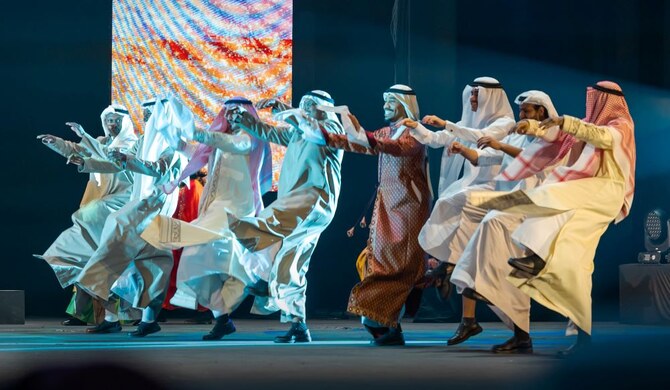
The 14th Gulf Theater Festival commenced with an opening ceremony that featured prominent figures from the Gulf and Arab theater scenes. (X: @MOCPerformArt)
2 / 3
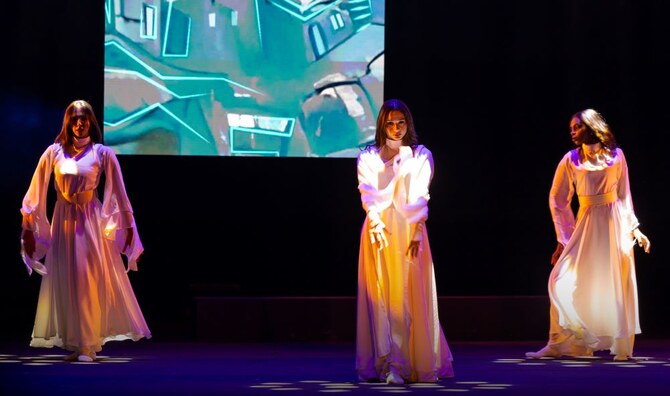
The 14th Gulf Theater Festival commenced with an opening ceremony that featured prominent figures from the Gulf and Arab theater scenes. (X: @MOCPerformArt)
3 / 3
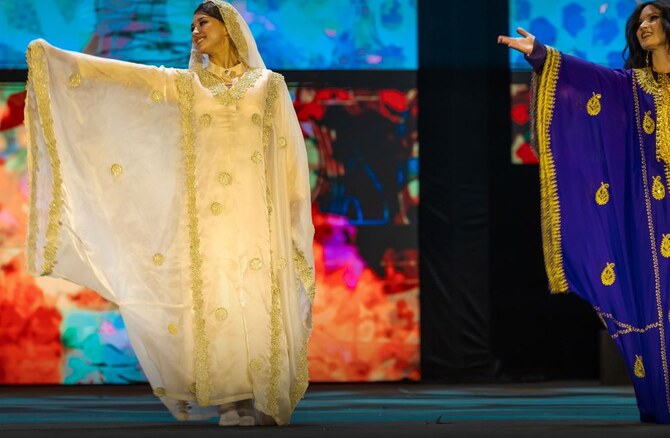
The 14th Gulf Theater Festival commenced with an opening ceremony that featured prominent figures from the Gulf and Arab theater scenes. (X: @MOCPerformArt)
Short Url
Updated 11 September 2024
Follow

Gulf Theater Festival in Riyadh revives tradition, fosters regional cultural exchange

  • For the first time since 1988, the festival is being hosted in Saudi Arabia, celebrating a rich legacy of Gulf theatrical collaboration
  • Event, running from Sept. 10 to 17, brings together artists, performers, and cultural figures from across the Gulf Cooperation Council nations to promote regional artistic exchange

RIYADH: The 14th Gulf Theater Festival kicked off in Riyadh, marking a grand return after an eight-year hiatus.

For the first time since 1988, the festival is being hosted in Saudi Arabia, celebrating a rich legacy of Gulf theatrical collaboration.

The event, running from Sept. 10 to 17, brings together artists, performers, and cultural figures from across the Gulf Cooperation Council nations to promote regional artistic exchange.

Held at the Princess Nourah bint Abdulrahman University Theater, the festival commenced with an opening ceremony that featured prominent figures from the Gulf and Arab theater scenes.

As part of the proceedings, the festival will include a series of competitive theatrical performances, workshops, and discussions aimed at enhancing production and collaboration.

The event also honors creative minds, recognizing their contributions to the art form with a series of awards.

Speaking on behalf of Saudi Minister of Culture Prince Badr bin Abdullah bin Farhan, Sultan Al-Bazie, CEO of the Theater and Performing Arts Commission, highlighted the festival’s significance.

“The festival is a night of Gulf culture, celebrating theater as a platform for creativity that has enriched cultural memory and fostered collaboration between our sister nations,” he said.

Al-Bazie also emphasized the support the cultural sectors receive from Saudi Arabia’s leadership, noting that the festival reflects the Kingdom’s vision for advancing the Gulf theater scene.

“The event aligns with our commitment to creating a thriving Gulf cultural landscape that enhances national identity, encourages dialogue with the world, and boosts the economic sustainability of the arts,” he added.

In an exclusive comment to Arab News, Al-Bazie shared his hopes for the future of the festival.

He said: “The festival returns after an absence of eight years and is held periodically among the GCC countries.

“It will continue to grow stronger and greater and evolve into institutional work to promote aid, theatrical production, training, and joint efforts. These are all hopes we aim to achieve in the coming years.”

With its rich blend of performances, lectures, and cultural exchange, the Gulf Theater Festival is expected to solidify Riyadh’s role as a central hub for regional artistic collaboration.

The event not only revives long-standing traditions but also paves the way for a more sustainable and dynamic future for Gulf theater.


Rubaiya Qatar’s flagship ‘Unruly Waters’ promises compelling curation

Updated 10 February 2026
Follow

Rubaiya Qatar’s flagship ‘Unruly Waters’ promises compelling curation

DOHA: The ambitious new quadrennial Rubaiya Qatar opens this November across the country and its capital Doha, and its headline exhibition, “Unruly Waters,” promises to be a major intervention in contemporary curation.

The show has four curators: Tom Eccles (executive director, Center for Curatorial Studies and the Hessel Museum of Art, Bard College); Ruba Katrib (chief curator and director of curatorial affairs, MoMA PS1); Mark Rappolt (editor-in-chief of ArtReview and ArtReview Asia); and Shabbir Hussain Mustafa (chief curator, Singapore Art Museum),

It features more than 50 artists and includes over 20 new commissions produced for the project. The show offers both a literal and metaphorical examination of water.

“Water is a kind of foil to talk about something else,” said Eccles at a briefing panel held alongside Art Basel Qatar last week, signaling a show that will use seas, currents and maritime histories to open conversations about trade, migration, ecology and cultural exchange.

The curators’ research was sparked, in part, by a maritime find now in Qatar’s collections: a shipwreck off the coast of Sumatra that yielded tens of thousands of objects and traced routes across the historic Maritime Silk Road.

Eccles said the material “gave us the world to think” beyond conventional regional frames and to reconfigure how an exhibition might map connections from the Gulf eastwards to south and southeast Asia.

The exhibition’s scale is matched by its ambition. “More than half of the show will be commissioned,” said Katrib, underlining the quadrennial’s commitment to new production and artworks conceived in dialogue with Doha’s audiences and sites.

Katrib emphasizes the show’s intergenerational and geographically wide-ranging cast of artists.

And the curators’ intent to foreground histories of trade — cups, pots and the everyday objects that circulated across oceanic networks — alongside more speculative practices addressing climate, migration and contingency.

Rappolt pointed out that “Unruly Waters” “is very much built on the work that our colleagues have done over several years in building infrastructures and networks.”

The curators have drawn on environmental history and scholarship — inviting contributions from historians and hosting academic exchanges — so that the exhibition functions as a platform for knowledge production, and dialogue.

Mustafa spoke about the plural, polyvocal structure of the show. The project maps multiple regions at once. “We have the Arab worlds. We have the Indian ocean worlds. We have Africa, we have Southeast Asia.”

And these zones will sit “alongside each other, not necessarily in agreement, but most certainly in a state of complexity.”