JEDDAH: Houthi rebels in Yemen fired a ballistic missile on Saturday night aimed at Riyadh.
Saudi defense forces intercepted and shot down the missile, and there were no casualties.
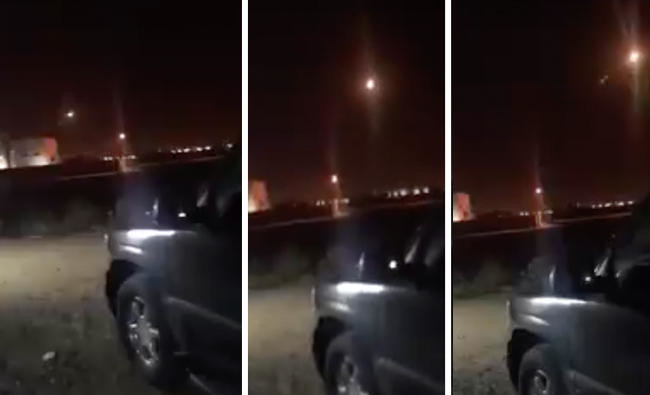
Fire engines and emergency vehicles sped to runway R33 at King Khaled International Airport after reports of loud bangs at about 8.45 p.m.
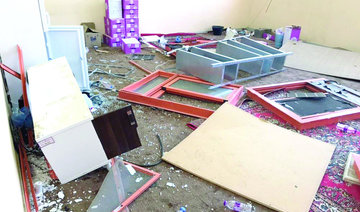
The General Authority of Civil Aviation said some remnants of the missile landed inside the airport perimeter, but there was no significant damage and all flights were operating as usual.
The Iran-backed rebels admitted the attack in a statement on the Houthi-run Al-Masirah television channel. They said they had targeted the airport.
The Houthis have now launched 78 missiles at Saudi Arabia, including one aimed at Makkah in July, since the Saudi-led coalition began fighting to restore the legitimate government in Yemen in March 2015.
Col. Turki Al-Maliki, the coalition spokesman, said the missile was fired at 8.07 p.m. and intercepted by the Patriot defense system. Some debris fell in an inhabited area east of the airport, he said.
“This aggressive and futile act by Houthi militias proves the involvement of a regional state that sponsors terrorism in providing the armed Houthi militias with advanced capabilities in flagrant violation of UN Resolution 2216, threatening the security of Saudi Arabia as well as the regional and international security,” Al-Maliki said. “Moreover, targeting civilian areas is a violation of international humanitarian law.”
Dr. Hamdan Al-Shehri, a Saudi political analyst and international relations scholar in Riyadh, told Arab News: “The Houthi missile attack, coming on a day when Saad Hariri resigned as Lebanon’s prime minister in protest against Hezbollah and Iran’s blackmail in Lebanon, can be read as a sign of Iranian frustration.
“Iran and Hezbollah are playing a dirty and dangerous game in the region. They are undermining the stability of the region.
“We know how they targeted the holy city of Makkah in the past; now they have targeted civilians and the airport in the Saudi capital. They are a killing machine and have no qualms about attacking innocent people.”
The attack would only strengthen the determination of the Saudi people and their allies, Al-Shehri said. “This will make us resolute against Iran and Hezbollah and their puppets, the Houthis. They are running out of their dirty cards. Saudi Arabia will neutralize them. Now the Kingdom’s resolve will be even fiercer.”
Now was the time for the international community to put a stop to the Houthi missile menace, Al-Shehri said. “They need to be stopped at all costs. They can’t play with the stability of the region.
“They are playing with fire, and the United Nations and the world must condemn the attacks, and not just condemn, but use all resources — diplomatic and military — to bring Iran, Hezbollah, and the Houthis to heel.”