

Saudi photographer brings Madinah into focus

1 / 4
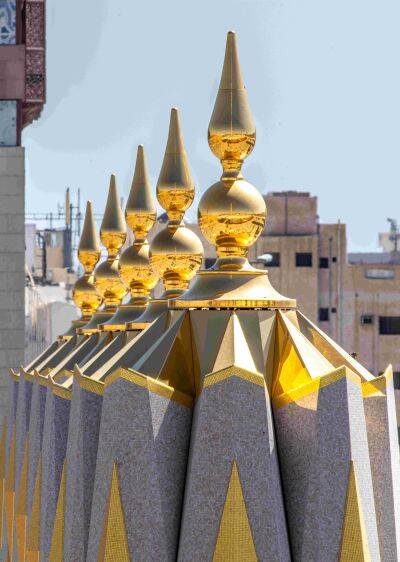
Saudi Arabia photographer Shaker Samargandi is presenting a contemporary vision of Madinah. (Supplied)
2 / 4
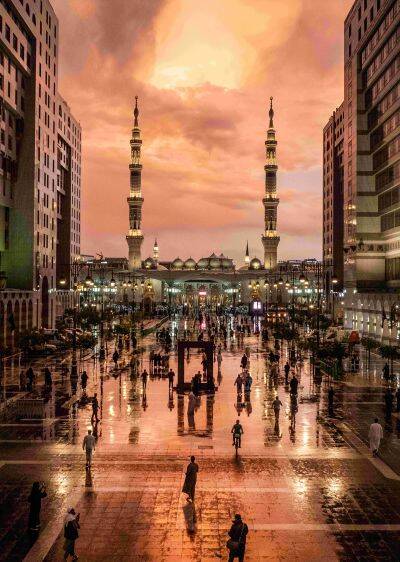
Saudi Arabia photographer Shaker Samargandi is presenting a contemporary vision of Madinah. (Supplied)
3 / 4
Saudi Arabia photographer Shaker Samargandi is presenting a contemporary vision of Madinah. (Supplied)
4 / 4
Saudi Arabia photographer Shaker Samargandi is presenting a contemporary vision of Madinah. (Supplied)
Short Url
Updated 16 February 2026
Follow

Saudi photographer brings Madinah into focus

  • Shaker Samargandi’s work captures the city’s layered identity in intimate detail
  • Approach has allowed architecture to be presented as a living element, one that interacts with light and the passage of time

MAKKAH: Through a deeply personal lens, Saudi Arabia photographer Shaker Samargandi is presenting a contemporary vision of Madinah.

Born and raised in Madinah, he says his familiarity with the city’s rhythms and spaces has shaped his artistic vision.

Rather than treating the holy city as a staged subject, Samargandi approaches it as “a living memory.” Through his lens, streets, courtyards and architecture become narrative elements revealing the city’s layered identity.

Samargandi told Arab News that Islamic architecture, especially that associated with the Prophet’s Mosque, has been a central focus of his visual interest, given its spiritual and aesthetic values deeply rooted in history.

He says his focus is not directed toward the overall scene, but the fine details that reflect the philosophy and aesthetics of the structure, allowing the viewer to contemplate the relationship between form and meaning.

This approach has allowed architecture to be presented as a living element, one that interacts with light and the passage of time.

Madinah’s geography plays a role, Samargandi explained. Mountains and harrat lava fields meet farms and palm groves within the urban fabric, creating a distinctive interplay between nature and urban life.

For the photographer, this relationship underscores how place is formed through constant interaction between landscape and people.

He says residents have often responded to his work by seeing their city from unfamiliar angles, prompting renewed reflection on their everyday surroundings.

Samargandi is now developing long-term projects, including a photo book documenting Madinah. For him, visual documentation carries cultural responsibility, particularly as the city undergoes rapid urban and social transformation.

Photography, he says, is not merely archival, it preserves daily details and aesthetic character for future generations while offering a tool to understand and rediscover place.

He further explained that working on long-term projects allows for a deeper understanding of a place, away from the fast pace of visual consumption.

Samargandi believes Madinah still holds, for the artist, vast territories and stories to be explored, that engage the present and honor the city’s roots.



18,000 personnel mobilized in Makkah, Madinah as itikaf begins

Updated 09 March 2026
Follow

18,000 personnel mobilized in Makkah, Madinah as itikaf begins

  • Worshipers who completed registration and obtained permits have started performing the ritual of itikaf at the Prophet’s Mosque
  • General Authority for the Care of the Affairs of the Grand Mosque and the Prophet’s Mosque has provided a range of services

JEDDAH: More than 18,000 personnel and nearly 6,000 vehicles and pieces of equipment have been deployed across Makkah and Madinah as authorities intensify preparations for the final 10 days of Ramadan, while worshipers began observing itikaf at the Prophet’s Mosque.

Worshipers who completed registration and obtained permits have started performing the ritual of itikaf at the Prophet’s Mosque, according to the Saudi Press Agency.

The General Authority for the Care of the Affairs of the Grand Mosque and the Prophet’s Mosque has provided a range of services, including guidance, organization, healthcare, translation, hospitality and essential supplies to ensure a comfortable and spiritually enriching experience.

Field teams have also been deployed to manage entry and exit points, and oversee service delivery so worshippers can dedicate themselves fully to prayer and reflection.

Meanwhile, the Madinah Municipality has intensified efforts to provide services to visitors at the Prophet’s Mosque and other major mosques across the city.

More than 5,700 personnel, 1,230 operational vehicles and pieces of equipment have been mobilized to support municipal services during the busy period.

The operational plan focuses on improving facility cleaning and environmental sanitation, strengthening infrastructure services, and intensifying inspections of commercial and food establishments to ensure compliance with health standards and product safety.

Electronic platforms have also been activated to enhance monitoring and speed up responses to municipal service reports.

Authorities are also conducting field campaigns to combat commercial fraud and regulate street vendors as visitor numbers rise in the city.

Through these plans, the Ministry of Municipalities and Housing has raised municipal readiness to provide services for Umrah performers and visitors, and enable them to perform their rituals in a safe and organized environment.

In Makkah, the municipality has deployed more than 13,000 personnel working round the clock to support cleaning and operational activities in the central area, and around the Grand Mosque.

Five parking areas with a capacity of more than 42,000 vehicles have also been prepared to ease access to the Grand Mosque and reduce congestion.