

Oman special zones investment rises 6.8% to $3.6bn

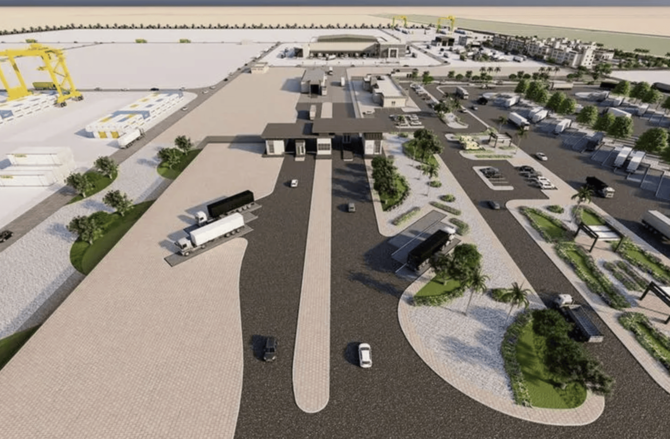
Rendering of Economic Zone at Al Dhahira, located 20 km from the Rub Al-Khali border crossing on the Oman-Saudi border. File/OPAZ
Short Url
Updated 16 February 2026
Follow

Oman special zones investment rises 6.8% to $3.6bn

JEDDAH: Investment in Oman’s special economic zones, free zones and industrial cities rose 6.8 percent in 2025, reaching 1.4 billion Omani rials ($3.64 billion), official data showed. 

The figure raises the total committed investment under the supervision of the Public Authority for Special Economic Zones and Free Zones, known as OPAZ, to 22.4 billion rials, the Oman News Agency reported. 

This increase underscores the central role of the zones in Oman’s Vision 2040 strategy to diversify the economy, drive growth, create jobs and expand the private sector. 

The authority said 325 investment agreements were signed across sectors during the year, with additional land allocated for industrial projects in several zones. 

“Development is ongoing in the Al-Dhahira Special Economic Zone, the Al-Rawdah Economic Zone, and the Muscat International Airport Free Zone, alongside four new industrial cities in Al-Mudhaibi, Al Suwaiq, Thumrait and Madha to accommodate diverse industrial activities, enhance local manufacturing, and create additional job opportunities for Omani youth,” the ONA report stated. 

Qais bin Mohammed Al-Yousuf, chairman of OPAZ, emphasized the authority’s commitment to fostering a competitive and attractive investment environment that supports economic diversification and financial sustainability. 

He said the authority’s strategy focuses on positioning special economic zones, free zones and industrial cities as preferred investment destinations through business-friendly regulations, targeted incentives and maximizing value added by projects. 

Al Yousuf added that these zones have established themselves as integrated economic platforms that support diversification, enhance investment attractiveness and maximize the benefits of free trade agreements and comprehensive economic partnerships. 

OPAZ expanded its international outreach in 2025 by joining the World Free Zones Organization, a move aimed at aligning local zones with global standards and attracting cross-border investment. 

The authority is developing specialized clusters including an integrated cold chain hub in Duqm, an aluminum cluster in Sohar Industrial City and a mining cluster in Shaleem, as well as a proposed silica and mining complex in the Duqm Special Economic Zone. 

Ahmed bin Hassan Al-Theeb, deputy chairman of OPAZ, said that 2025 witnessed numerous achievements across the authority’s key focus areas, including planning and development; regulation and supervision; facilitation and aftercare services; marketing and investment attraction; operations and business acceleration; and institutional excellence. 

He further said that the authority increased foreign investment outreach, contacting over 500 companies in sectors such as pharmaceuticals, food, and sustainable construction, as well as services, logistics, storage, and renewable energy technologies. 

A new digital project-tracking system registered 294 investments across sectors including renewables, petrochemicals, fisheries and minerals by year-end, he added. 

The zones created 4,467 jobs for Omanis in 2025, exceeding the 2,500 target and raising total national employment in the network to 30,780 out of about 85,000 workers. Omanization reached 36 percent, with 4,774 small and medium enterprises operating across the zones. 


Global brands shut Middle East stores as conflict causes chaos

Updated 03 March 2026
Follow

Global brands shut Middle East stores as conflict causes chaos

  • Luxury brands and retailers close stores in Middle East
  • Conflict threatens the region that has ‌been luxury’s fastest growing
  • Mass-market retailers monitor situation, adjust operations in region

PARIS: In Dubai and other major Middle Eastern shopping hubs, many stores are closed or operating with a skeleton staff as the escalating conflict in the ​region causes chaos for businesses and travel.

The US-Israeli air war against Iran expanded on Monday with no end in sight, with Tehran firing missiles and drones at Gulf states as it retaliates for a weekend of bombing that killed Iran’s supreme leader and reportedly killed scores of Iranian civilians, including a strike on a girls’ primary school.

Chalhoub Group, which runs 900 stores for brands from Versace and Jimmy Choo to Sephora across the region, said its stores in Bahrain were closed, while other markets, including the UAE, Saudi Arabia, and Jordan remained open though staff attendance was “voluntary.”

“We operate with a lean team formed of members who volunteered and feel comfortable to come to the store,” Chalhoub’s Vice President of Communications Lynn al ‌Khatib told Reuters, adding ‌that the company’s leadership team personally visited Dubai Mall and Mall of the Emirates ​on ‌Monday ⁠morning to check ​in ⁠with workers.

E-commerce giant Amazon closed its fulfillment center operations in Abu Dhabi, suspended deliveries across the region and instructed its employees in Saudi Arabia and Jordan to remain indoors, Business Insider reported on Monday, citing an internal memo.

Gucci-owner Kering said its stores were temporarily closed in the UAE, Kuwait, Bahrain and Qatar and it has suspended travel to the Middle East.

Luxury growth engine under threat

Shares in luxury groups LVMH, Hermes, and Cartier-owner Richemont were down 4 percent to 5.7 percent on Monday afternoon as investors digested the knock-on impacts of the conflict.

The Middle East still accounts for a small share of global spending on luxury — between 5 percent and 10 percent, according ⁠to RBC analyst Piral Dadhania. But the region was “luxury’s brightest performer” last year, according to consultancy ‌Bain, while sales of expensive handbags have stalled in the rest of the ‌world.

Now, shuttered airports have put an abrupt stop to tourism flows into ​the region and missile strikes — including one that damaged Dubai’s ‌five-star Fairmont Palm hotel — are likely to dissuade travelers, particularly if the conflict drags on.

“If you assume that it’s ‌a $5 billion to $6 billion (travel retail) market and let’s say it’s going to be shut down for a month, we are talking about hundreds of millions of dollars that are definitely at risk,” said Victor Dijon, senior partner at consultancy Kearney.

If Middle Eastern shoppers cannot travel to Paris or Milan, that could also hurt luxury sales in Europe, he added.

Luxury brands have been investing in lavish new stores and exclusive events ‌across the region. Cartier unveiled a “high-jewelry” exhibition in Dubai’s Keturah Park just days before the conflict started.

Cartier and Richemont did not reply to requests for comment.

Luxury conglomerate LVMH ⁠has also bet big on ⁠the region. Last month, its flagship brand Louis Vuitton staged an exhibition at the Jumeirah Marsa Al Arab hotel, and beauty retailer Sephora launched its first Saudi beauty brand.

LVMH does not report specific figures for the region, but in January Chief Financial Officer Cecile Cabanis said the Middle East has been “displaying significant growth.” LVMH did not reply to a request for comment on how its business may be impacted by the conflict.

The Middle East has also attracted new investment from mass-market players. Budget fashion retailer Primark said in January that it plans to open three stores in Dubai in March, April and May, followed by stores in Bahrain and Qatar by the end of the year.

“Primark is set to open its first store in Dubai at the end of March but clearly this is a fast-moving situation which we are monitoring closely,” a spokesperson for Primark-owner Associated British Foods said.

Apple stores in Dubai will remain closed until Thursday morning, the company’s website showed, while Swedish fast-fashion retailer ​H&M said its stores in Bahrain and Israel are ​closed.

Consumer goods group Reckitt has told all employees in the Middle East to work from home, temporarily closed its Bahrain manufacturing site and suspended all business travel to the region until further notice.