Saudi photographer brings Madinah into focus

1 / 4
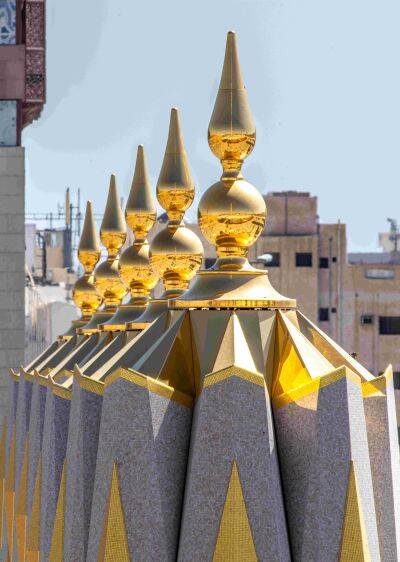
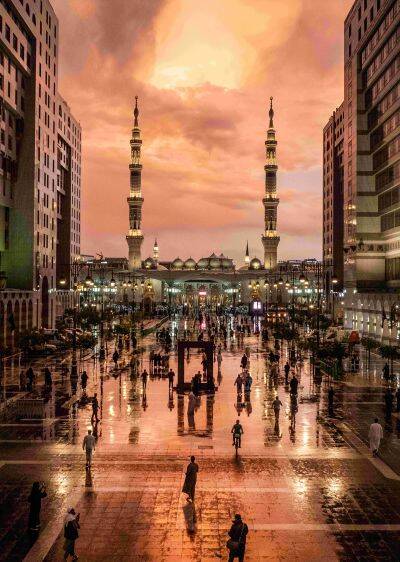
Saudi Arabia photographer Shaker Samargandi is presenting a contemporary vision of Madinah. (Supplied)
2 / 4
Saudi Arabia photographer Shaker Samargandi is presenting a contemporary vision of Madinah. (Supplied)
3 / 4
Saudi Arabia photographer Shaker Samargandi is presenting a contemporary vision of Madinah. (Supplied)
4 / 4
Saudi Arabia photographer Shaker Samargandi is presenting a contemporary vision of Madinah. (Supplied)
Short Url
Updated 16 February 2026
Follow

Saudi photographer brings Madinah into focus

  • Shaker Samargandi’s work captures the city’s layered identity in intimate detail
  • Approach has allowed architecture to be presented as a living element, one that interacts with light and the passage of time

MAKKAH: Through a deeply personal lens, Saudi Arabia photographer Shaker Samargandi is presenting a contemporary vision of Madinah.

Born and raised in Madinah, he says his familiarity with the city’s rhythms and spaces has shaped his artistic vision.

Rather than treating the holy city as a staged subject, Samargandi approaches it as “a living memory.” Through his lens, streets, courtyards and architecture become narrative elements revealing the city’s layered identity.

Samargandi told Arab News that Islamic architecture, especially that associated with the Prophet’s Mosque, has been a central focus of his visual interest, given its spiritual and aesthetic values deeply rooted in history.

He says his focus is not directed toward the overall scene, but the fine details that reflect the philosophy and aesthetics of the structure, allowing the viewer to contemplate the relationship between form and meaning.

This approach has allowed architecture to be presented as a living element, one that interacts with light and the passage of time.

Madinah’s geography plays a role, Samargandi explained. Mountains and harrat lava fields meet farms and palm groves within the urban fabric, creating a distinctive interplay between nature and urban life.

For the photographer, this relationship underscores how place is formed through constant interaction between landscape and people.

He says residents have often responded to his work by seeing their city from unfamiliar angles, prompting renewed reflection on their everyday surroundings.

Samargandi is now developing long-term projects, including a photo book documenting Madinah. For him, visual documentation carries cultural responsibility, particularly as the city undergoes rapid urban and social transformation.

Photography, he says, is not merely archival, it preserves daily details and aesthetic character for future generations while offering a tool to understand and rediscover place.

He further explained that working on long-term projects allows for a deeper understanding of a place, away from the fast pace of visual consumption.

Samargandi believes Madinah still holds, for the artist, vast territories and stories to be explored, that engage the present and honor the city’s roots.


SDAIA president says Saudi Arabia is building an integrated AI ecosystem

Updated 20 February 2026
Follow

SDAIA president says Saudi Arabia is building an integrated AI ecosystem

RIYADH: Saudi Data and Artificial Intelligence Authority President Abdullah Al-Ghamdi says that Saudi Arabia is moving steadily to establish artificial intelligence as a trusted national capability, the Saudi Press Agency reported.

Guided by the objectives of Saudi Vision 2030, Al-Ghamdi said the goal is to use AI to help develop government services, enhance competitiveness, build human capacity and improve quality of life through a comprehensive strategy based on three main pillars that unlock the potential of this technology and achieve sustainable developmental impact.

“The first pillar focuses on building human capacity and enhancing readiness to engage with AI technologies,” he said.

The second pillar is building an integrated national AI ecosystem that drives expansion and innovation by developing advanced digital infrastructure that enables various sectors to adopt AI applications efficiently, consistently and with effective governance, Al-Ghamdi said.

The third pillar, he said, is governance that ensures responsible and measurable AI through a national framework aligned with international standards.

This came during Al-Ghamdi’s speech at a high-level ministerial session held on Thursday on the sidelines of the AI Impact Summit 2026 in New Delhi.

He is heading the Saudi delegation, and the session saw broad participation from heads of state, decision-makers and technology leaders from around the world.

Al-Ghamdi also had a meeting with Indian Prime Minister Narendra Modi on Thursday evening, discussed AI cooperation and expressed his gratitude for hosting the summit and for the hospitality extended to the participants.