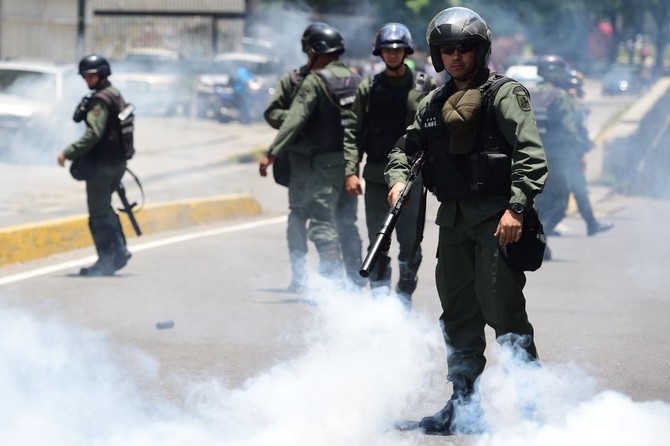
CARACAS: Venezuelan security forces fired scores of tear gas volleys and turned water cannons on rock-throwing protesters on a bridge in Caracas on Wednesday as the death toll from this month’s anti-government unrest hit at least 29.
A 20-year-old male demonstrator died in those latest clashes in the capital after being hit by a gas canister, said officials of the city’s eastern Chacao district.
Authorities also announced two new fatalities from clashes earlier this week: a 22-year-old who received various gunshot wounds at a protest in the city of Valencia, and a 28-year-old government supporter shot in the stomach in Tachira state.
The wave of protests since early April against socialist President Nicolas Maduro have sparked Venezuela’s worst violence since 2014. Demonstrators want elections to end the socialists’ two-decade rule, but the South American nation’s brutal economic crisis is also fueling anger.
“I want everything to end: the hunger, the murders, the corruption, all the ills we are suffering. We have to stay in the street until there is change. We are the majority,” said student Ricardo Ropero, 20, at a march in Caracas.
Red-shirted supporters of Maduro, the 54-year-old former bus driver who succeeded Hugo Chavez in 2013, also rallied on the streets of the capital, punching their fists in the air and denouncing opposition “terrorists.”
Maduro says his foes are seeking a violent coup, with US connivance, like a short-lived 2002 putsch against Chavez.
BATTLE ON BRIDGE
Amid another day of nationwide opposition rallies, the worst trouble in Caracas on Wednesday occurred when National Guard troops and police blocked off a highway where several thousand demonstrators were marching downtown.
On a bridge in east Caracas, masked youths picked up tear gas canisters fired at them to hurl back at security forces or into a nearby trash-strewn river.
Traffic once again ground to a standstill as the zone resounded to the familiar sounds of the near-daily clashes. When water cannons were turned on the marchers, they fell back and skirmishes spread to surrounding streets through the afternoon.
Opposition leaders accuse Maduro of seizing dictatorial powers and unleashing repression on peaceful protesters, but the opposition’s ranks also include groups of youths who hunt for trouble, hurling Molotov cocktails or burning property.
As well as wanting a general election, Maduro’s opponents are demanding the release of jailed activists, humanitarian aid to help offset shortages of food and medicine, and autonomy for the opposition-led legislature.
International pressure on Maduro has grown too, with 19 members of the 34-nation Organization of American States (OAS) bloc voting on Wednesday to hold a special meeting of foreign ministers to discuss the Venezuelan crisis.
Venezuela had threatened to walk from the group if that meeting went ahead, and Foreign Minister Delcy Rodriguez tweeted on Wednesday afternoon that she would soon announce the president’s instructions.
Maduro narrowly won election in 2013 against opposition leader Henrique Capriles, but the economic crisis has battered his public approval ratings since then.
The latest data from pollster Datanalisis, cited by a client, showed Maduro’s popularity edged up a couple of points to 24.1 percent in March, possibly due to the impact of subsidized food distribution bags known as CLAPs.
He has called for local state elections, postponed from 2016, to be held soon, but has shown no sign of supporting an early presidential election. The opposition now has majority support and the ruling Socialists would likely lose any vote.
During this month’s protests, more than 1,500 people have been arrested, with 800 still detained, according to rights group Penal Forum.


![]()
Venezuela death toll hits 29, protesters battle security forces
Venezuela death toll hits 29, protesters battle security forces

Latest updates


Recommended


© 2026 SAUDI RESEARCH & PUBLISHING COMPANY, All Rights Reserved And subject to Terms of Use Agreement.