

Thousands flee northwest Pakistan after mosques warn of possible military action

Residents from Tirah valley, who fled a remote mountainous region bordering Afghanistan, gather to get themself registered, in Bara, Khyber District of Khyber Pakhtunkhwa province, Pakistan, on January 30, 2026. (REUTERS)
Short Url
Updated 31 January 2026
Follow

Thousands flee northwest Pakistan after mosques warn of possible military action

  • Residents of the Tirah Valley said they have moved out of the area into nearby towns despite heavy snowfall and cold winter temperatures
  • Defense Minister Khawaja Asif denied any operation was planned or underway in Tirah, calling the movement a routine seasonal migration

BARA/KARACHI: Tens of thousands of people have fled a remote mountainous region in northwestern Pakistan in recent weeks, ​residents said, after warnings broadcast from mosques urged families to evacuate ahead of a possible military action against militants.

Residents of the Tirah Valley, in the Pakistani province of Khyber Pakhtunkhwa that borders Afghanistan, said they have moved out of the area into nearby towns despite heavy snowfall and cold winter temperatures because of the announcements to avoid the possible fighting.

“The announcements were made in the mosque that everyone should leave, so everyone was leaving. We left too,” said Gul Afridi, a shopkeeper who fled with his family to the town of Bara located 71 km (44 miles) east ‌of the ‌Tirah Valley.

Local officials in the region, who asked to remain unidentified, ‌said ⁠thousands ​of families ‌have fled and are being registered for assistance in nearby towns.
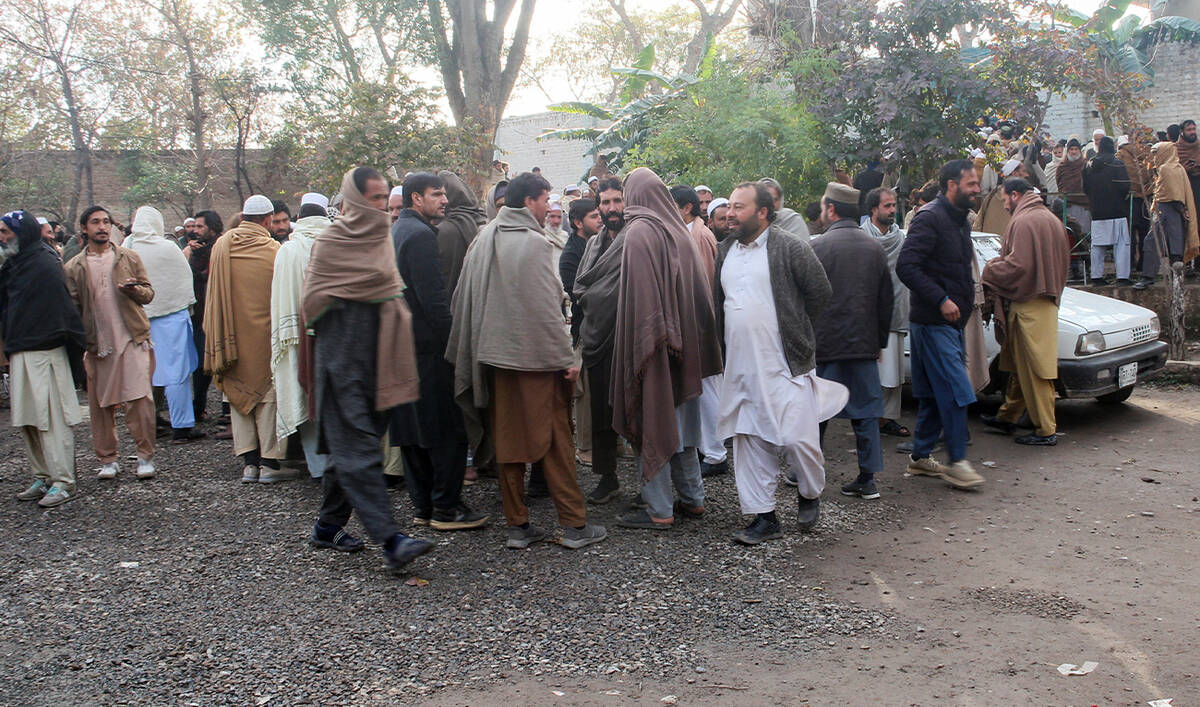


Residents from Tirah valley, who fled a remote mountainous region bordering Afghanistan, gather to get themself registered, in Bara, Khyber District of Khyber Pakhtunkhwa province, Pakistan, on January 30, 2026. (REUTERS)

The Tirah Valley has long been a sensitive security zone and a stronghold for Tehreek-e-Taliban Pakistan, a militant group that has carried out attacks on Pakistani security forces.

The Pakistani government has not announced the evacuation nor any planned military operation.

On Tuesday, Pakistan’s Defense Minister Khawaja Muhammad Asif denied any operation was planned or underway in Tirah, calling the movement a routine seasonal migration driven by harsh winter conditions.

However, a Pakistani military source with knowledge of ⁠the matter said the relocation followed months of consultations involving tribal elders, district officials and security authorities over the presence of militants in ‌Tirah, who they said were operating among civilian populations and ‍pressuring residents.

The source asked to remain unidentified as ‍they are not authorized to speak to the media.

The source said civilians were encouraged to ‍temporarily leave to reduce the risk of harm as “targeted intelligence-based operations” continued, adding there had been no build-up for a large-scale offensive due to the area’s mountainous terrain and winter conditions.

Pakistan’s military media wing, the Inter-Services Public Relations, the interior ministry, and the Khyber Pakhtunkhwa provincial government did not respond to requests for comment made on Friday.
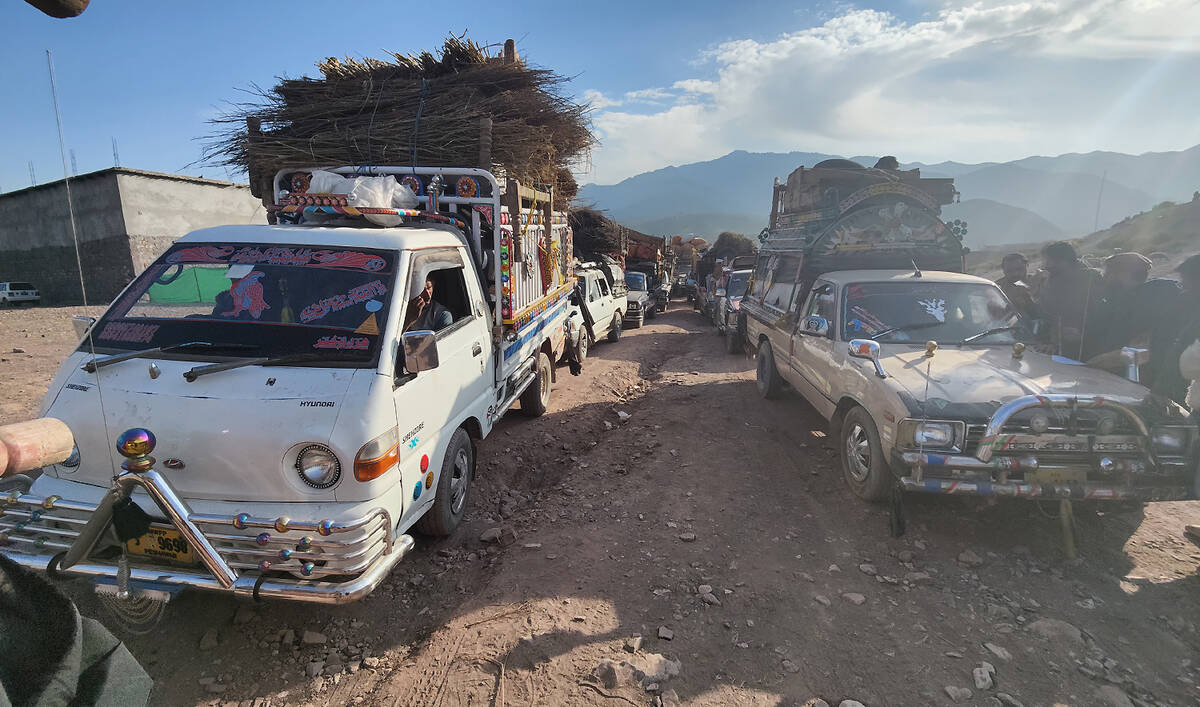


Families sittinng in vehicles with their belongings in Pakistan’s Tirah Valley on January 15, 2026. (AN photo)

NOT ​THE COLD

Residents rejected suggestions that winter alone drove the movement.“No one left because of the cold,” said Abdur Rahim, who said he left his village for Bara ⁠earlier this month after hearing evacuation announcements. “It has been snowing for years. We have lived there all our lives. People left because of the announcements.”

Gul Afridi described a perilous journey through snowbound roads along with food shortages that made the evacuation an ordeal that took his family nearly a week.

“Here I have no home, no support for business. I don’t know what is destined for us,” he said at a government school in Bara where hundreds of displaced people lined up to register for assistance, complaining of slow processes and uncertainty over how long they would remain displaced.


Families load their belongings onto vehicles in Pakistan’s Tirah Valley on January 15, 2026. (AN photo)

Abdul Azeem, another displaced resident, said families were stranded for days and that children died along the way.

“There were a lot of difficulties. People were stuck because of the snow,” he said.

The Tirah Valley drew national attention in September after a deadly ‌explosion at a suspected bomb-making site, with officials and local leaders offering conflicting accounts of whether civilians were among the dead.


Pakistan condemns Netanyahu’s ‘hexagon of alliances’ plan, says alert to growing India-Israel defense ties

Updated 26 February 2026
Follow

Pakistan condemns Netanyahu’s ‘hexagon of alliances’ plan, says alert to growing India-Israel defense ties

  • Israel’s Netanyahu last week proposed an alliance of countries in and around Middle East against its adversaries
  • Pakistan maintains “robust military preparedness” to deter any potential aggression, says foreign office spokesperson

ISLAMABAD: Pakistan’s foreign office spokesperson on Thursday condemned Israeli Prime Minister Benjamin Netanyahu’s recent statement about forming a “hexagon of alliances” within or around the Middle East, saying Islamabad was alert to growing defense ties between New Delhi and Tel Aviv. 

Netanyahu on Sunday outlined plans to form a new regional bloc, describing it as a “hexagon of alliances” that he said could include Israel, India, Greece and Cyprus, along with other unnamed Arab, African and Asian states. He said the grouping would collectively stand against what he described as “radical” adversaries.

His comments came days before Indian Prime Minister Narendra Modi arrived in Israel on Wednesday for a two-day trip to bolster ties. The two are expected to discuss cooperation in science and technology, innovation, agriculture, water management, technology, defense and security during the trip. 

The statement drew a sharp response from Pakistan’s Senate, which unanimously passed a resolution on Tuesday rejecting Netanyahu’s remarks.

“I would also like to draw your attention to the recent resolution adopted by the Senate of Pakistan that strongly condemned such remarks and attempts to undermine Muslim unity,” Foreign Office spokesperson Tahir Andrabi told reporters during a weekly press briefing.

“We continue to condemn these provocative steps and statements by the leadership of the occupying power that threaten regional peace and stability,” he added.

Netanyahu had also said Israel’s goal was to create an axis of nations that see eye to eye against what he described as the “radical Shia” and “radical Sunni” axis of nations. 

Andrabi said attempts to divide the Muslim world along sectarian lines were a “nefarious design” on Netanyahu’s part.

India is Israel’s largest arms buyer and second-largest trading partner in Asia, after China. In response to a question on India’s growing defense ties with Israel, Andrabi said Pakistan remained cognizant of the risks posed by such cooperation.

“Yes, we remain seized of the defense ties between Israel and India,” the spokesperson said, noting that certain “systems and platforms” may have been used by India against Pakistan in the past.

“We are alive to the threats they pose to our security, sovereignty and territorial integrity, as well as to regional peace and stability.”

Andrabi said Pakistan maintained “robust military preparedness” to deter any potential aggression from hostile forces.

‘UTMOST CAUTION EXERCISED’

Andrabi spoke about Pakistan’s recent strikes against alleged militant camps in Afghanistan, saying Islamabad had conducted them in self-defense and with extreme caution to avoid casualties. 

Pakistan said it carried out airstrikes in Afghanistan against militant camps and hideouts in three provinces on Saturday night, killing over 100 militants. Afghanistan accused Pakistan of violating its territorial sovereignty and killing dozens of civilians. Kabul has vowed to retaliate. 

Andrabi said the strikes were carried out to ensure protection for the lives of the people of Pakistan and to prevent “imminent terrorist attacks.”

“These actions were directed solely against identified terrorist camps and hideouts, and utmost caution was exercised to prevent harm to civilians,” he said. 

He warned Pakistan would take necessary measures under its right to self-defense against “terrorist threats” emanating from Afghan territory.

On the safety of Pakistani nationals in Afghanistan following the strikes, Andrabi said Islamabad had raised the issue with Afghan authorities, adding that Islamabad expected “foolproof security” for Pakistani diplomats and civilians.