- The former military chief’s wide-ranging bloc faces divisions on the way forward
- Eisenkot has until next month to form a government to replace Netanyahu
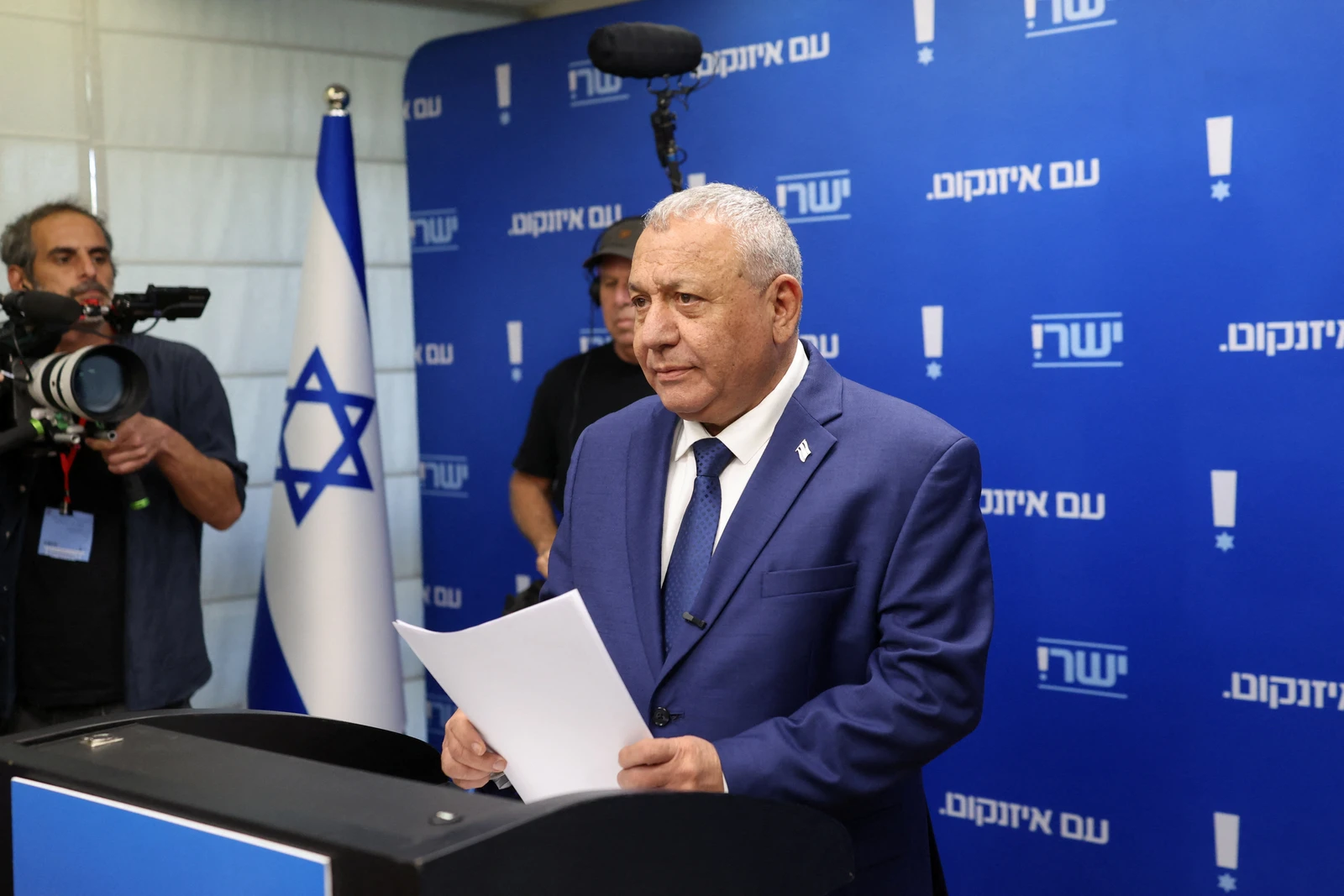
JERUSALEM: Gadi Eisenkot, who has been tasked with forming the next Israeli government, on Friday vowed not to let coalition-building talks drag on as his wide-ranging bloc faces divisions on the way forward.
The former military chief’s remarks appear as a warning to his own camp, which is split over whether to forge alliances with the ultra-Orthodox parties, Arab-majority lists, or whether to form a national unity government with caretaker prime minister Benjamin Netanyahu.
“I have no intention of letting this drag on. When the time is right, I will bring a new government before the Knesset for its approval, a good government that I will lead,” Eisenkot wrote on X in a message about ongoing negotiations.
Eisenkot has until next month to form a government to replace Netanyahu, after the October election failed to deliver a clear majority for either of them.
While denying any attempt to force through a coalition, Eisenkot stressed the need to act fast.
“We are in very dangerous territory. The outgoing prime minister is acting in ways we have never seen before,” he said.
“Military priorities have become entangled with political interests, and the timetable for military operations with the political calendar,” he added.
Members of Israel’s opposition suspect Netanyahu could launch a new military operation against Iran in order to derail talks and remain in power.
Should efforts to create a broad-based government fail, Eisenkot said he would be prepared to put forward a minority national emergency government for a parliamentary vote.
“Every member of the Knesset will have to follow their conscience and decide whether to allow a new government to take office or whether they are prepared to drag Israel and its citizens into another election with Netanyahu still serving as caretaker prime minister,” he said.
These remarks were the clearest sign yet of Eisenkot’s growing impatience nearly two weeks after being tasked by President Isaac Herzog with forming a government.
Eisenkot’s 48-seat bloc is well short of the 61 needed for a majority in parliament and its members are divided over how to proceed.
Eisenkot appears ready to form a minority government with external backing from the 19 lawmakers in the Arab-majority Raam and Joint List.
But nationalist Avigdor Liberman, who sits in Eisenkot’s bloc, has repeatedly refused such an option and instead said he is open to working with the two ultra-Orthodox parties, Shas and United Torah Judaism (UTJ).
Complex negotiations have been underway since.
Netanyahu, meanwhile, is pushing hard for a national unity government, an option that also seems favored by Eisenkot’s most important partner, former prime minister Naftali Bennett.