- Riyadh's improvements are attributed to enhanced performance across four of five assessed dimensions, with a notable entry into the top 50 of the Oxford Economics Global Cities Index for the first time.
- Saudi Arabia's Regional Headquarters Program has successfully attracted over 700 international companies, surpassing its target ahead of the 2030 goal.
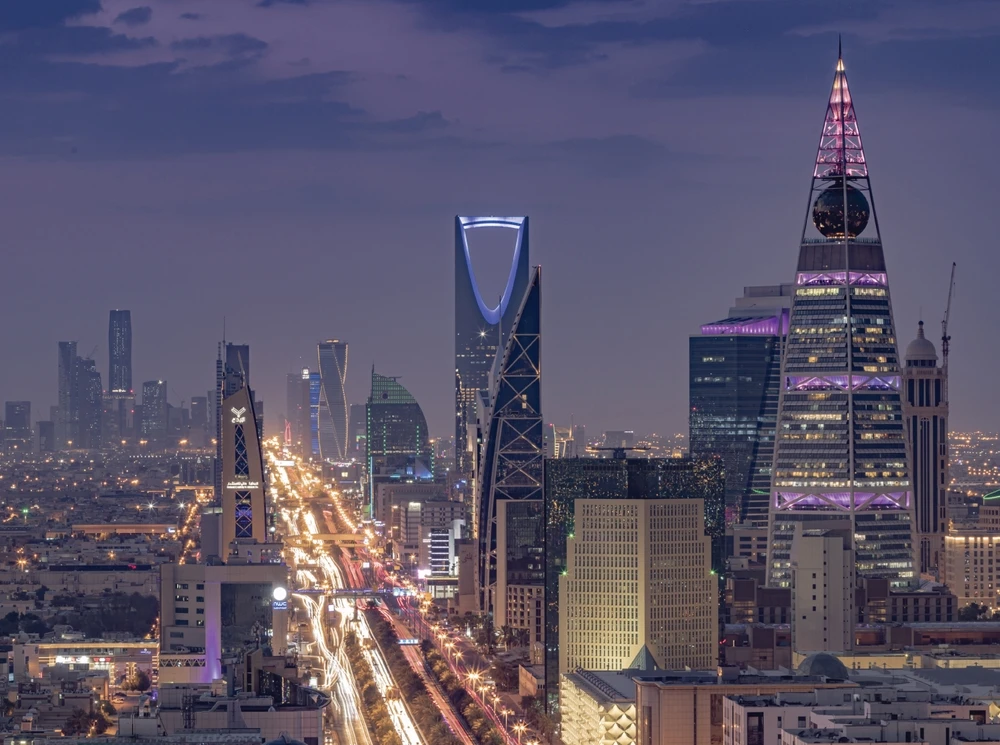
RIYADH: Saudi Arabia’s capital has again risen in Kearney’s Global Cities Index, having now jumped 16 places since 2022 to rank 54th in the 2026 list.
Dammam recorded the biggest rise in the Middle East in the Global Cities Outlook list, which gauges their future potential, advancing 18 spots year on year to 64th.
The report showed Riyadh rose two places from 2025, improving across four of five dimensions, while Dammam’s progress was driven by gains in economics and innovation.
The findings come amid Riyadh’s growing prominence as an international business hub.
In September, the capital entered the top 50 of the Oxford Economics Global Cities Index for the first time, climbing 47 places and ranking fourth globally for human capital.
The Kingdom’s Regional Headquarters Program has also attracted more than 700 international companies, surpassing its 2030 target of 500.
Valentin Lavaill, executive director of Kearney Foresight Middle East and Africa, told Arab News that Saudi cities are benefiting from the Kingdom’s wider economic transformation under Vision 2030.
“Riyadh demonstrates the difference deliberate policy can make,” Kearney said in its report, highlighting investments in international schools and educational capacity.
Economic diversification
“Between 2021 and 2025, real non-oil activity grew by approximately 34%, reflecting the progress made in not only diversifying, but strengthening the economy,” Lavaill said.
Since 2020, the average scores of the five Saudi cities assessed have improved across four dimensions, with cultural experience rising 204 percent, information exchange increasing 120 percent and human capital growing 56 percent.
“Education helps people develop the skills and capabilities needed in a changing economy, while new industries offer them opportunities to put those skills into practice,” he said.
Lavaill noted that these investments help cities attract and retain businesses, investors and talent while building a more diverse economic base.
Makkah recorded the largest annual improvement among Saudi cities in the index, climbing six places, while Jeddah slipped two spots to 85th despite gains across three dimensions.
Innovation gains
Dammam’s rise in the outlook was supported by a 34-place improvement in economics and a 91-place jump in innovation.
“This year, the city rose from 142nd to 51st in the innovation dimension, driven primarily by strong anticipated performance on patents production,” Lavaill said.
He highlighted Dammam Valley’s biotechnology startup program and university-led patent and entrepreneurship support as initiatives that could advance industrialization and strengthen smaller businesses’ contribution to the non-oil economy.
The report also found that Dammam attracted increased foreign direct investment in 2025, while Riyadh and Jeddah lost ground despite operating under the same broad national conditions.
Future opportunities
Lavaill noted that Jeddah and Dammam benefit from international trade connections, while Riyadh is emerging as a hub for businesses and governments.
“The opportunity is to convert these strengths into broader global influence,” he said.
“In the global AI race, Saudi cities can also strengthen their position by investing in digital infrastructure, including data centers.”
He added: “Each city can build its own pathway to global prominence, laying the foundations to challenge established cities that have long dominated the top 30 of our index.”