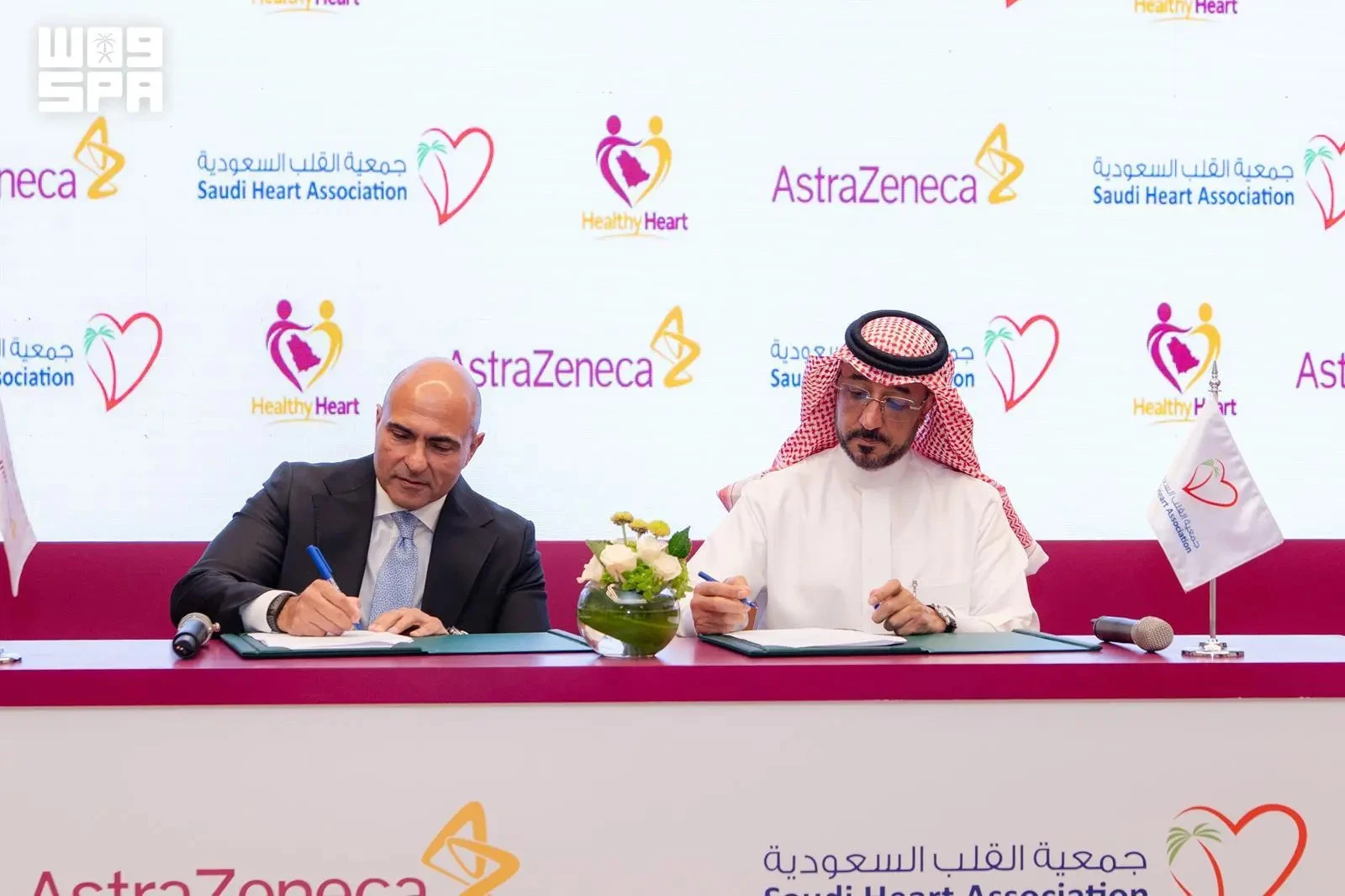
RIYADH: The Saudi Heart Association has signed a memorandum of understanding with AstraZeneca to support cardiac research, train healthcare practitioners and improve care for hypertension patients, SPA reported on Friday.
The agreement comes as cardiovascular disease remains a major public health challenge in the Kingdom. Figures from the General Authority for Statistics show that 7.9 percent of people aged 15 and over had hypertension in 2024, while 1.5 percent had cardiovascular disease.
Cardiovascular diseases are disorders of the heart and blood vessels, including coronary heart disease and cerebrovascular disease, which affect the blood vessels supplying the heart and the brain, according to the World Health Organization.
Under the agreement, initial areas of cooperation include supporting the generation of scientific evidence through cardiology studies and research, and promoting scientific exchange through conferences and forums. The two sides will also build the capabilities of healthcare practitioners in cardiac specialties and work to improve care for hypertension patients by helping enhance the policies, quality, efficiency and pathways of cardiac care in the Kingdom.
Dr. Waleed Al-Habeeb, president of the association and a consultant heart failure cardiologist at King Saud University, said improving heart disease treatment outcomes in the Kingdom required coordinated and ambitious work across the healthcare system.
He added that the partnership with AstraZeneca would strengthen the association’s ability to generate scientific evidence, empower healthcare workers and raise standards of cardiac care, enabling more patients to live longer, healthier lives.
This is not the association’s first such partnership. In 2024, it signed an agreement with German pharmaceutical company Bayer to improve cardiac care in the Kingdom, focusing on early detection of patients at risk of cardiovascular disease (Bayer said in a statement published on their website). The company added that the agreement targeted patients with a mix of risk factors, including high blood pressure, smoking, poor diet and high cholesterol, as well as age and family history.
The Saudi Ministry of Health has previously reported progress in heart attack care. Speaking at the Model of Care Forum in January 2025, Health Minister Fahad Al-Jalajel said the healthcare sector had improved the heart attack treatment rate to 70 percent within the target timeframe in 2024, adding that the Kingdom’s healthcare model aimed to improve quality of life through specialized healthcare pathways.
Saudi Heart Association, AstraZeneca sign deal to boost cardiac care