- Regional arms control resolution secures overwhelming global support with 180 votes in favor
- Another measure seeks guarantees against nuclear threats for countries without nuclear weapons
ISLAMABAD: Three Pakistan-sponsored resolutions on arms control and international security have been adopted by a United Nations committee, with India and Israel the only two countries to oppose a measure backed by 180 nations, Pakistan’s UN mission said on Tuesday.
The resolutions, approved by the UN General Assembly’s First Committee, address conventional arms control, regional confidence-building and security assurances for countries without nuclear weapons, amid heightened tensions in South Asia and the Middle East.
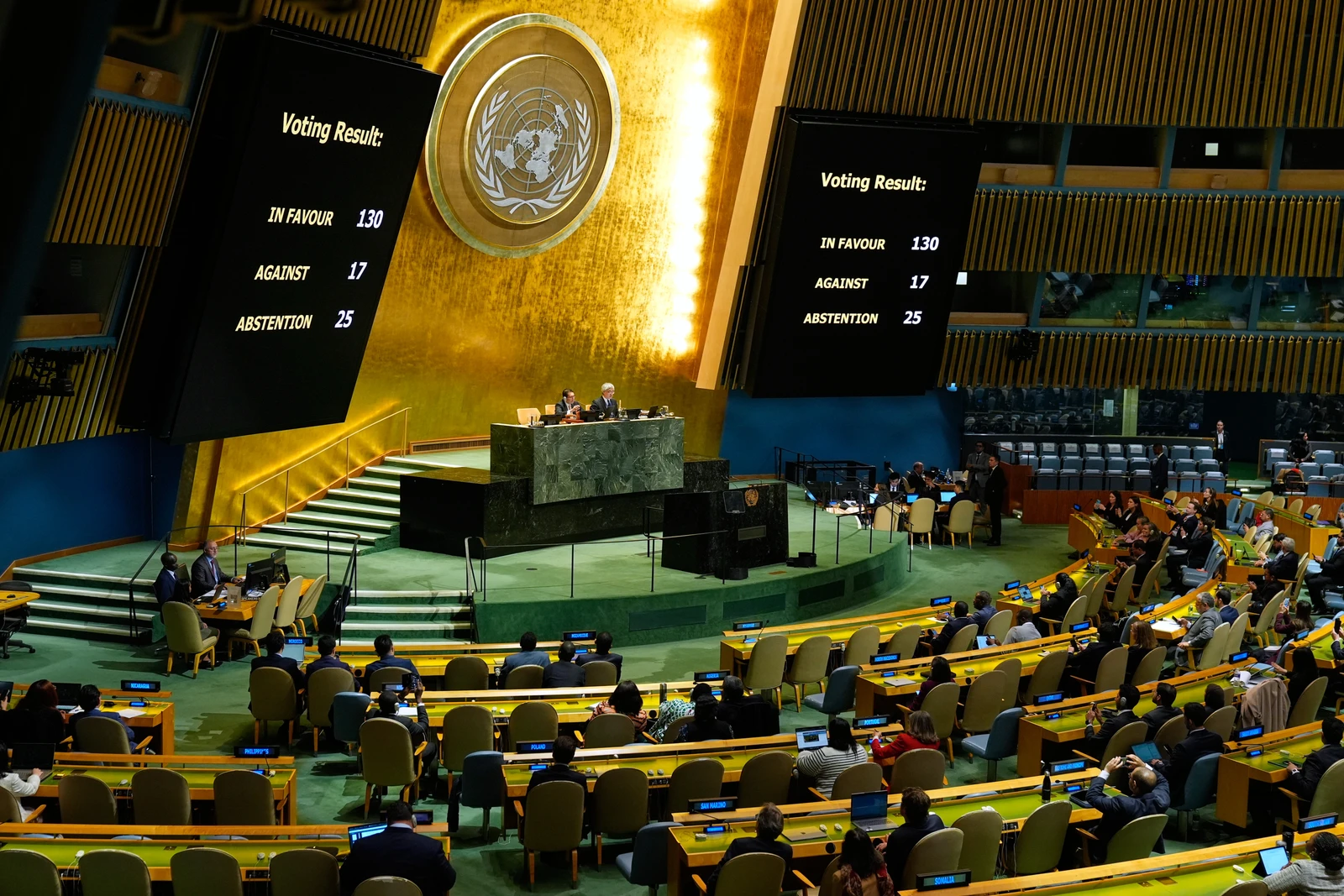
The resolution on conventional arms control at regional and subregional levels secured 180 votes in favor, with India and Israel voting against it. The other two Pakistan-sponsored measures were also adopted, one without a vote and the other with 122 votes in favor and none against.
“The results demonstrate the international community’s continued backing of Pakistan’s long-standing work on security assurances for non-nuclear-weapon States and on regional approaches to arms control and confidence-building,” Pakistan’s UN mission said in a statement shared on X.
The conventional arms control resolution advocates regional arrangements to address military imbalances and reduce the risk of conflict. It also emphasizes that countries with greater military capabilities bear particular responsibility for promoting regional security agreements.
The principle carries particular significance for South Asia, where nuclear-armed Pakistan and India have a history of military confrontations, and the Middle East, where the ongoing hostilities have heightened concerns over military escalation and regional stability.
The First Committee also adopted Pakistan’s resolution entitled “Confidence-building measures in the regional and subregional context” without a vote.
A third resolution, entitled “Conclusion of effective international arrangements to assure non-nuclear-weapon States against the use or threat of use of nuclear weapons,” was approved by 122 votes, with none against.
The measure seeks stronger international assurances for countries that do not possess nuclear weapons, addressing concerns over their vulnerability to nuclear threats and the absence of universally accepted, legally binding security guarantees.
Pakistan’s mission said the country had “for decades, led initiatives in the United Nations to advance priority issues of conventional arms control, confidence-building measures, and regional disarmament.”
The votes come as conflicts in the Middle East and tensions in other regions have renewed concerns about the effectiveness of existing arms control arrangements and the ability of international institutions to prevent military escalation.
“At a time of heightened tensions and eroding arms control architecture, these resolutions offer practical, cooperative paths to reduce risks, building trust and promoting international and regional peace and stability,” the mission said.
The First Committee, which deals with disarmament and international security, considers draft resolutions before they are submitted to the full General Assembly for final adoption.
Although General Assembly resolutions are generally not legally binding, they can help establish international norms and provide a basis for further negotiations on disarmament, security assurances and regional arms control.