- Border closures with Iran disrupt LPG supplies, pushing prices to as much as Rs800 per kilogram
- Government has directed state firms to arrange bulk imports, opens market to private competition
ISLAMABAD: Pakistan is looking to Saudi Arabia and Oman as potential suppliers of liquefied petroleum gas (LPG) under government-to-government and commercial deals to ease shortages and curb soaring prices ahead of winter, Petroleum Minister Ali Pervaiz Malik said on Tuesday.
The government is scrambling to secure alternative supplies after Pakistan closed two key border crossings with Iran last month, citing security concerns and efforts to curb smuggling in its volatile southwestern Balochistan province. The crisis comes as the US-Iran war has disrupted regional energy supplies and driven up fuel costs.
Asked which countries Pakistan was considering for LPG imports, Malik identified Saudi Arabia and Oman as potential markets.
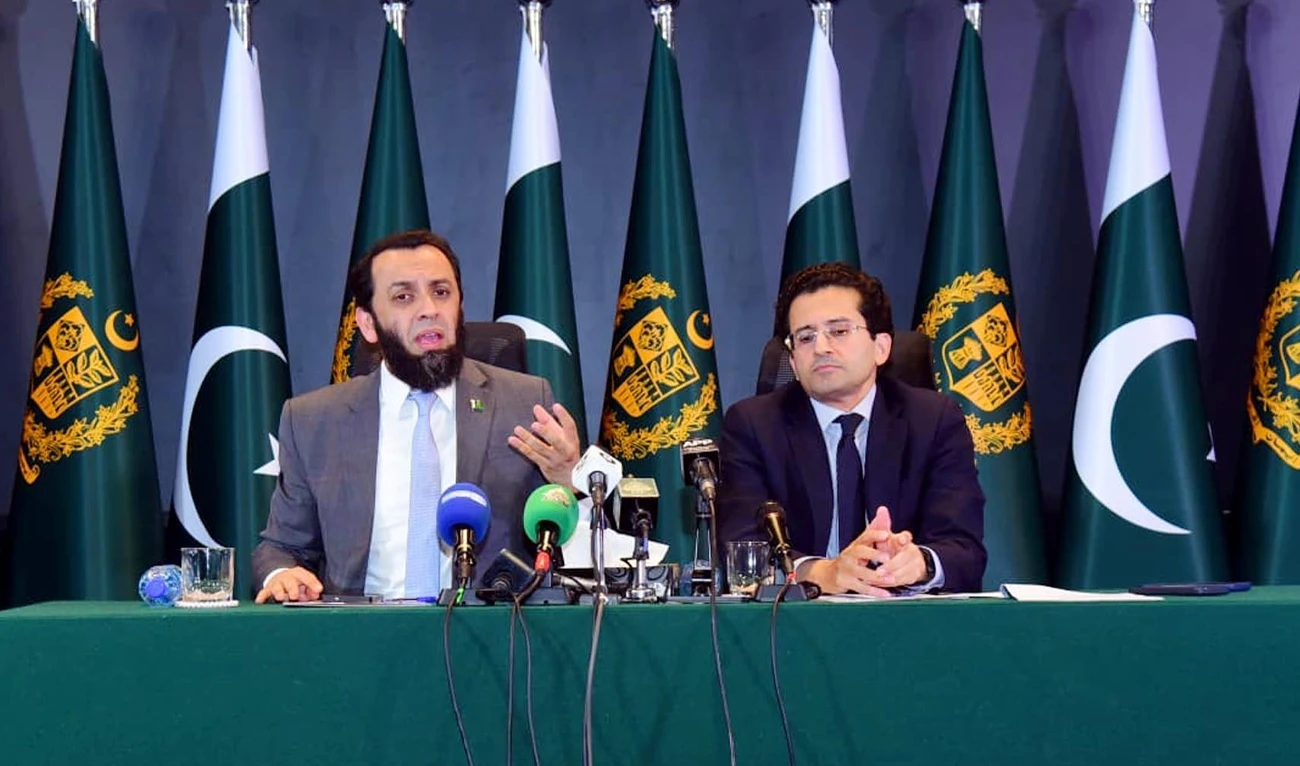
“One visit has been made [to Oman]. The team is going on another visit,” he told reporters after a news conference in Islamabad, where he and Information Minister Attaullah Tarar outlined government measures to address energy shortages and rising prices.
Malik said an agreement with Oman had already been signed “digitally,” but did not clarify whether it covered LPG supplies.
Pakistan last month signed a sale and purchase agreement with Oman’s OQ Trading Limited to import petroleum products as part of efforts to diversify supplies and strengthen energy security. The agreement had been approved by the government’s Economic Coordination Committee in August.
Pakistan consumes around 2.4 million tons of LPG annually, equivalent to approximately 6,500-7,000 tons a day, but produces only 2,000-2,500 tons domestically. According to Malik, nearly half or more of the country’s demand was previously met through imports across its western border, while additional supplies arrived by sea through two LPG terminals at Port Qasim in Karachi.
The disruption has left Pakistan struggling to replace a major source of supply at a time when demand is expected to increase during the colder months.
Addressing the news conference, Malik said the government had directed three state-owned companies — Pakistan State Oil (PSO), SSGC LPG Limited (SLL) and Pakistan LNG Limited (PLL) — to arrange bulk LPG imports through government-to-government (G2G) and business-to-business (B2B) agreements.
“They have been told, bulk trade, on G2G basis, and on B2B basis, you book it,” he said.
Malik said the companies had already made considerable progress in securing supplies, although he provided no details of the quantities being negotiated or when shipments might arrive.
He also warned against collusion and attempts to manipulate supplies and prices as the government sought to prevent traders from exploiting shortages.
The government has also decided to introduce greater competition in the LPG import market, allowing public- and private-sector companies to compete for supplies in an effort to bring down consumer prices.
“Now the decision has been made that this sector will be opened for competition,” Malik said, adding that private companies would also be encouraged to import LPG.
“If you want to bring the cheapest, and give the cheapest to the public, then do it,” he said.
The minister said the government was aiming to bring LPG prices down to between Rs300 and Rs400 per kilogram through increased imports and competition.
“I will be happy, if they [private importers] bring it cheaper than PSO. Through competition we will try to provide it as cheap as possible,” he said.
The measures form part of broader government preparations to meet rising gas demand during winter, when households rely more heavily on both LPG cylinders and piped natural gas.
Malik said the government was also prepared to purchase expensive liquefied natural gas (LNG) to maintain supplies through the piped gas network during December and January, when winter demand is expected to peak.
“Seeing the pain of the people, and also knowing that from December and January, winter will be at its peak, at this time what we are trying to do is that even on the piped network even if we have to buy the most expensive fuel, we will bring it and try to meet it through LNG.”
Pakistan has been forced to rely more heavily on expensive spot-market LNG purchases after its long-term supplier from Qatar declared force majeure amid the Middle East war, adding to the government’s challenge of securing affordable energy supplies.