- Islamabad says censorship, Internet shutdowns and surveillance suppress voices in conflict zones, occupied territories
- Pakistani diplomat urges greater transparency in digital platforms, international cooperation to counter disinformation
ISLAMABAD: Pakistan on Monday warned of the growing influence of global technology giants over online discourse, calling for stronger international action against Islamophobia, disinformation and censorship that threaten freedom of expression, particularly in conflict zones and territories under foreign occupation.
The warning comes amid international debate over the power of digital platforms to shape public opinion, the spread of misleading information during conflicts and the balance between governments’ authority to regulate online content and the protection of fundamental rights.
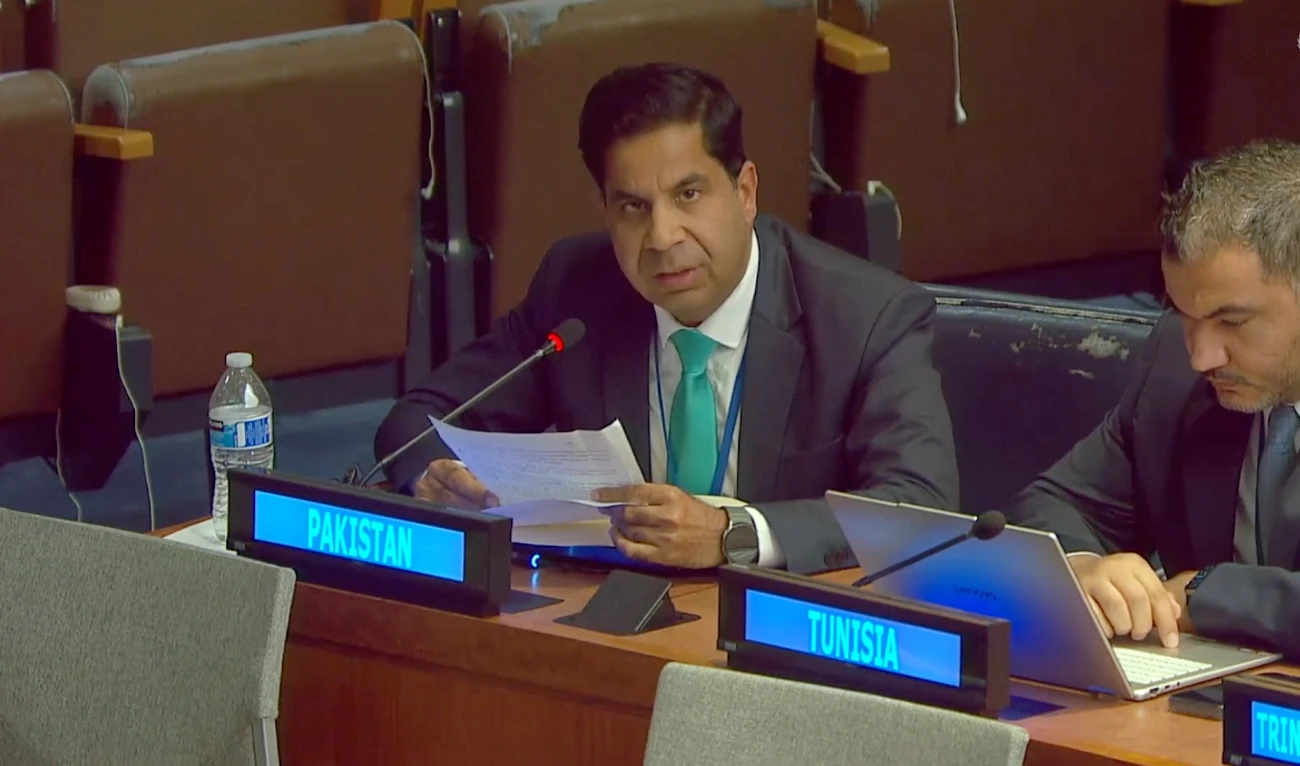
Addressing the UN General Assembly’s Fourth Committee during a debate on information, Pakistani diplomat Amanat Ali called for greater international cooperation to protect the integrity of information online, warning that emerging technologies could be used to manipulate public opinion and undermine trust.
“We must ... address the growing concentration of influence among multinational technology corporations and digital platforms, whose opaque algorithms and content policies increasingly shape public discourse,” Ali said, according to a statement released by Pakistan’s UN mission.
He warned that misinformation, disinformation and hate speech were increasingly being used to polarize societies, manipulate public opinion and undermine public trust, particularly during conflicts and foreign occupation.
“Internet shutdowns, censorship, digital surveillance and restrictive media laws are employed to suppress legitimate voices, distort realities and delegitimize struggles for fundamental rights and self-determination,” he said.
Against this backdrop, Pakistan called for stronger efforts to counter Islamophobia, racism and xenophobia, warning of the broader dangers posed by hate speech and intolerance in an increasingly polarized information environment.
Ali said rapid advances in artificial intelligence offered opportunities to accelerate development and expand access to knowledge, but warned that the technology could also be misused to deceive the public and manipulate opinion.
He called for greater international cooperation to ensure the responsible, transparent and accountable use of emerging technologies while respecting countries’ rights to regulate their digital environments.
“Respect for digital sovereignty rights and the rights of the states to regulate their digital environment in accordance with international law and their national frameworks must remain central to our collective approach,” Ali said.
He urged the UN Department of Global Communications to strengthen its outreach through digital platforms, local languages and partnerships with member states, while allocating more resources to multilingual communication.
Ali also reaffirmed his country’s commitment to freedom of expression, media independence and access to information, saying it was ready to work with other UN member states toward a more credible, inclusive and responsible global information environment.