- Suspect allegedly used identity cards of patients’ relatives to disguise unrelated donors and facilitate mandatory pre-transplant tests
- The arrest comes after Pakistan’s Human Organs Transplant Authority reported an illegal transplant operation at a house in Islamabad
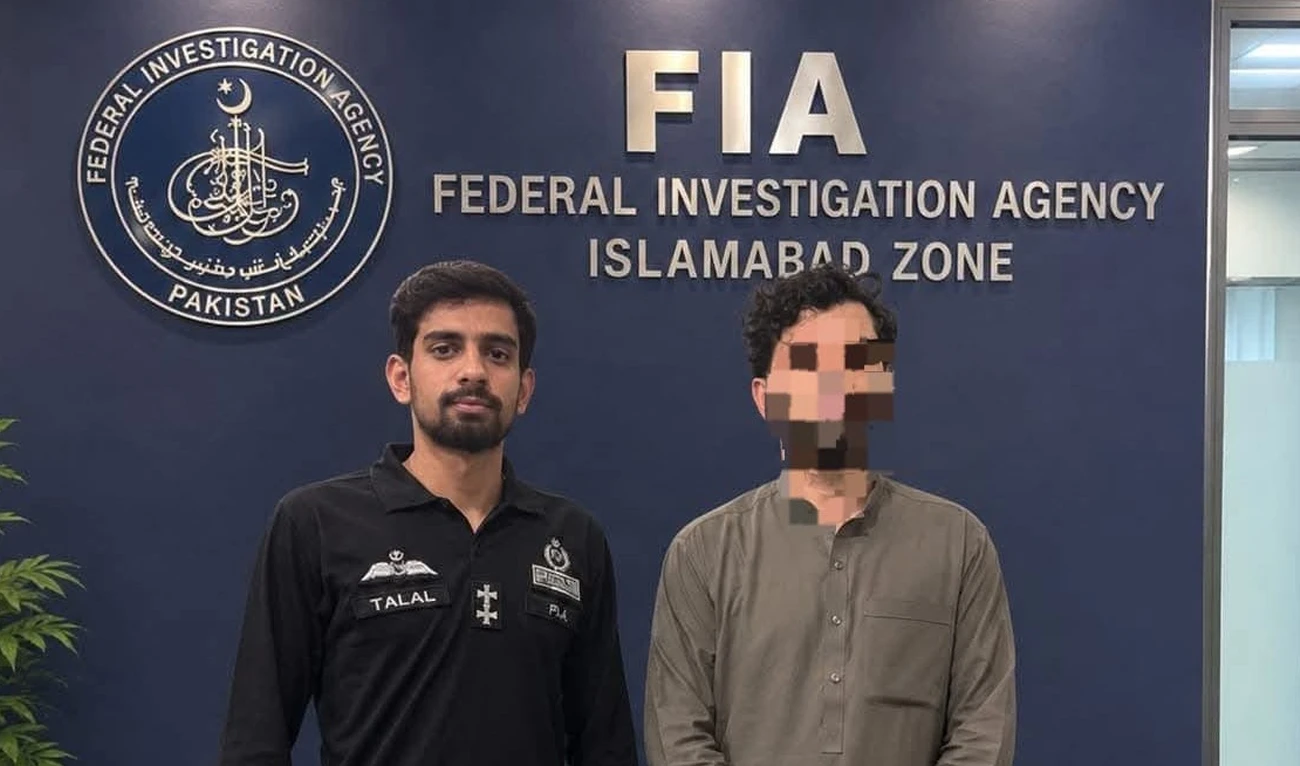
ISLAMABAD: Pakistan’s Federal Investigation Agency (FIA) has arrested a laboratory worker accused of helping an illegal kidney transplant network bypass mandatory medical screening by using identity documents belonging to patients’ relatives to pass off unrelated donors as family members, the agency said on Tuesday.
The suspect, identified as Noor-ul-Wahab, worked as a phlebotomist at an eShifa Labs collection center in Takht Bhai in the northwestern Khyber Pakhtunkhwa province and allegedly prepared falsified prescriptions in the names of doctors to facilitate tests required before kidney transplantation, according to the FIA.
Investigators alleged Wahab used national identity cards belonging to patients’ family members instead of those of the actual donors, allowing samples from unrelated individuals to be submitted under different identities. The tests included HLA Tissue Typing, Panel Reactive Antibody (PRA), Cross-Match and Donor-Specific Antibodies (DSA).
These tests are used to assess compatibility between donors and recipients and the risk of rejection, following transplantation. The arrest is part of an investigation under case No. 60/2026, lodged last month, after the Human Organ Transplantation Authority (HOTA) reported an illegal transplant operation at a house in Islamabad’s PWD Society.
“Evidence gathered during the investigation points to his alleged role and involvement with the [illegal transplant] network,” the FIA said on Tuesday.
According to the first information report (FIR), investigators found that a kidney transplant had already been performed on Muhammad Qasim, with Ramzan Arshad, a brick kiln laborer, serving as the donor in exchange for money.
The FIR said the overall transplant deal was worth Rs3 million ($10,700), while Arshad was paid Rs340,000 ($1,215) through intermediaries, identified as Shahid and Liaqat. Rs2 million ($7,240) had allegedly been given to the doctor involved, while investigators recovered another Rs1 million ($3,620) from an agent.
The operation was allegedly conducted by Dr. Manzoor Hussain with the assistance of agents and technicians. Three suspects were arrested during the raid, while the donor and the recipient were subsequently taken to the Pakistan Institute of Medical Sciences for medical examination and treatment.
The network had operated for more than five years. However, the available case record and the latest FIA statement do not establish how many additional transplants were conducted, which hospitals or surgical facilities were used, or whether other donors were coerced or paid.
Munawar Ishaq, a representative of eShifa Labs in Islamabad, confirmed to Arab News that the company operated a collection center in Takht Bhai but said it had no knowledge of the alleged activities.
He said the laboratory required identity documents, family registration certificates, and doctors’ prescriptions before processing samples. However, he acknowledged that the laboratory might not detect if someone substituted samples at the backend.
“If at the backend someone substituted another sample and changed documents, then we cannot identify it,” he said.
Ishaq said the collection center was being relocated after a recent anti-encroachment operation and demolition of its building, adding that the company was looking into the matter.
The development comes amid wider concerns about illegal kidney trade in Pakistan.
A 2026 study published in BMC Medical Ethics medical journal, based on interviews with five people who illegally sold kidneys between 2016 and 2023, documented recruitment through brokers, financial desperation, deception and coercive surgical practices.
Participants described being blindfolded, sedated or deprived of their mobile phones before operations, while several said they received only a fraction of the money promised to them. Most reported deteriorating health and continuing financial hardship after surgery.
The researchers cautioned that their small, predominantly male sample could not represent all illegal kidney donors in Pakistan, but said the findings exposed how criminal networks exploit vulnerable people through weaknesses in health care regulation.
Pakistan’s Transplantation of Human Organs and Tissues Act 2010 prohibits commercial trading in human organs and provides penalties for illegal transplantation.
The FIA said Wahab was being interrogated and an investigation was continuing to identify other members of the illegal transplant network.