The glances at the clock

https://arab.news/2hyz2
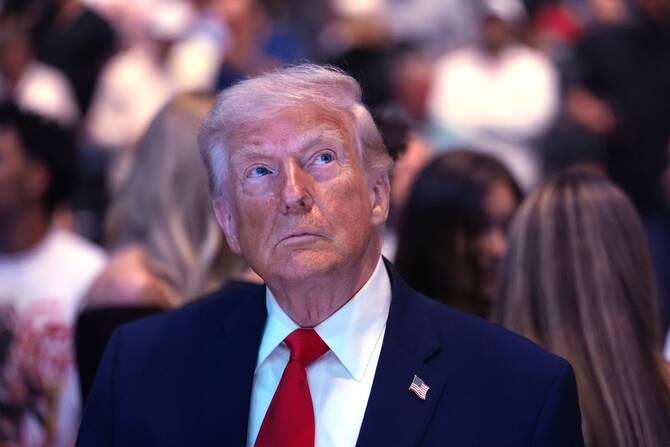
Donald Trump glances at his clock. He does not like long wars. He realizes how dangerous they are. He knows a war is risky as midterm elections approach. He also does not like to lose or even admit defeat. He believes that he was victorious in the war. Nothing remains but to translate the victory into tangible results. He believes that he showed enough leniency. He sent his vice president, J.D. Vance, to Islamabad. The vice president is not one of the administration hawks or an advocate of war.
He believed that the “new Iranian regime” was more rational, flexible and smarter and that it would grasp the message. That did not happen. Mohammed Bagher Ghalibaf is one of the figures that makes up the backbone of the Iranian regime. He is a product of the Revolutionary Guards and institutions that are completely loyal to the supreme leader.
It is not easy for the regime to appear that it has surrendered to the orders of the “Great Satan” and the master of the White House. Trump has hinted that he has other cards up his sleeve, such as imposing a blockade on the Strait of Hormuz. He will not allow Tehran to lure Washington toward such a risky open confrontation.
Ghalibaf is aware the world will grow weary of Iran’s behavior, which is causing massive damage to the global economy
Ghassan Charbel
One can only imagine what ran through Vance’s head as he made his way back from Islamabad. He had hoped that the Iranians would come seeking relief from the war and be relieved that the regime did not collapse under American and Israeli bombardment. Had he struck a great deal, his name would have immediately gone down in history and he would have backed up his chances of later becoming president. None of that happened.
One can only imagine what ran through Ghalibaf’s head. He agreed to sit down with Vance under one roof. This was the first meeting of its kind since the revolution 47 years ago. He may have sensed that Trump’s America is different from the ones that came before. He may have sensed that the time when Iran could task its proxies with bombing an American embassy or kidnapping an American citizen is over. Ghalibaf knows that Iran was not really able to satisfactorily avenge Qassem Soleimani’s death and that it had to sit down at the same table with the deputy of the president who ordered his killing.
Despite all this, the Iranian delegation acted as though the war never happened. Ghalibaf knows that Iran has used all its cards and that it succeeded in shuffling priorities. It created a major issue called the Strait of Hormuz. Opening the passage through military means is costly. He is also aware that the entire world will grow weary of Iran’s behavior, which is causing massive damage to the global economy, meaning it may come up with an international plan to reopen the strait by any means necessary. On top of all this, Iran’s insistence on maintaining its enriched uranium may deepen its isolation.
Benjamin Netanyahu glances at his clock. A majority of the Israeli people support the “existential war” against Iran. The cost is high and claiming a decisive victory against Iran and its proxies is not easy. He held his breath as the negotiations unfolded in Islamabad. Embarking on a war with Trump is fraught with concerns. The master of the White House is often hasty in concluding that the war is over.
Netanyahu has the ability to spring surprises and make quick decisions. He did not go easy. He ordered the army to carry out a horrific massacre in Beirut to consolidate his agreement with Trump on separating the Lebanese file from the confrontation with Iran. He was relieved that the American delegation was not hasty in appeasing the Iranian delegation by meeting their demands on Lebanon.
Netanyahu is still dreaming of another round of war to deepen Iran’s military and economic losses
Ghassan Charbel
Netanyahu’s concerns are not limited to the nuclear file, which is a top priority for Trump. Iran’s rockets have struck several areas in Israel and caused unprecedented damage. He is still dreaming of another round of war to deepen Iran’s military and economic losses and to push Tehran to really abandon its dream of eliminating the “cancerous growth,” meaning Israel.
Netanyahu believes that he succeeded in taking revenge for Iran’s role in the Al-Aqsa Flood operation and Hassan Nasrallah and his successor Naim Qassem’s wars. He took out the former supreme leader and some of the Iranian leadership in developments that were unprecedented in his history of wars in the Middle East.
Qassem glances at his clock. Hezbollah has confirmed its absolute loyalty to Iran and the Wilayat Al-Faqih. He knows that the decision to go to war only enjoys support within its own community and that the rest of the Lebanese population opposes it. He knows that Lebanon is preparing for direct US-sponsored negotiations with Israel. He also knows that the current Iran is not the same as the one that existed before the war. The party also lacks its “Syrian depth.” Ahmad Al-Sharaa’s Syria is in no way similar to Bashar Assad’s Syria. Qassem knows that turning to the street risks sparking civil war and creating permanent divisions between segments of society. He knows that Nabih Berri is also glancing at his clock.
The Pakistani mediator glances at his clock. Salvaging the ceasefire is the top priority. Is the wounded supreme leader glancing at his clock and realizing that maintaining the regime is more important than anything else and that offering concessions is better than suicidal choices? Will new negotiations be held or is that only possible after a new round of violence? Will the Iranian leadership make the right realizations before Trump and Netanyahu’s clocks align again?
- Ghassan Charbel is editor-in-chief of Asharq Al-Awsat newspaper. X: @GhasanCharbel
This article first appeared in Asharq Al-Awsat.