CEBU, Philippines: Southeast Asia’s top diplomats met Wednesday under growing pressure to push a peace plan that has so far failed to end Myanmar’s civil war, to beat a deadline to conclude talks on a nonaggression pact with China this year.
The Association of Southeast Asian Nations, a diverse 11-national bloc, has struggled to project unity and relevance for years. But it faced its latest setback last year when deadly fighting erupted between two members, Thailand and Cambodia, over a longtime border conflict.
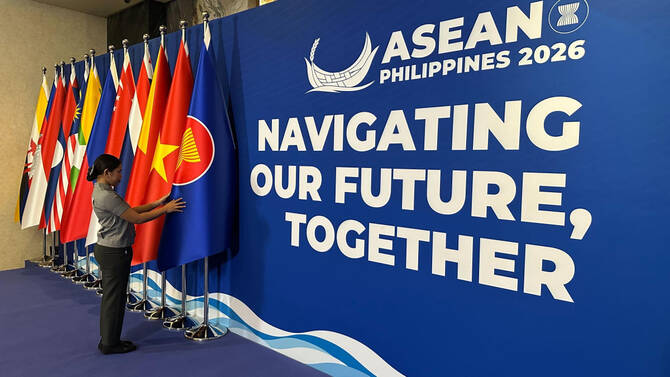
Fighting ended with a ceasefire that was brokered by Malaysia and pushed through by pressure from US President Donald Trump, who threatened to withhold trade privileges unless they agreed. Helping sustain that fragile ceasefire is high on the agenda of the ASEAN’s foreign ministers’ annual meeting in the central Philippine city of Cebu.
The Philippines holds ASEAN’s rotating chair this year, taking what would have been Myanmar’s turn after the country was suspended from chairing the meeting after its army forcibly ousted Aung San Suu Kyi’s democratically elected government in 2021.
ASEAN is struggling to promote peace in Myanmar’s civil war
ASEAN does not recognize the country’s military government, and its leaders are barred from attending the regional bloc’s meetings, although lower-level career diplomats have been allowed to participate.
The resulting war has killed tens of thousands of people and displaced millions in a crisis that has emerged as one of ASEAN’ biggest challenges and source of embarrassment as Western governments demanded the bloc to do more.
Last week, Malaysian Foreign Minister Mohamad Hasan said that ASEAN leaders decided in their annual summit in October not to send observers to Myanmar’s recent elections because conditions for credible polls were not met, though some member countries, like Cambodia and Vietnam, chose to do so individually.
ASEAN leaders proposed a five-point peace plan in 2021, which demanded, among others, an immediate end to fighting and hostilities, but it has failed to end the violence or foster dialogue among contending parties.
Discussion on the peace plan was a top priority in the ministerial meetings in Cebu, according to the agenda, which was seen by the Associated Press.
Philippine Foreign Secretary Theresa Lazaro, who has been designated as the ASEAN’s special envoy to Myanmar, would report to her counterparts in Cebu the result of her recent visit to Myanmar, where she met the ruling generals among other officials. She would also discuss the result of a conference of various political and ethnic groups opposed to Myanmar’s military government that she recently organized in the Philippines in a bid to reach out to all contending sides.
Participants in the Philippine conference discussed enforcement of the peace plan, “including how to advance de-escalation, facilitate humanitarian assistance, effectively address transnational crime and foster political dialogue among relevant stakeholders,” the Department of Foreign Affairs in Manila said.
Deadline for South China Sea code of conduct looms
ASEAN foreign ministers were also under pressure to conclude negotiations with China ahead of a self-imposed deadline this year on a so-called “code of conduct” to manage disputes over long-unresolved territorial rifts in the South China Sea, where China makes expansive claims that overlap with those of four ASEAN members.
They hope to prevent the disputes, long regarded as a potential flashpoint, from degenerating into a major conflict that could drag in US forces.
Washington has no claims in the disputed waters but has warned China that it’s obligated to defend the Philippines, a longtime treaty ally, if Filipino forces come under an armed attack in the offshore region.
Negotiations on the proposed code of conduct have dragged on for more than two decades without any major breakthrough in the most contentious issues, including whether such an accord should be made legally binding. But the bloc resolved to conclude the negotiations by the end of 2026 at a meeting in
Analysts say concluding the talks will be an uphill climb.
“Even with a strong political will, concluding it will remain challenging,” said Australia-based analyst Lupita Wijaya, who has done extensive research on the South China Sea.
“The central roadblock is not the pace of negotiations, but more on fundamental differences between ASEAN claimant states and China over interpretations of international law or whether the COC should be legally binding,” she said.


![]()

ASEAN’s top diplomats under pressure to end Myanmar war and manage South China Sea disputes
Short Url
https://arab.news/9b4tf
ASEAN’s top diplomats under pressure to end Myanmar war and manage South China Sea disputes
- ASEAN does not recognize the country’s military government, and its leaders are barred from attending the regional bloc’s meetings
- ASEAN foreign ministers under pressure to conclude negotiations with China ahead of a self-imposed deadline this year on a so-called ‘code of conduct’


Latest updates


© 2026 SAUDI RESEARCH & PUBLISHING COMPANY, All Rights Reserved And subject to Terms of Use Agreement.