NOMAS hosts cultural evening celebrating Saudi heritage

1 / 8
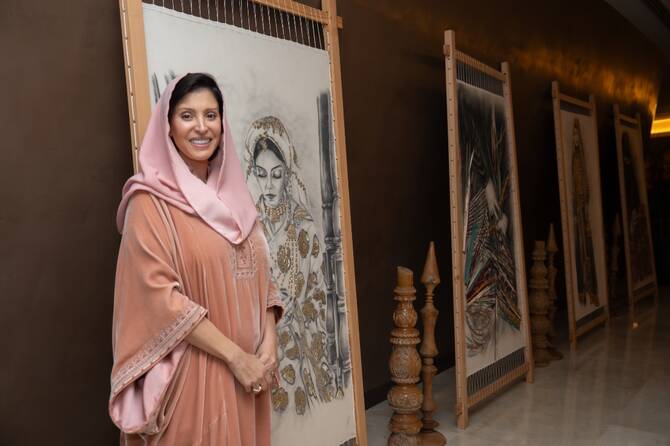
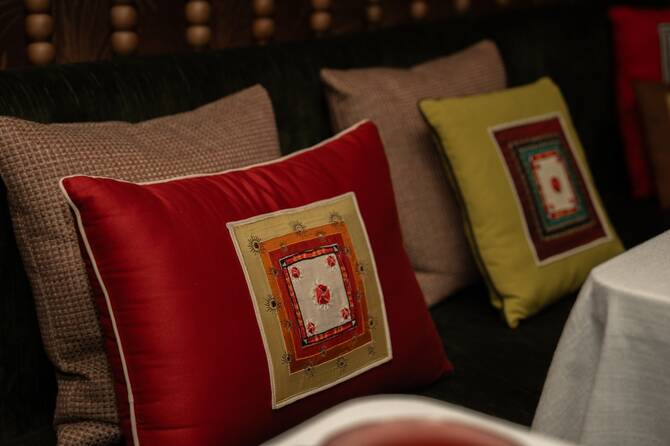
Princess Nourah said she hoped the event would encourage guests to look closely at the artistry around them. “Please keep your eyes open tonight. Anything you see on the shelves, on the walls, even the pillows on the chairs, all of it comes from our artisans and craftspeople,” she told Arab News. “There is so much detail in every piece, and we wanted visitors to feel surrounded by that history and creativity.” (AN Huda Bashatah)
2 / 8
NOMAS Riyadh welcomed guests on Thursday evening for a special cultural event held in collaboration with Art of Heritag. (AN Huda Bashatah)
3 / 8
(AN Huda Bashatah)
4 / 8
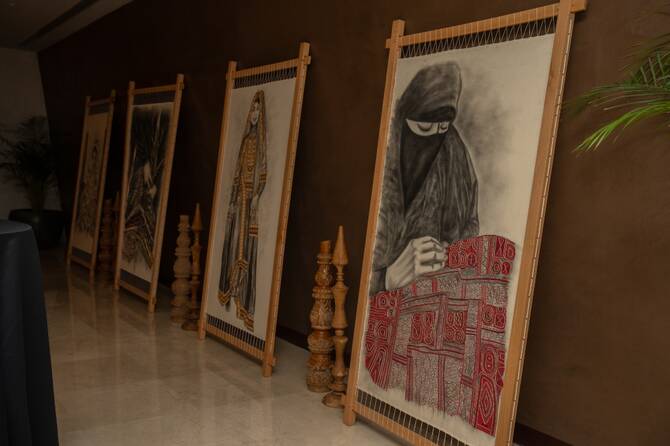
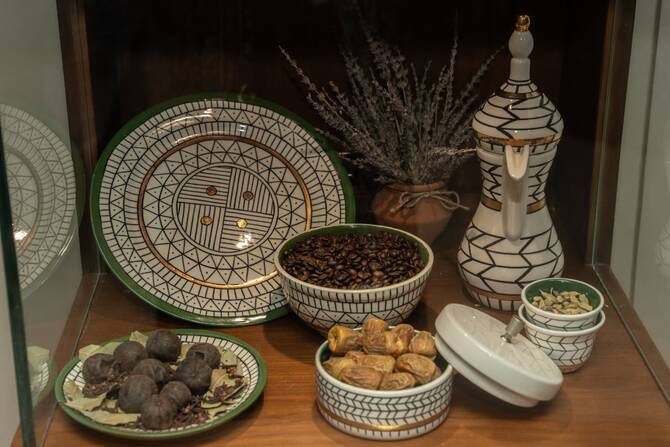
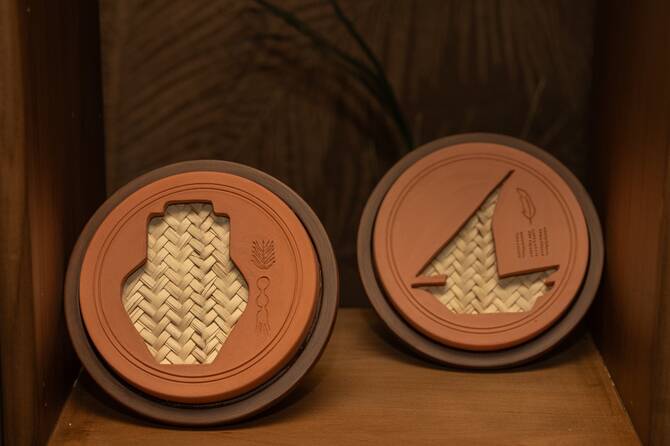
The evening featured an intimate display of Saudi art and heritage pieces sourced from different regions of the Kingdom. Visitors were invited to explore intricate textiles, traditional designs, and handcrafted items that reflect the depth and richness of local craftsmanship. The display extended throughout the restaurant, allowing guests to discover details woven into the décor. (AN Huda Bashatah)
5 / 8
(AN Huda Bashatah)
6 / 8
(AN Huda Bashatah)
7 / 8
(AN Huda Bashatah)
8 / 8
(AN Huda Bashatah)
Short Url
Updated 28 November 2025
Follow

NOMAS hosts cultural evening celebrating Saudi heritage

  • Event was collaboration with Art of Heritage

RIYADH: NOMAS Riyadh welcomed guests on Thursday for a special cultural event, held in collaboration with Art of Heritage, which brought together Saudi craftsmanship, regional artistic traditions, and a culinary experience designed to honor the Kingdom’s diverse heritage.

NOMAS is a fine-dining restaurant located in the Marriott Riyadh Diplomatic Quarter, offering a culinary experience that blends traditional Saudi cuisine and heritage with a modern atmosphere. Opened in September 2025, it showcases Saudi identity through interiors designed locally, artisan-made details such as handcrafted lamps, and bespoke tableware that reflects stories and traditions from regions across the Kingdom.

The evening featured an intimate display of Saudi art and heritage pieces sourced from different regions of the Kingdom. Visitors were invited to explore intricate textiles, traditional designs, and handcrafted items that reflected the depth and richness of local craftsmanship. The display extended throughout the restaurant.

The gathering took place in the presence of Princess Nourah Al-Faisal, founder of Art of Heritage, who spoke to Arab News about the significance of the collaboration.


(AN Huda Bashatah)

Princess Nourah said she hoped the event would encourage guests to look closely at the artistry around them, and stressed: “Please keep your eyes open tonight. Anything you see on the shelves, on the walls, even the pillows on the chairs, all of it comes from our artisans and craftspeople. There is so much detail in every piece, and we wanted visitors to feel surrounded by that history and creativity.”

She said that Art of Heritage was known for its traditional clothing, but the organization’s work extended far beyond fashion. “Everybody thinks we only do clothing, but a lot of what we produce are homeware items,” she said. “We have plates, cups … and we are moving more into tableware. This exhibition was a chance to showcase that variety.”

The curated dinner also highlighted Saudi culinary heritage, with NOMAS’ chef Ahad presenting a menu inspired by regional flavors and traditional ingredients. Guests were later treated to an evening of storytelling which celebrated the cultural influences behind the showcased artworks.

Princess Nourah expressed her appreciation of the partnership behind the event, and added: “We are very proud of the work we do at Art of Heritage, and we have found amazing partners in the Marriott team for this event. What better setting than a dinner like this to highlight our artisans and the beauty of their craft?”

She said: “Thank you so much for being here and for supporting the work of our craftspeople. It means a great deal to us, and I hope everyone enjoys discovering the stories behind each piece.”



Rare sighting of critically endangered leatherback turtle in Red Sea

Updated 05 February 2026
Follow

Rare sighting of critically endangered leatherback turtle in Red Sea

  • Turtles travel thousands of kilometers to Red Sea
  • Nesting 6,500km away in India’s Andaman Islands

RIYADH: Saudi Arabia’s National Center for Wildlife has documented a rare sighting of a leatherback sea turtle in the Red Sea, marking a significant biological record for one of the planet’s most critically endangered marine species.

The sighting occurred approximately 30 km off the coast of Al-Qunfudhah within the Blue Holes Protected Area, a newly established marine reserve, according to a recent report from the Saudi Press Agency.

The NCW said the presence of a leatherback in these waters was an exceptional event.

Recognized as the largest turtle species on Earth, the leatherback can weigh up to 900 kilograms. It has a unique leathery, black carapace — distinguished by five longitudinal ridges rather than a hard bony shell — and able to dive to depths exceeding 1,000 meters.

Shutterstock image

Noting the species’ migratory nature, the center explained that leatherbacks travel thousands of kilometers foraging for jellyfish. The specimen likely navigated through the Bab Al-Mandeb Strait in search of food.

This is considered a remarkable journey, the NCW said, noting that the nearest known populations reside in the Indian Ocean, spanning waters from South Africa to Sri Lanka (roughly 7,000 to 8,000 km away).

The closest known nesting grounds are located in India’s Andaman Islands, approximately 6,500 kilometers away. No nesting activity has been recorded in the Red Sea.

According to the Red List of the International Union for Conservation of Nature, the leatherback is Critically Endangered in the Indian Ocean.

While data for the Red Sea and Arabian Gulf is scarce, recent isolated sightings include a juvenile recorded in Jordan in December 2025 and another off Djibouti in 2019.

The NCW emphasized that these rare appearances highlight the ecological importance of the Kingdom's marine conservation efforts in the Red Sea.

The center pointed to the Farasan Islands Marine Protected Area, along with the new Blue Holes and Ras Hatiba reserves, as critical sanctuaries that could support the expansion in range of such endangered species.