KUALA LUMPUR: Malaysia ended its search Monday for migrants who went missing after their boat capsized 11 days ago, with searchers recovering 36 bodies after the sinking off the Thai-Malaysian coast.
Fourteen survivors were also rescued since the shipwreck on November 6, near Thailand’s Tarutao island while trying to reach Malaysia.
Officials said the vessel was carrying some 70 undocumented migrants, mostly from Myanmar’s persecuted Rohingya community.
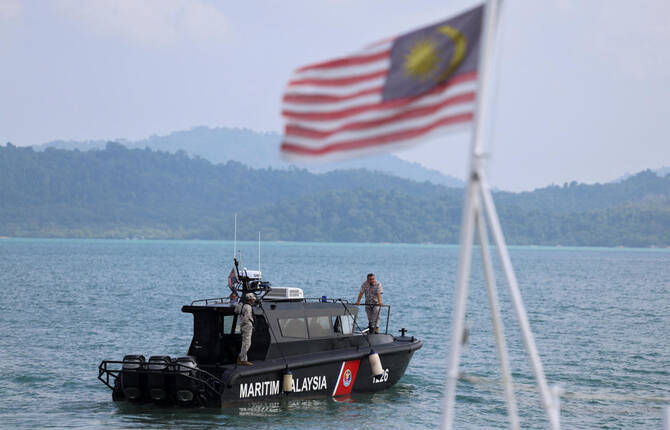
“The search-and-rescue operation will be called off at 6:30 p.m. (1030 GMT) today (Monday),” said Zainudin Mohd Zuki, deputy operations director of the Malaysian Maritime Enforcement Agency (MMEA) in the northern states of Kedah and Perlis.
“We have examined all factors, including the size of the area, assets deployment, duration of the operation and information about the incident.
“However, if there are any new leads or indications, we will reassess and reactivate the operation to search for the remaining missing victims,” Zainudin said at a news conference.
Malaysian rescuers have recovered 29 bodies, while their Thai counterparts have found seven in recent days.
“As of Monday, the Malaysian and Thai authorities found 36 bodies, cumulatively,” Romli Mustafa, MMEA’s director in Kedah and Perlis, told AFP.
The 14 survivors — mainly Rohingya and Bangladeshi citizens — were all found in Malaysian waters since operations began on November 8, with Monday marking the 10th day of the search.
At least 19 vessels and more than 300 personnel searched an area of around 1,750 square nautical miles, roughly eight times the size of Singapore.
The passengers on the capsized boat were likely part of a larger group of some 300 people who had left Myanmar two weeks ago, and were split between at least two vessels, officials say.
Malaysian police reported the second vessel as missing.
Relatively affluent Malaysia is home to millions of migrants from poorer parts of Asia, many of them undocumented, working in industries including construction and agriculture.
But sea crossings, facilitated by human trafficking syndicates, are hazardous and often lead to overloaded boats capsizing.
The Rohingya have been persecuted in Myanmar for decades, and thousands risk their lives every year to flee repression and civil war, often aboard makeshift boats.
More than 5,300 Rohingya fled Bangladesh and Myanmar by sea between January and early November, with more than 600 reported dead or missing, the United Nations Refugee Agency and International Organization for Migration said last week.


![]()

Migrant shipwreck leaves 36 dead as Malaysia ends search
Short Url
https://arab.news/5z49u
Migrant shipwreck leaves 36 dead as Malaysia ends search
- Malaysia ended its search Monday for migrants who went missing after their boat capsized 11 days ago, with searchers recovering 36 bodies after the sinking off the Thai-Malaysian coast


Latest updates


Recommended


© 2026 SAUDI RESEARCH & PUBLISHING COMPANY, All Rights Reserved And subject to Terms of Use Agreement.