

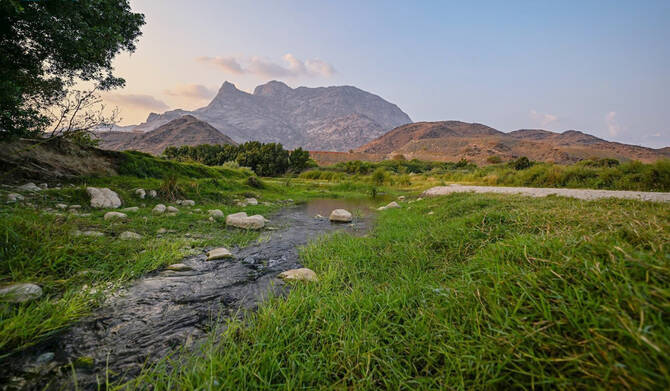

JEDDAH: In a report published on Saturday, the Saudi Press Agency highlighted the “unique geography and biodiversity” of Wadi Al-Ahsabah — a seasonal watercourse in Saudi Arabia’s Baha region which stretches approximately 100 kilometers from Al-Makhwah governorate to the Tihamah plains before flowing into the Red Sea — and the valley around it, which has become a popular winter and spring destination for tourists.
“Its stunning landscapes are adorned with seasonal wild plants, including lavender, rue, and wild mint, as well as Sidr trees and lush green areas,” the SPA wrote.

Wadi Al-Ahsabah is among Baha’s most productive regions, making it vital for agriculture and local food security. (SPA)
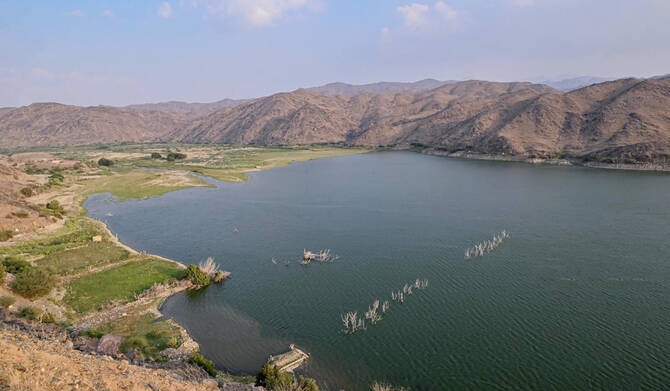
The Wadi Al-Ahsabah Dam, built in 2012, serves as the primary drinking water source for Al-Makhwah and Ghamid Al-Zinad, supplying around 15 wells. The dam is 895 meters long and 22 meters high, and has a storage capacity of nearly 11 million cubic meters.
The area around the dam features a 3,600-square-meter park, “providing a natural retreat for visitors and enhancing local tourism,” according to the SPA. “During heavy rainfall, the dam’s gates discharge excess water, aiding groundwater recharge and supplying farmers’ wells.”
Due to its fresh water and fertile soil, Wadi Al-Ahsabah is among Baha’s most productive regions, making it vital for agriculture and local food security.
The valley “exemplifies a balance between environmental preservation and development,” the SPA concluded, “making it a key water resource and eco-tourism destination in Tihamah.”


