

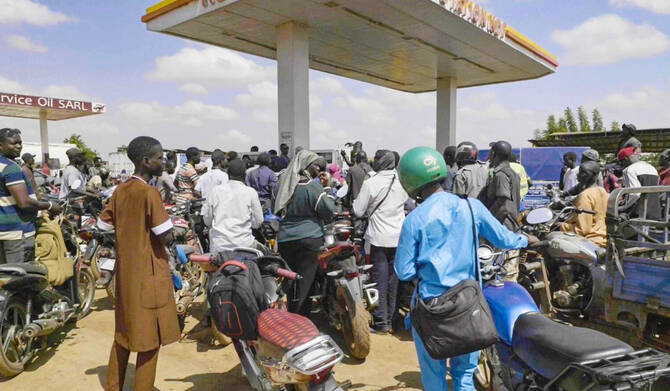

LAGOS: Mali’s government has moved to impose fuel rationing to counter widespread shortages caused by Al-Qaeda-linked groups operating in the border regions that have, in recent months, cut off fuel supplies to the landlocked African country.
In announcing the rationing, officials did not say when it would start.
The measure was cast as an effort to reduce long lines at gas stations, especially with the Muslim holy month of Ramadan only a few weeks away.
Since September, Al-Qaeda-linked militants and other extremists in Mali have increasingly attacked fuel trucks — more than a hundred trucks have been burned in the violence, which has crippled fuel imports and distribution.
Mali’s fuel importers’ union said that over 2,000 tanker trucks have entered the country since the start of the year — significantly fewer than the up to 6,000 per month that arrived prior to the attacks.
Officials say the rationing system will ensure a more equitable distribution of fuel among consumers.
The new measures will include registering vehicle plates and wait periods for cars and vehicles to refuel.
Cars will be allowed to tank up every 72 hours and motorcycles every 48 hours.
Moussa Alassane Diallo, Mali’s trade and industry minister, told a union of petroleum product importers that the rationing will “give us complete control” over gas stations, and allow authorities to “monitor the quantities of fuel sold.”
“We are committed to ending the fuel crisis as long as the military continues to escort our tanker trucks”, said Ibrahim Toure, head of the petroleum importers union.
But many residents — especially taxi drivers — expressed concerns that the fuel limits would impact their daily lives.
“These measures may work for private cars, but for us taxi drivers, it’s going to be difficult because we don’t earn enough money to fill up our taxis every time we go,” said Oumar Coulibaly, a taxi driver in the capital, Bamako.
“We do a lot of trips, and we need fuel,” he said.
Experts say the junta’s move was likely spurred by concerns about popular discontent over the prolonged fuel shortage.
Beverly Ochieng, a senior analyst with the consultancy Control Risks’ Global Risk Analysis team, said the “insecurity on supply routes due to militant presence and activity will remain a challenge to the transportation of fuel in the coming weeks, and the stability of supplies will vary.”


