GCC expats can now invest directly in Saudi main market

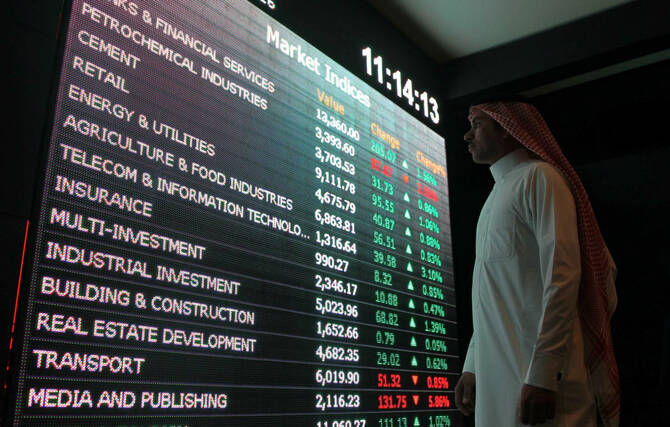
The updates would enhance the attractiveness of the Saudi capital market for local and international investors. File/Reuters
Short Url
Updated 13 July 2025
Follow

GCC expats can now invest directly in Saudi main market

  • Move promotes openness of market internationally
  • Draft was open for 30 calendar days for public consultation

RIYADH: Residents of Gulf Cooperation Council countries, including expatriates, can now directly invest in Saudi Arabia’s main stock market for the first time, under new regulations announced by the Capital Market Authority. 

The reform, unveiled by CMA Chairman Mohammed El-Kuwaiz, removes previous restrictions that limited access to swap agreements or required investors to go through licensed intermediaries. It applies to current and former residents of Saudi Arabia or other GCC states, according to an official announcement. 

The initiatives align with the Kingdom’s economic diversification goals under Vision 2030, which seeks to deepen capital markets and attract global capital. By streamlining account openings and broadening access, the CMA aims to enhance liquidity, transparency, and investor confidence.  

In a post on X, El-Kuwaiz said the move “promotes the openness of the market internationally, while at the same time building a long-term investment relationship with wider segments of investors around the world, within the framework of a more flexible and attractive regulatory environment.” 

In a separate statement, the CMA said the updates would “enhance the attractiveness of the Saudi capital market for local and international investors, increase the level of investor protection, and strengthen the confidence of market participants.” 

The amendments were approved following the CMA’s publication of the draft on Nov. 20, 2024, titled “Facilitating the Procedures for Opening and Operating Investment Accounts for Various Categories of Investors.” 

The draft was open for public consultation for 30 calendar days via the Unified Electronic Platform for Consulting the Public and Government Entities, affiliated with the National Competitiveness Centre, and the CMA’s website. 

The GCC investor expansion is part of a wider regulatory overhaul unveiled by the CMA last week to modernize Saudi Arabia’s investment fund landscape. 

Key reforms included expanded distribution channels, allowing investment fund units to be distributed through licensed digital platforms and fintech firms approved by the Saudi Central Bank. 

Stronger governance measures have also been introduced, including new safeguards for fund manager transitions, which require CMA approval and a 60-day handover period to protect investors. 

REITs listed on the parallel market now have greater flexibility, as they can invest in development projects without strict asset allocation limits, potentially enhancing returns. 

The latest regulatory changes represent another strategic step to deepen liquidity, attract foreign capital, and position the Saudi Exchange as a leading money market in the region. 


Armah Sports net profit up 62% on strong personal training demand

Updated 14 sec ago
Follow

Armah Sports net profit up 62% on strong personal training demand

RIYADH: Strong demand for personal training services and continued expansion in its membership base drove Armah Sports Co.’s net proft to shareholders up 62 percent to SR62 million ($16.53 million) in 2025.

Revenue increased rising 27 percent annually to SR224.9 million in the year ending Dec. 31, while while operating revenue climbed 48 percent to SR81.1 million, reflecting operating leverage as revenue growth outpaced cost increases.

Personal training profit increased 51 percent during the year, supported by sustained demand for high-quality training services. 

Subscription and membership revenue grew 24 percent, driven by expansion in the average member base and the increasing maturity of existing clubs. The company also recorded growth in ancillary revenue streams from its fitness centers.

Industry data suggests the company’s performance reflects broader structural growth in the Kingdom’s fitness sector.

Ahmed Attallah, manager at the organizers of health and fitness exhibition FIBO Arabia, told Arab News: “Saudi Arabia’s fitness industry is undergoing structural expansion rather than cyclical growth.”

He added: “The market has grown from approximately SR3.4 billion in 2017 to SR7.7 billion in 2024 and is projected to reach SR15.5 billion by 2030. This growth is supported by regulatory reform, rising female participation, and sustained private-sector investment aligned with Vision 2030.” 

FIBO Arabia is one of the largest annual health, fitness and wellness industry exhibitions in Riyadh that brings together operators, suppliers, investors and other sector stakeholders to showcase innovations and business opportunities.

Attallah added that revenue growth across operators is increasingly driven by premium services. 

“Personal training and premium services remain underdeveloped compared to mature markets, creating room for further revenue growth. At the same time, boutique formats and digitally integrated models are attracting younger, experience-driven consumers,” he said.

Attallah stated that strong financial results from leading operators reflect underlying market fundamentals, and said: “Capital inflows, international brand expansion, and fitness infrastructure embedded within gigaprojects and mixed-use developments point to long-term confidence in the sector.”

He added: “Saudi Arabia is moving from rapid expansion to institutional maturity, positioning it as the Middle East’s leading growth market for fitness and wellness investment.”

Deferred revenue at Armah rose to SR62.6 million across the year, reflecting strong membership renewals and enhancing revenue visibility for future periods.

Cost of revenue increased 22 percent in line with higher activity levels, while operating expenses rose 46 percent, reflecting investments in automation and key senior hires to support future expansion. Interest expenses were linked to financing and lease liabilities associated with the company’s growth strategy.

During the year, Armah recorded non-recurring items including a SR9.5 million gain from a sublease transaction, a SR0.8 million gain from a rent waiver on a lease, and SR1.5 million in expenses related to preparations for transitioning to the Kingdom’s Main Market from Nomu.

Excluding non-recurring items, adjusted net income attributable to shareholders reached SR53.2 million, while adjusted earnings before interest, taxes, depreciation and amortization totaled SR115 million, in line with the reconciliation disclosed in the audited financial statements.

Armah has advanced its expansion and market positioning over the past year, announcing plans in January for a new men’s B_FIT club in Riyadh’s Irqah district. In 2025, it signed agreements for additional clubs in Al Maseef and a SR224 million development deal with Qimam Noshoz.