


WASHINGTON: The world’s most desperate countries are falling further and further behind, their plight worsened by conflicts that are growing deadlier and more frequent.
That is the sobering conclusion of the World Bank’s first comprehensive study of how 39 countries contending with “fragile and conflict-affected situations’’ have fared since the COVID-19 pandemic struck in 2020.
“Economic stagnation — rather than growth — has been the norm in economies hit by conflict and instability,” said Ayhan Kose, the World Bank’s deputy chief economist.
Since 2020, the 39 countries, which range from the Marshall Islands in the Pacific to Mozambique in sub-Saharan Africa, have seen their economic output per person fall by an average 1.8 percent a year. In other developing countries, by contrast, it grew by an average of 2.9 percent a year over the same period.
FASTFACT
The World Bank finds that countries involved in high-intensity conflict — which result in more than 150 deaths per million people — experience a cumulative drop of 20% in their gross domestic product, or the output of goods and services, after five years.
More than 420 million people in the fragile economies are living on less than $3 a day — the bank’s definition of extreme poverty. That is more than the combined total of everywhere else, even though the 39 countries account for less than 15 percent of the world’s population.
Many of these countries have long-standing problems with crumbling infrastructure, weak governance, and low educational standards.
People in the 39 countries get an average of just six years of schooling, three years fewer than those in other low- and middle-income countries. Life expectancy is five years shorter, and infant mortality is twice as high.
Increasing conflicts have made things worse.
In the 2000s, the world saw an annual average of just over 6,000 conflicts — in which organized groups used armed force against other groups or civilians and caused at least one death. Now the yearly average exceeds 20,000.
The conflicts are more lethal, too: In the 2000s, they took an average of fewer than 42,000 lives a year. From 2000 through 2024, the number averaged almost 194,000.
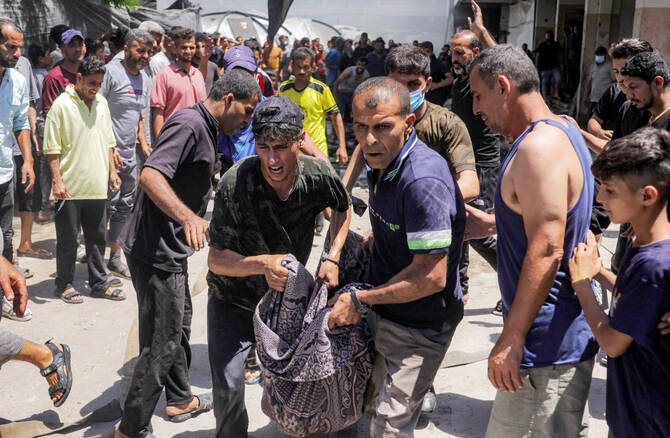
Of the 39 countries, 21 are involved in active conflicts, including Ukraine, Sudan, Ethiopia, and Gaza.
The World Bank finds that countries involved in high-intensity conflict — which result in more than 150 deaths per million people — experience a cumulative drop of 20 percent in their gross domestic product, or the output of goods and services, after five years.
More conflict also means more hunger: The World Bank estimated that 18 percent — around 200 million — of the people in the 39 countries are “experiencing acute food insecurity’’ compared with just 1 percent in other low and middle-income countries.
Some countries have managed to escape the cycle of conflict and economic fragility. Kose cites Nepal; Bosnia and Herzegovina; Rwanda; and Sri Lanka as relative success stories.
And the World Bank report notes that the 39 countries do enjoy strengths, including natural resources such as oil and natural gas, and a lot of young, working-age people at a time when many economies are aging.
“Some of them are very rich when it comes to their tourism potential,’’ Kose said.
“But you need to have security established. You and I are not going to go and visit these places unless they are safe, even though they might be the most beautiful places in the world.’’


