


HAVANA: With a monthly pension barely sufficient to buy 15 eggs or a small bag of rice, Cuba’s elderly struggle to make ends meet in one of Latin America’s poorest and fastest-aging countries.
As the communist island battles its deepest economic crisis in three decades, the state is finding it increasingly hard to care for some 2.4 million inhabitants — more than a quarter of the population — aged 60 and over.
Sixty is the age at which women — for men it’s 65 — qualify for the state pension which starts at 1,528 Cuban pesos per month.
This is less than $13 at the official exchange rate and a mere $4 on the informal street market where most Cubans do their shopping.
“Fight for life, for death is certain,” vendor Isidro Manuet, 73, told AFP sitting on a sidewalk in the heart of Havana, his skin battered by years in the sun, several of his front teeth missing.
“I manage to live, survive, nothing more,” he said of his meager income that allows him to buy a little food, and not much else.
As he spoke to AFP, Manuet looked on as small groups of people walked by his stall carrying bags full of food.
They were coming out of Casalinda, one of several part government-run megastores that sells goods exclusively to holders of US dollars — a small minority of Cubans.
Most rely instead on informal stalls such as the ones Manuet and other elderly Cubans set up on sidewalks every morning to sell fruit, coffee, cigarettes, candy, used clothes and other second-hand goods.
Near Manuet’s stall, 70-year-old Antonia Diez sells clothing and makeup.
“Things are bad, really bad,” she sighs, shaking her head.
Many of Cuba’s elderly have been without family support since 2022, when the biggest migratory exodus in the country’s history began amid a crisis marked by food, fuel and medicine shortages, power blackouts and rampant inflation.
More beggars can be seen on Havana’s streets — though there are no official figures — and every now and then an elderly person can be spotted rummaging through garbage bins for something to eat, or sell.
The Cuban crisis, which Havana blames on decades of US sanctions but analysts say was fueled by government economic mismanagement and tourism tanking under the Covid-19 pandemic, has affected the public purse too, with cuts in welfare spending.
As a result, the government has struggled to buy enough of the staples it has made available for decades to impoverished Cubans at heavily subsidized prices under the “libreta” ration book system.
It is the only way many people have to access affordable staples such as rice, sugar and beans — when there is any.
Diez said she used to receive an occasional state-sponsored food package, “but it’s been a while since they’ve sent anything.”
This all means that many products can only be found at “dollar stores” such as Casalinda, or private markets where most people cannot afford to shop.
According to the University of Havana’s Center for Cuban Economic Studies, in 2023 a Cuban family of three would have needed 12 to 14 times the average minimum monthly salary of 2,100 pesos (around $17) to meet their basic food needs.
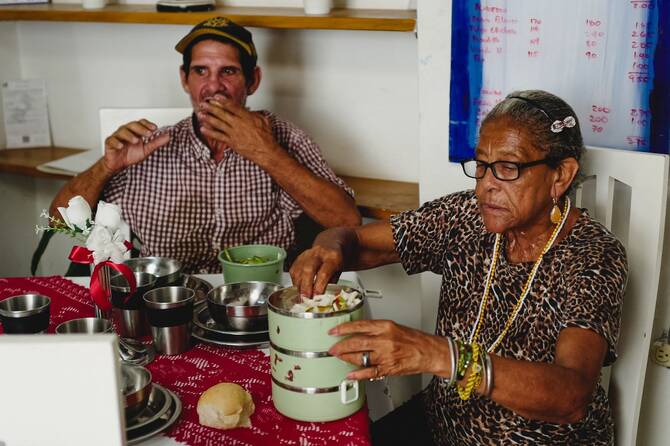
Official figures show about 68,000 Cubans over 60 rely on soup kitchens run by the state Family Assistance System for one warm meal per day.
At one such facility, “Las Margaritas,” a plate of food costs about 13 pesos (11 dollar cents). Pensioner Eva Suarez, 78, has been going there daily for 18 months.
“The country is in such need. There’s no food, there’s nothing,” she told AFP, adding her pension is basically worthless “because everything is so expensive.”
Inflation rose by 190 percent between 2018 and 2023, but pensions have not kept pace.
Some are losing faith in communism, brought to the island by Fidel Castro’s revolution, and its unfulfilled promises such as a liter of subsidized milk for every child under seven per day.
“I have nothing, my house is falling apart,” said Lucy Perez, a 72-year-old economist who retired with 1,600 pesos (about 13 dollars) a month after a 36-year career.
“The situation is dire. The nation has no future.”
It’s not just the elderly suffering.
Cuba was rocked by unprecedented anti-government protests in 2021, and students have been rebelling in recent months due to a steep hike in the cost of mobile Internet — which only arrived on the island seven years ago.
In January, the government announced a partial dollarization of the economy that has angered many unable to lay their hands on greenbacks.


